
Handwoven Faux Leather
Premium hand-woven faux leather that blends style with durability
New Handwoven Faux Leather for Upholstery & Interior Design
This page features our latest handwoven faux leather products, developed to combine artisanal woven aesthetics with the durability and practicality of synthetic leather. These materials highlight handcrafted weaving textures while maintaining consistent quality, making them suitable for modern upholstery and interior projects.
Handwoven faux leather is commonly used in furniture upholstery, accent chairs, headboards, decorative wall panels, hospitality seating, and interior design features where visual texture and material character are essential. Compared with standard embossed patterns, handwoven surfaces offer greater depth and a more distinctive, premium appearance.
This category is designed for furniture manufacturers, interior designers, project procurement teams, and specification buyers looking for unique upholstery materials with strong design value.

Hand Woven Faux Leather
Looking for a versatile, high-quality material for your next project? Our hand-woven faux leather is perfect for adding a touch of craftsmanship to:
🔹 Pillows & Decorative Items
🔹 Interior Design Projects
🔹 Furniture Upholstery
🔹 Automotive Interiors
🔹 Fashion Accessories
🔹 Contract & Hospitality installations
🔹 Custom Creations
✨ MOQ:
- Only 1 yard for stock items(136+ existing designs available)
- Custom designs starting at 10 yards per color!
Design Flexibility + Available Stock =Your Competitive Edge
Handwoven Faux Leather +136 Designs Avaiable
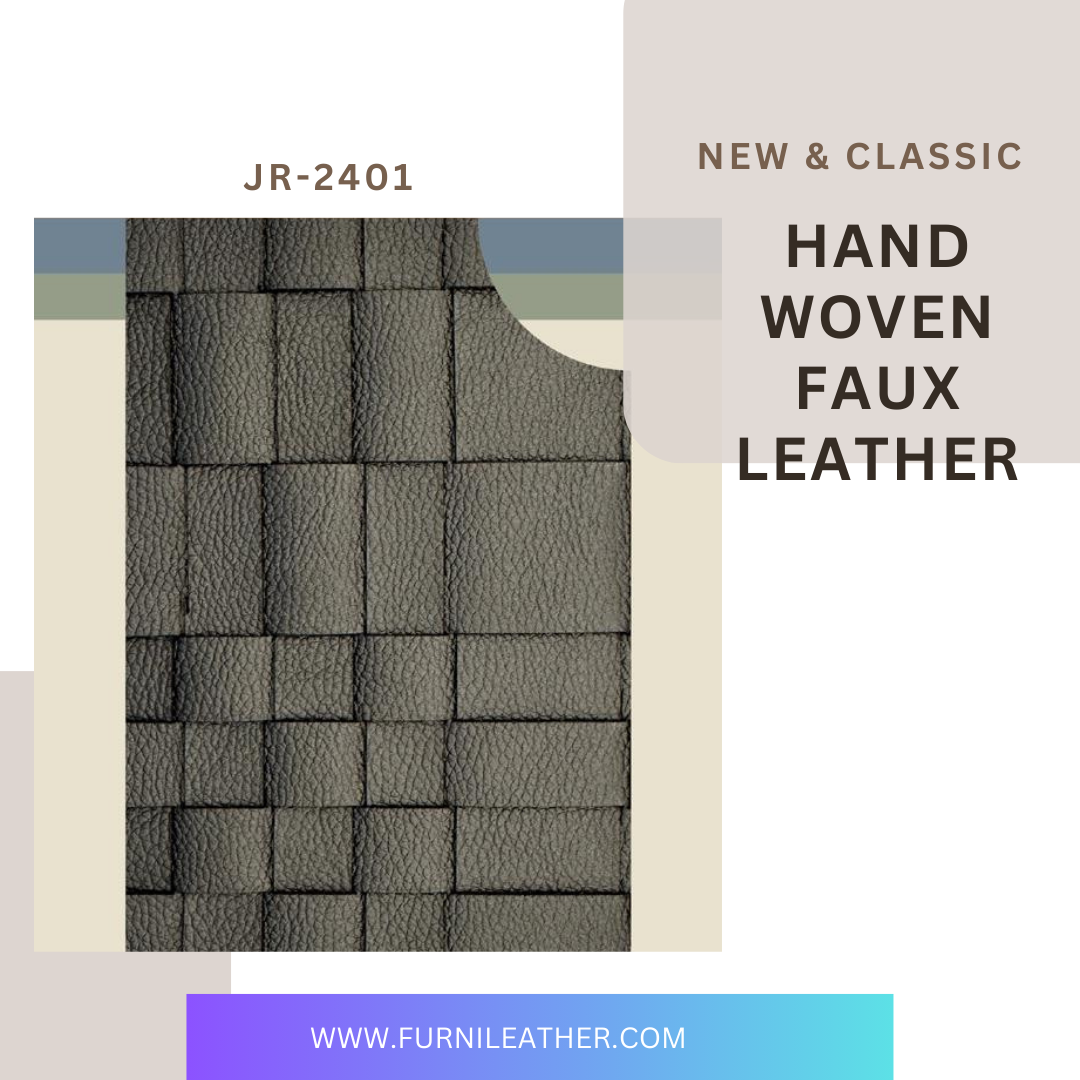
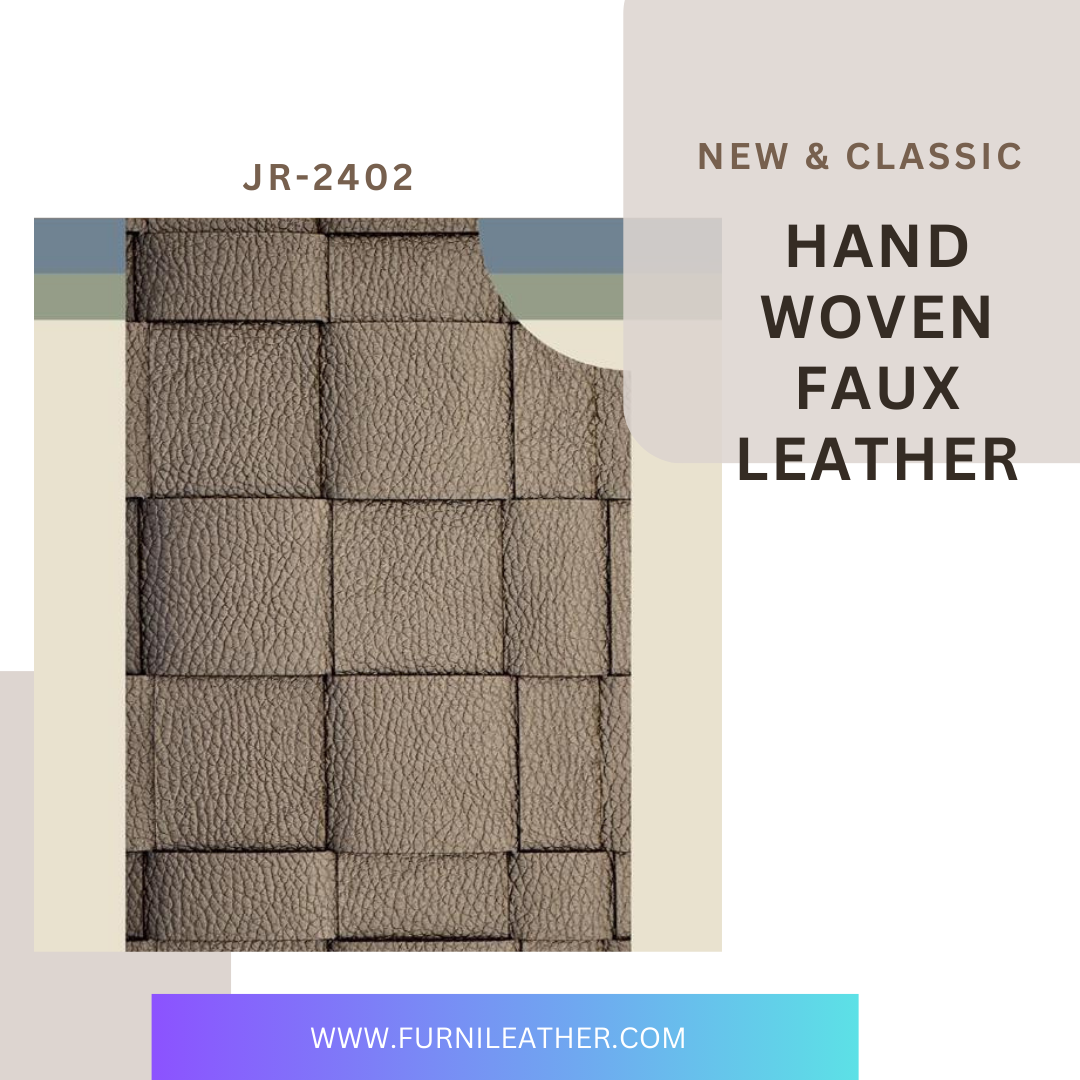
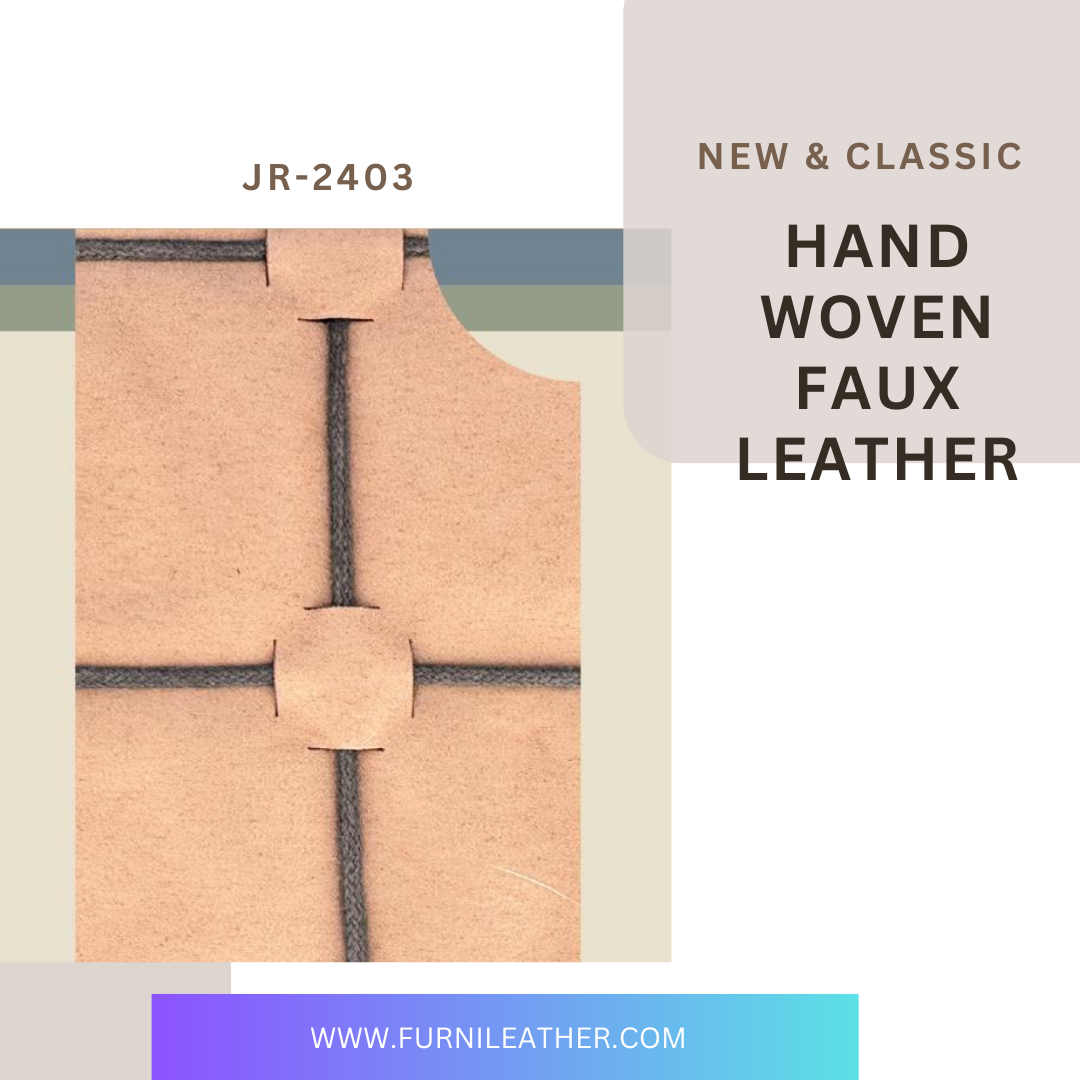
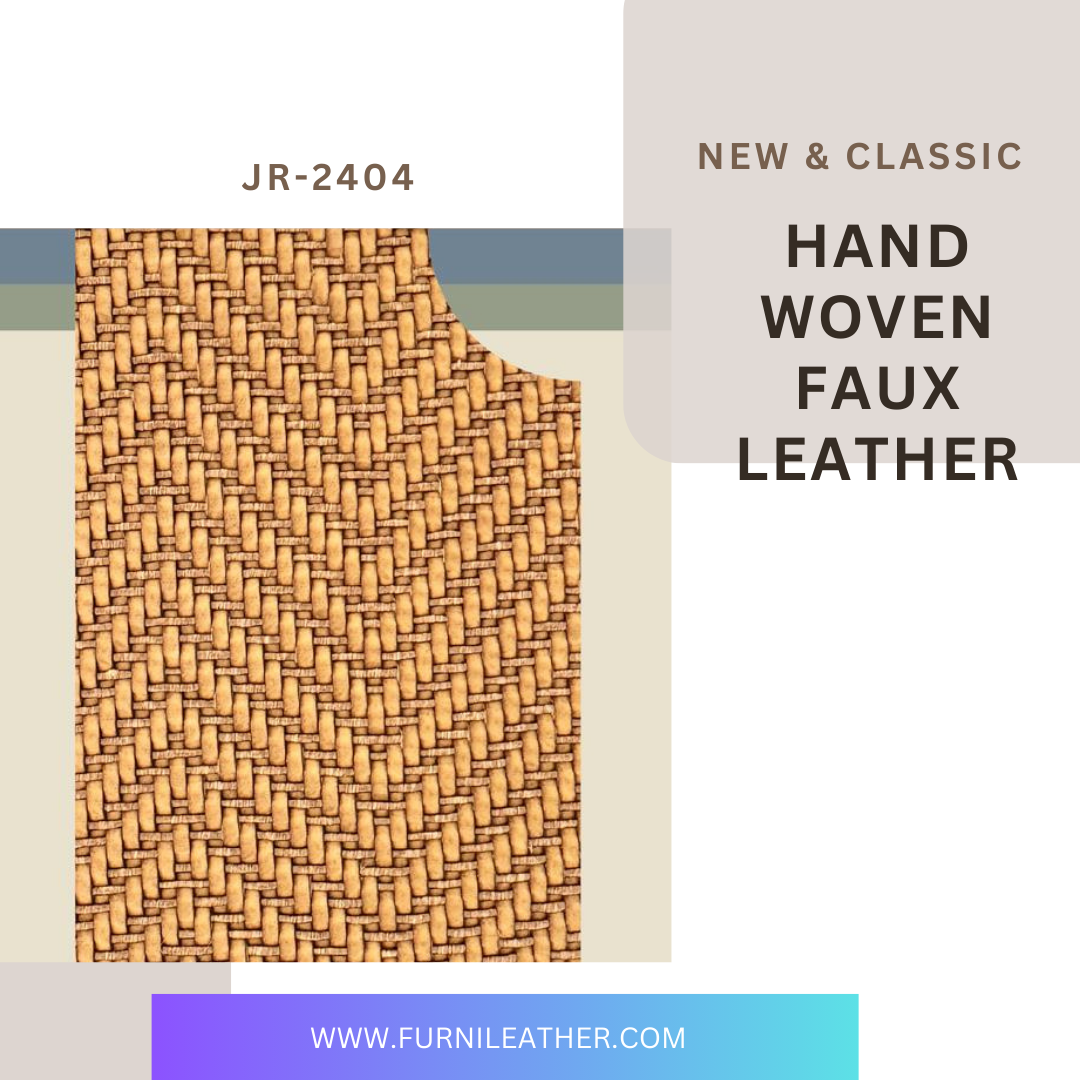

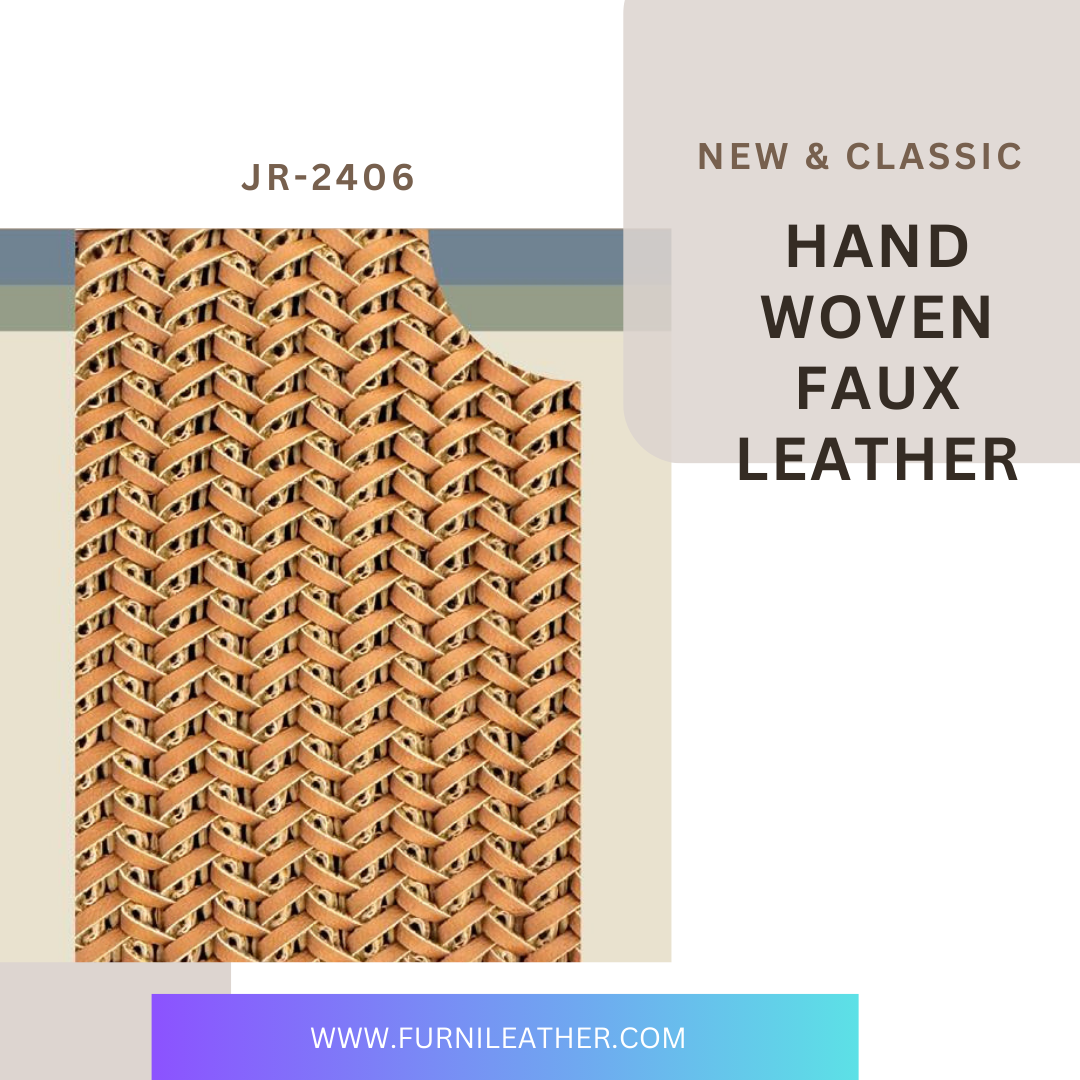
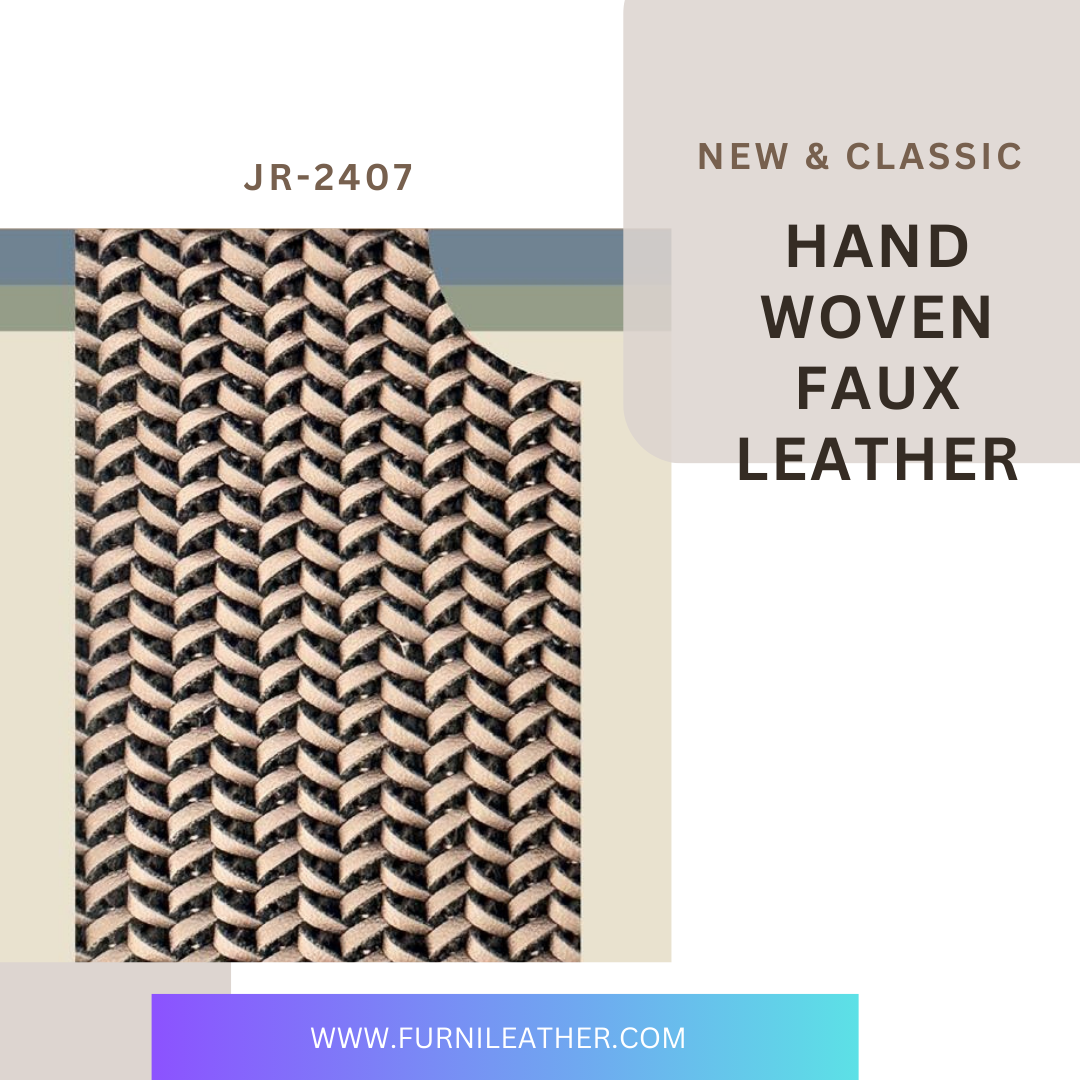
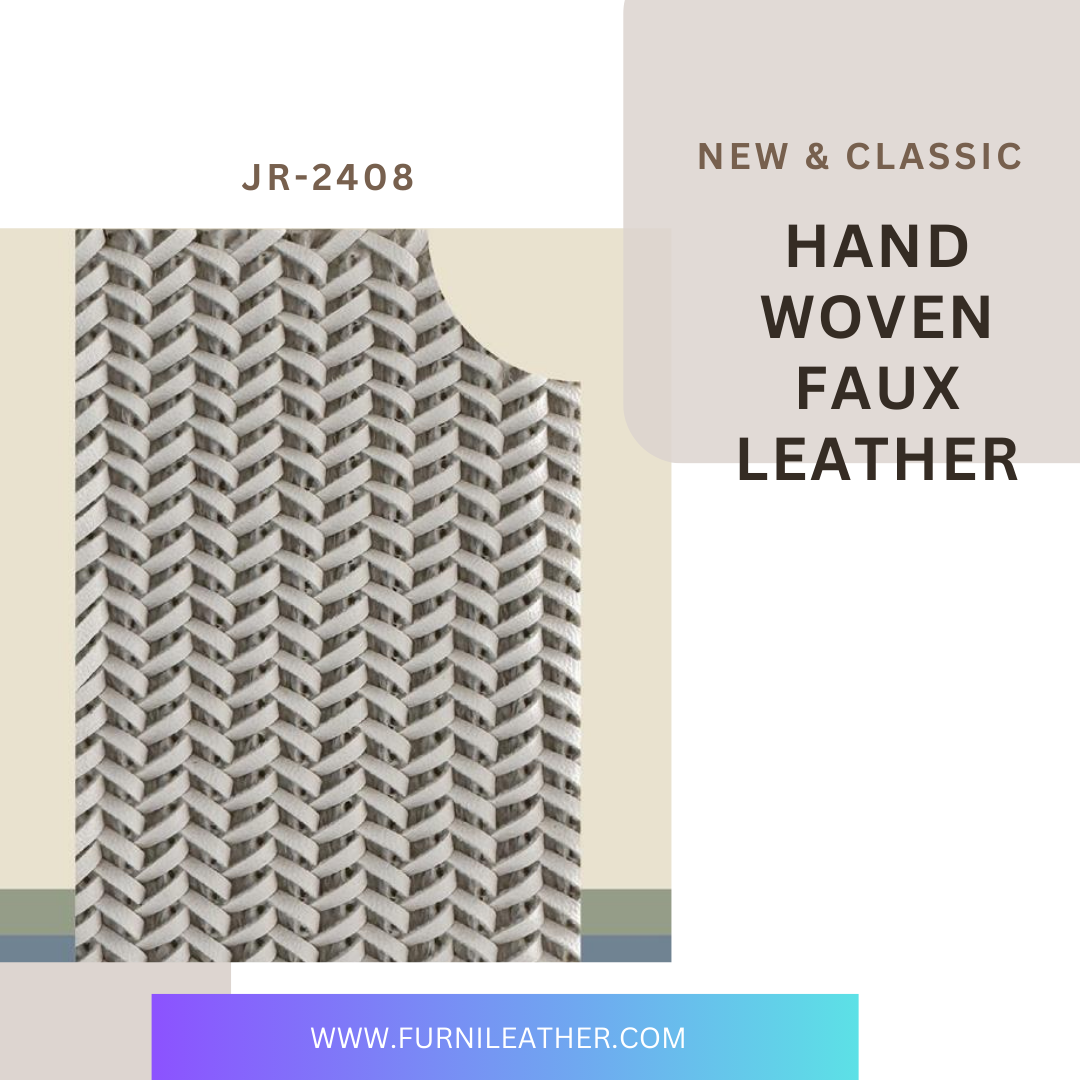
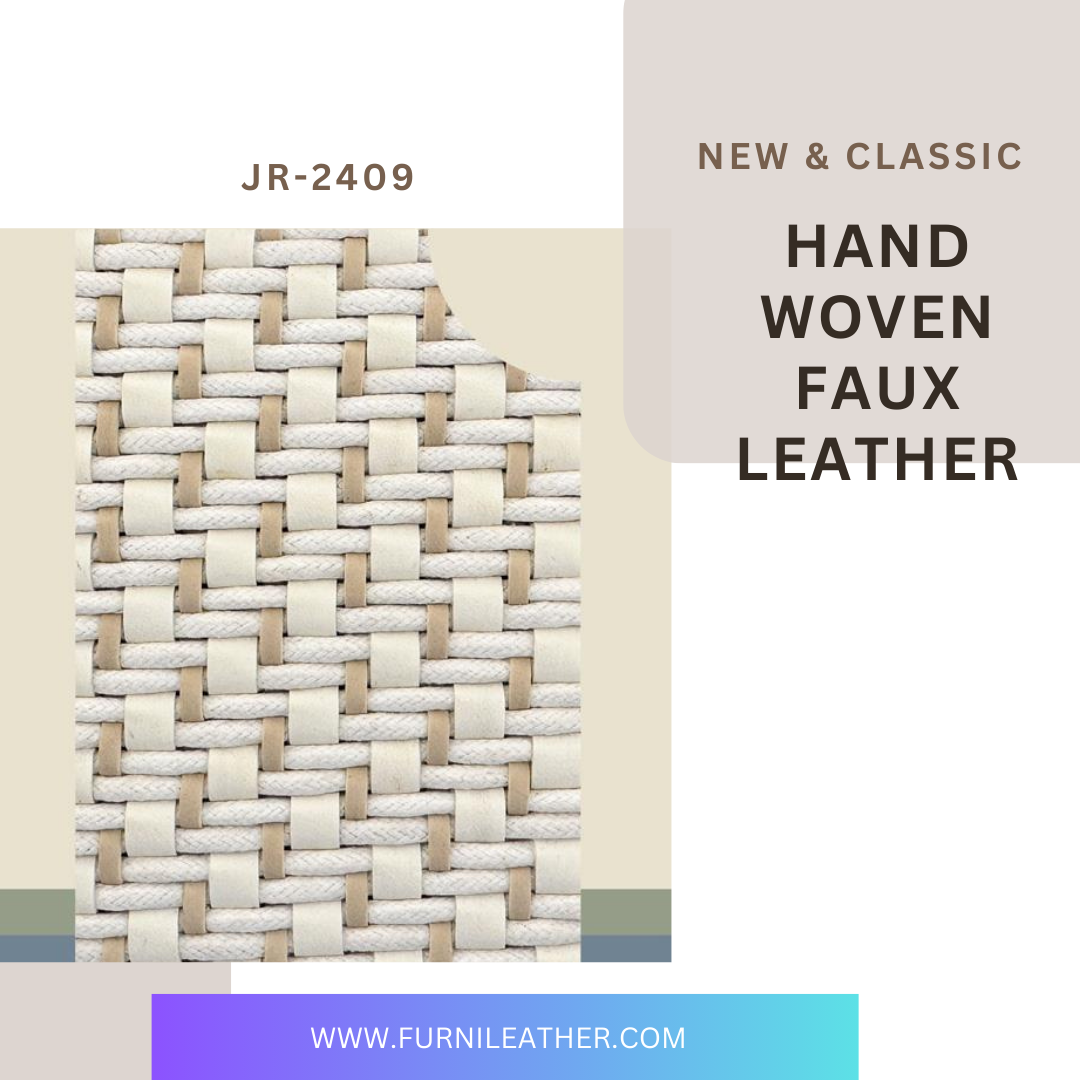
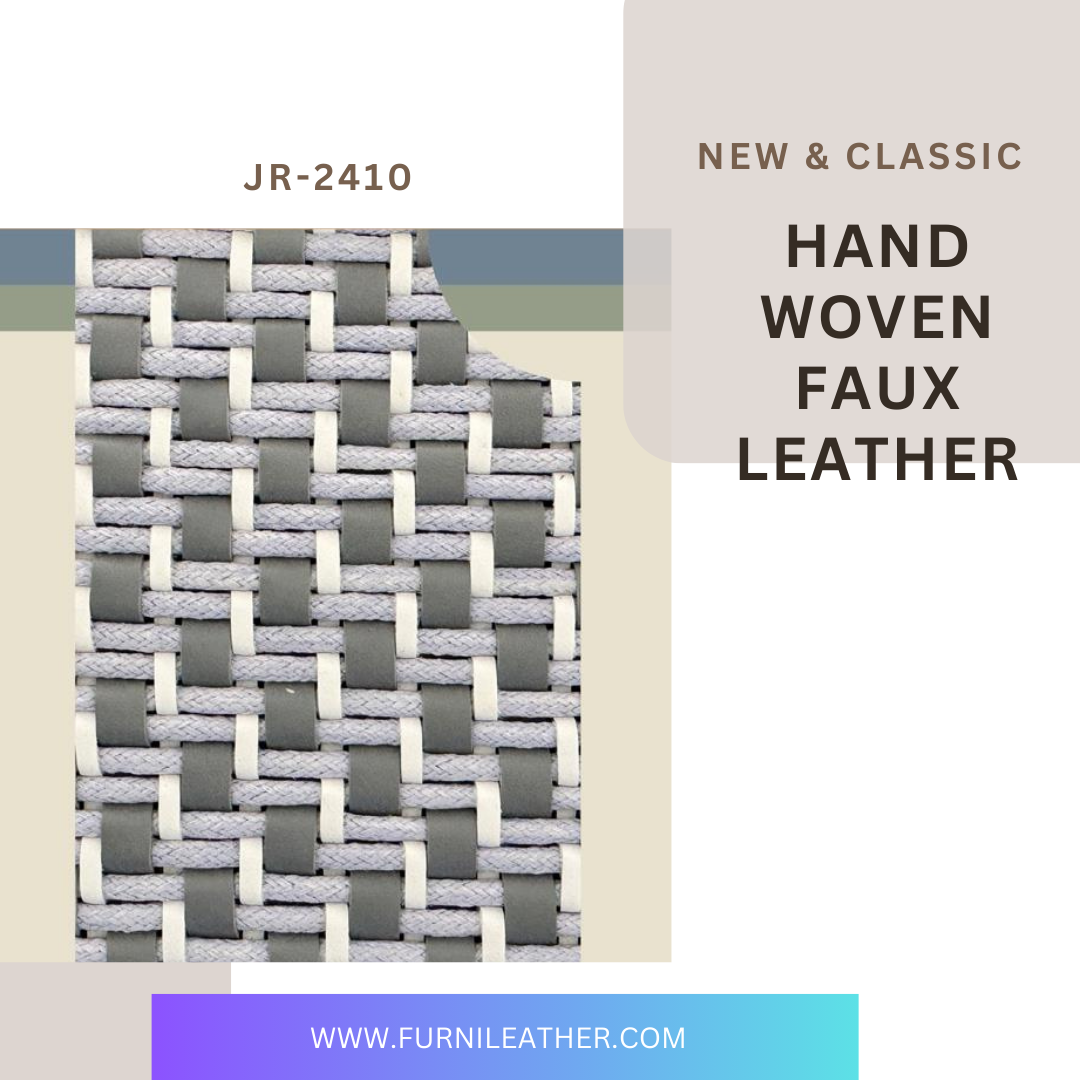
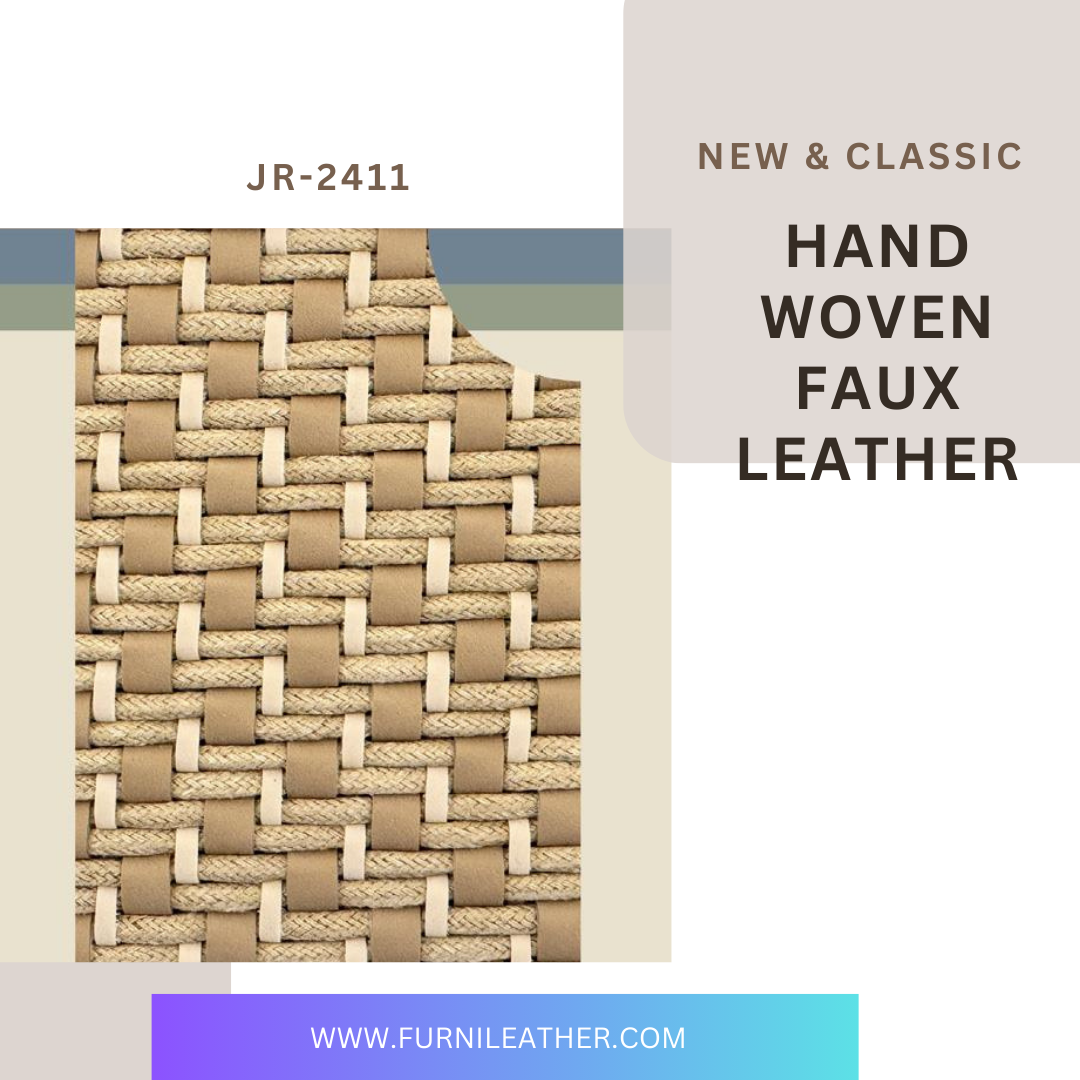
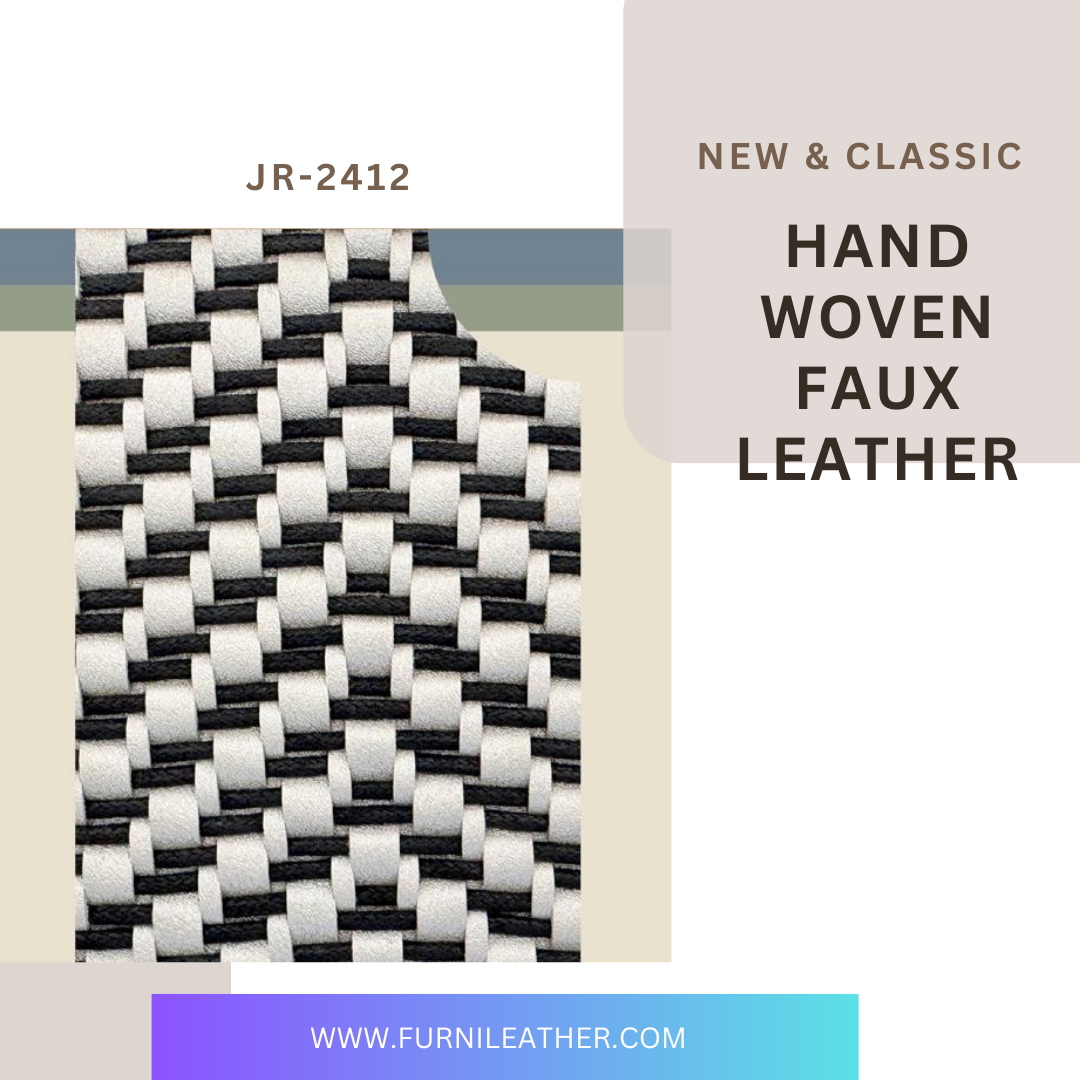
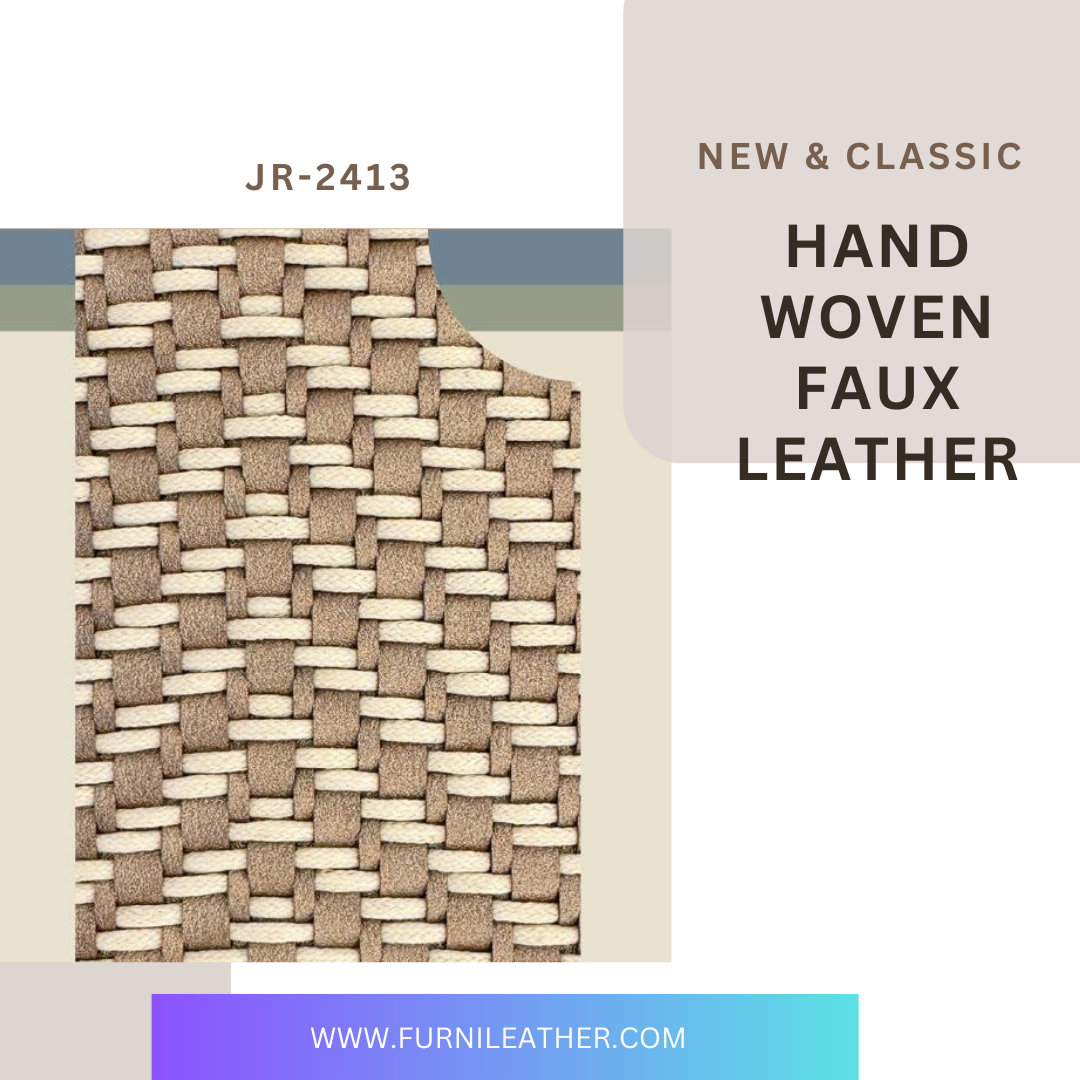
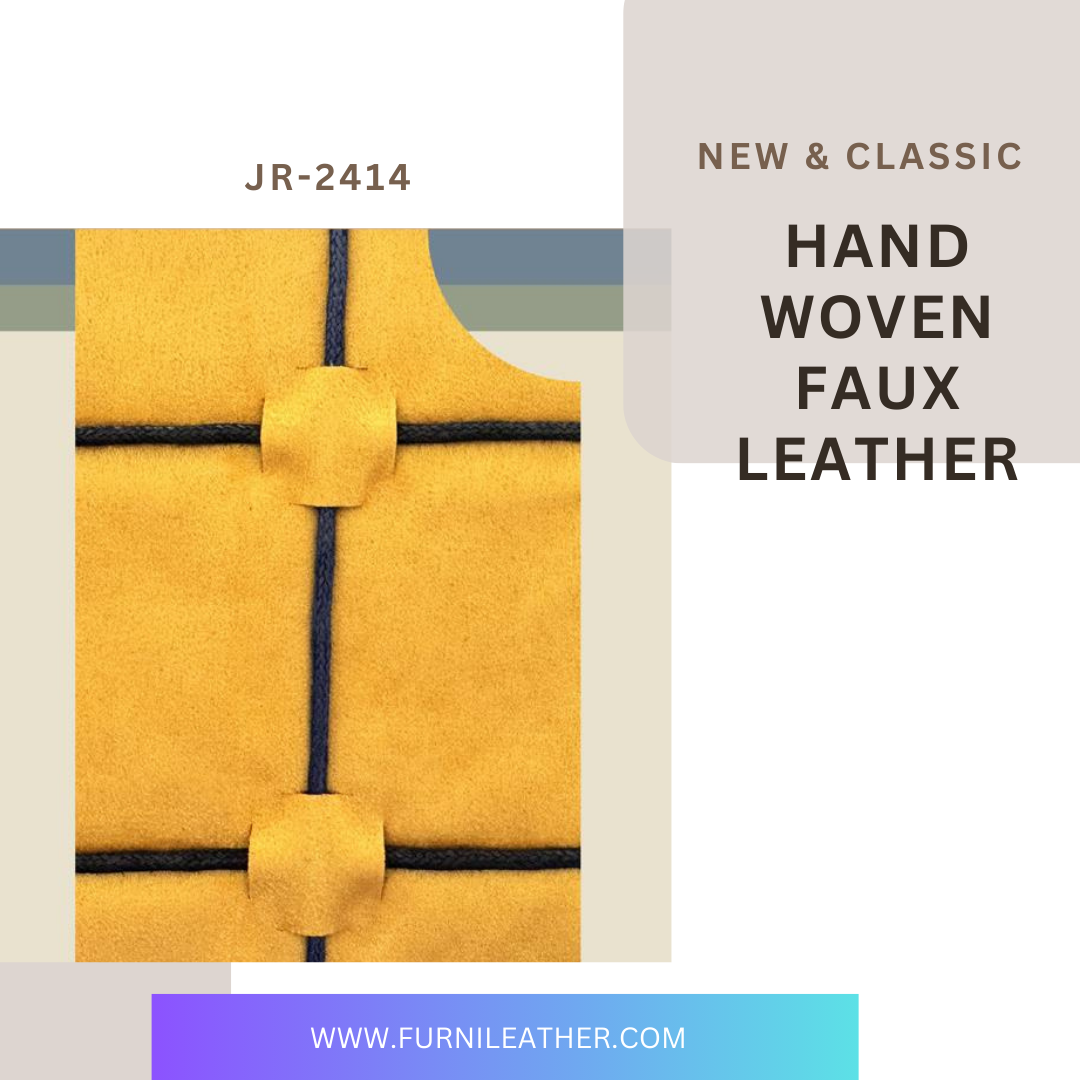
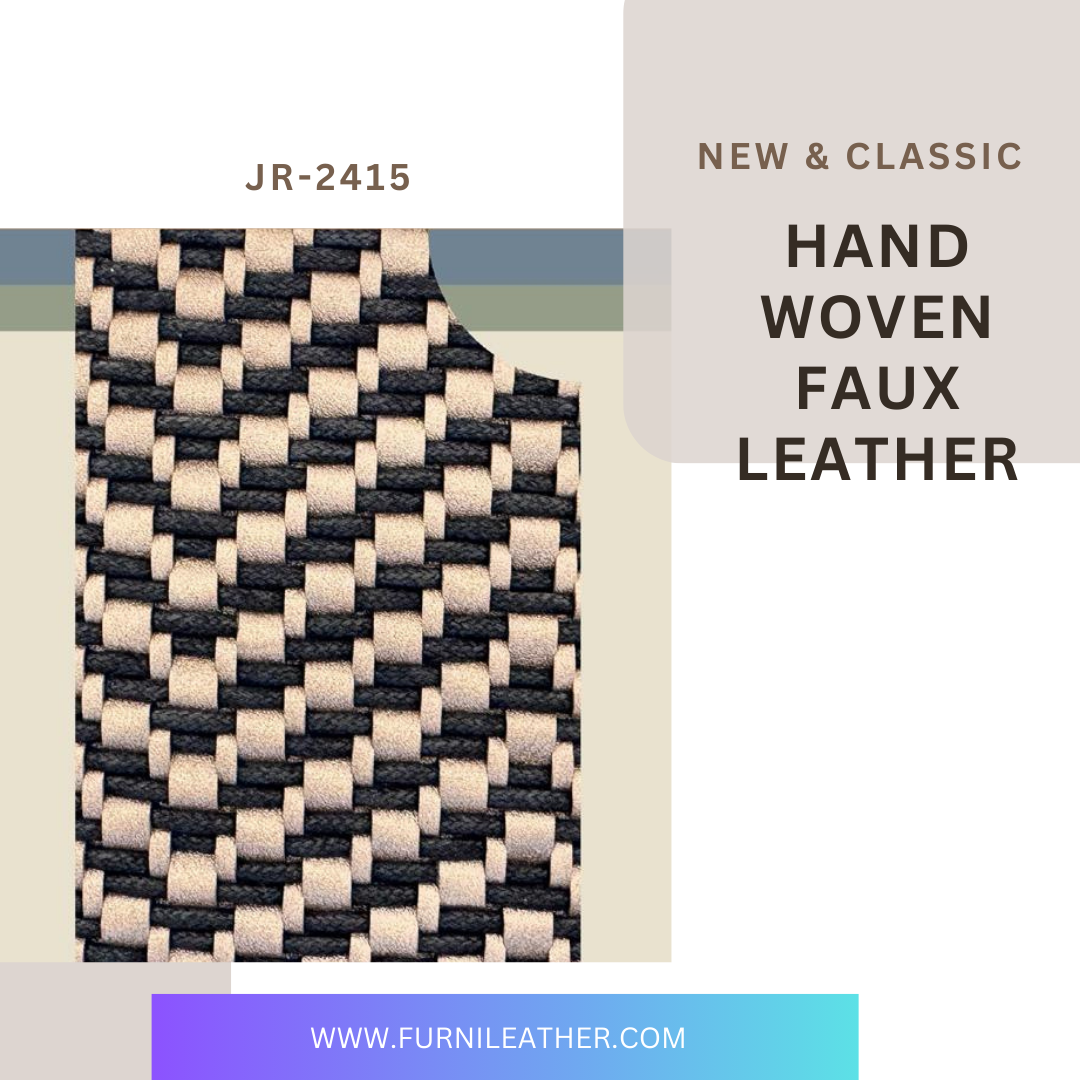
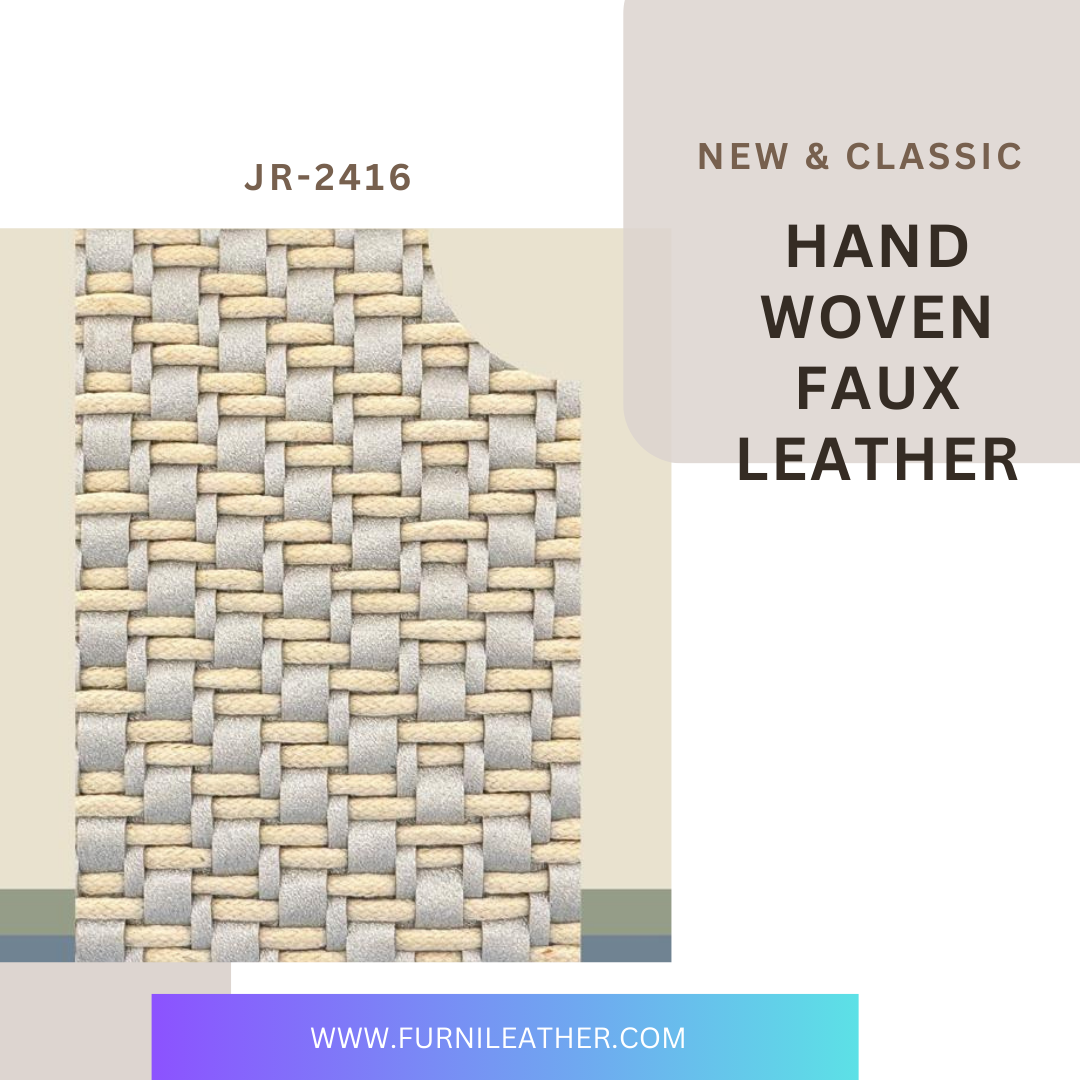
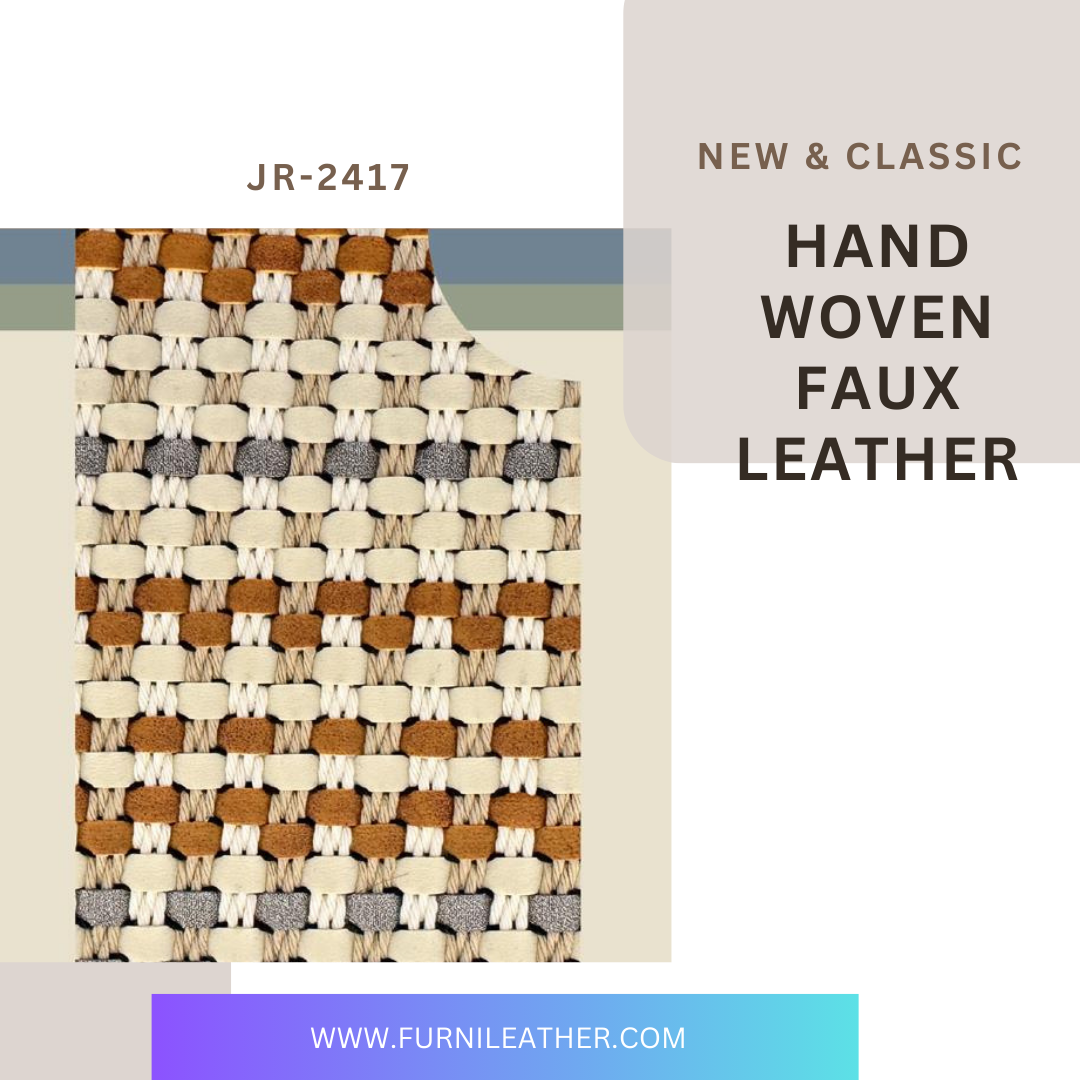
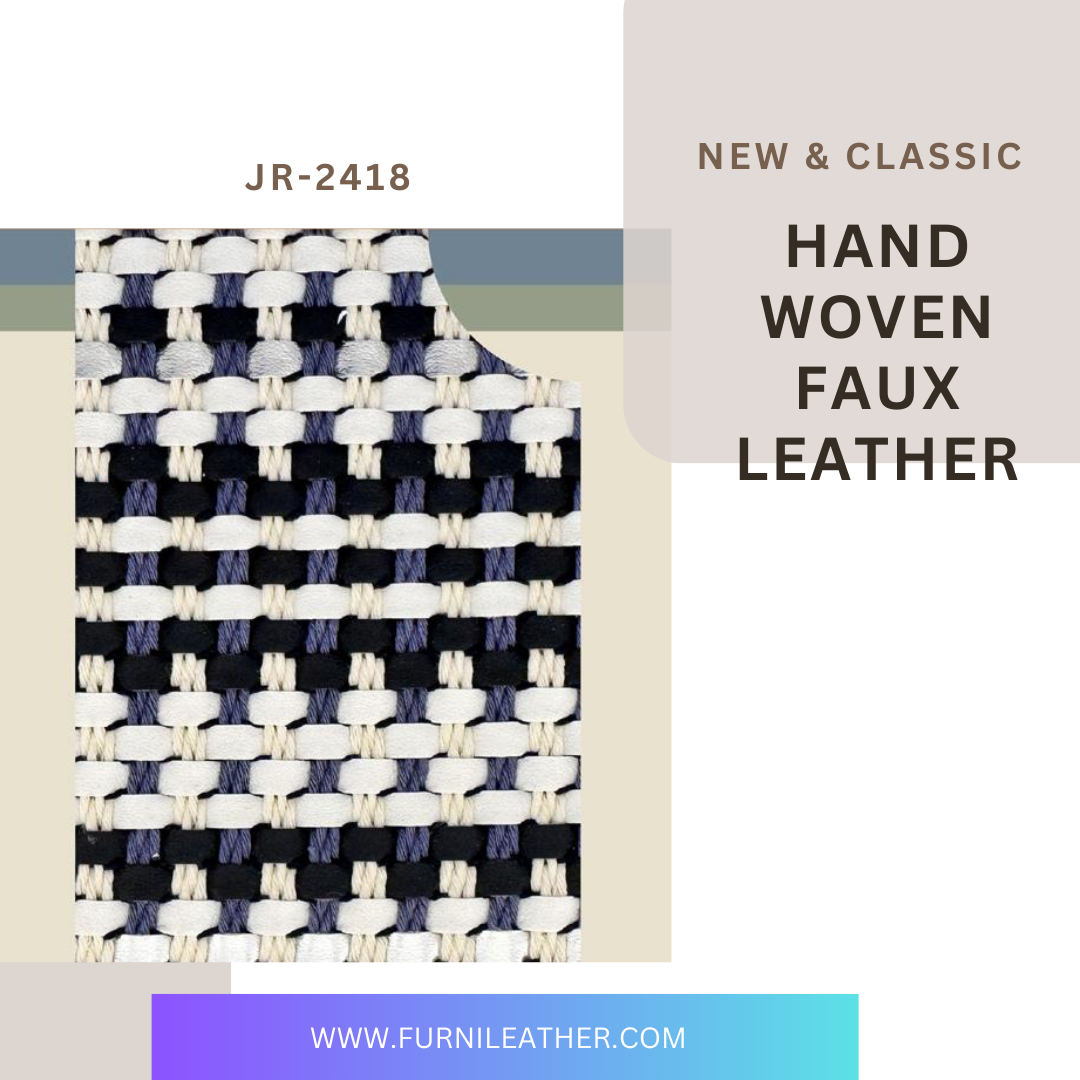
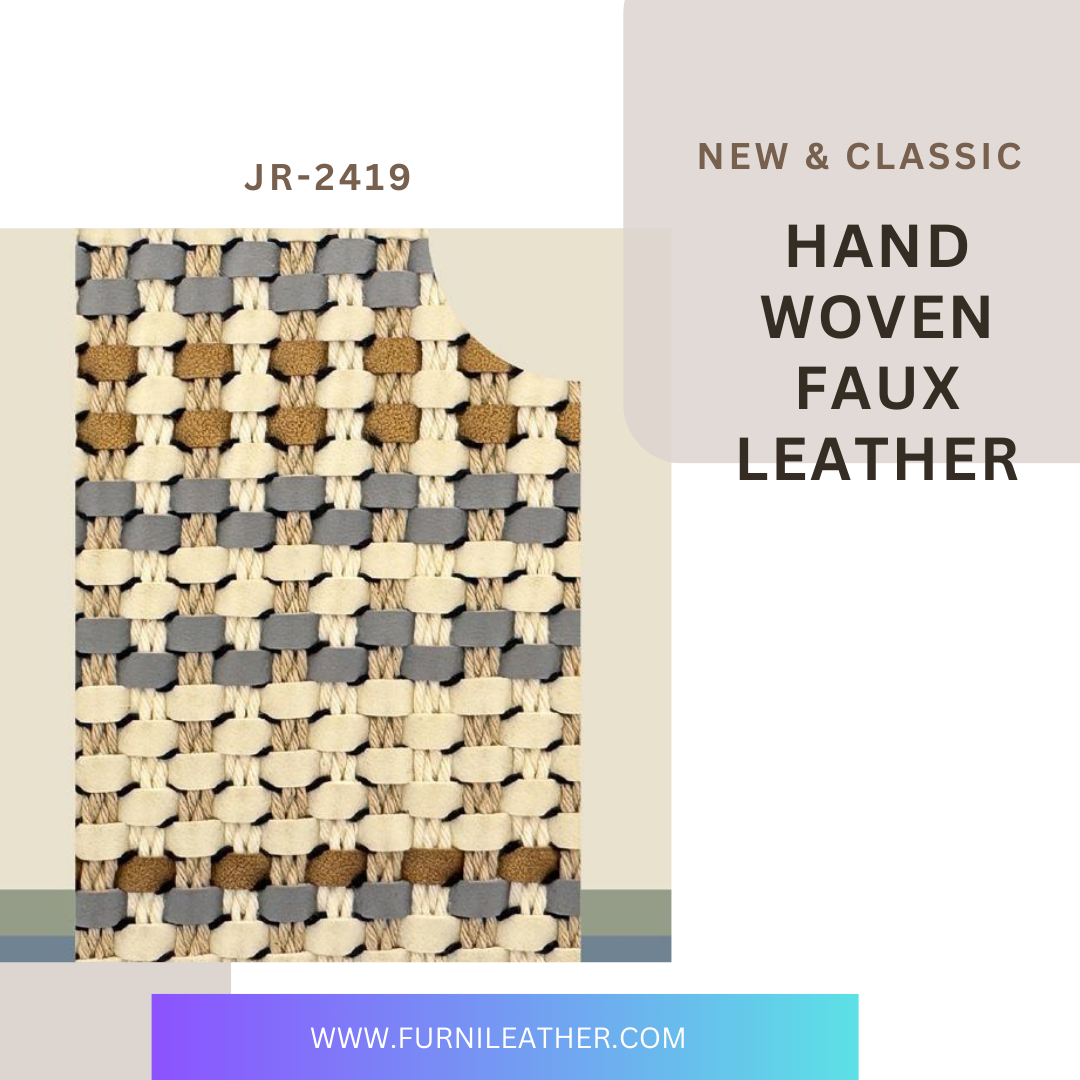
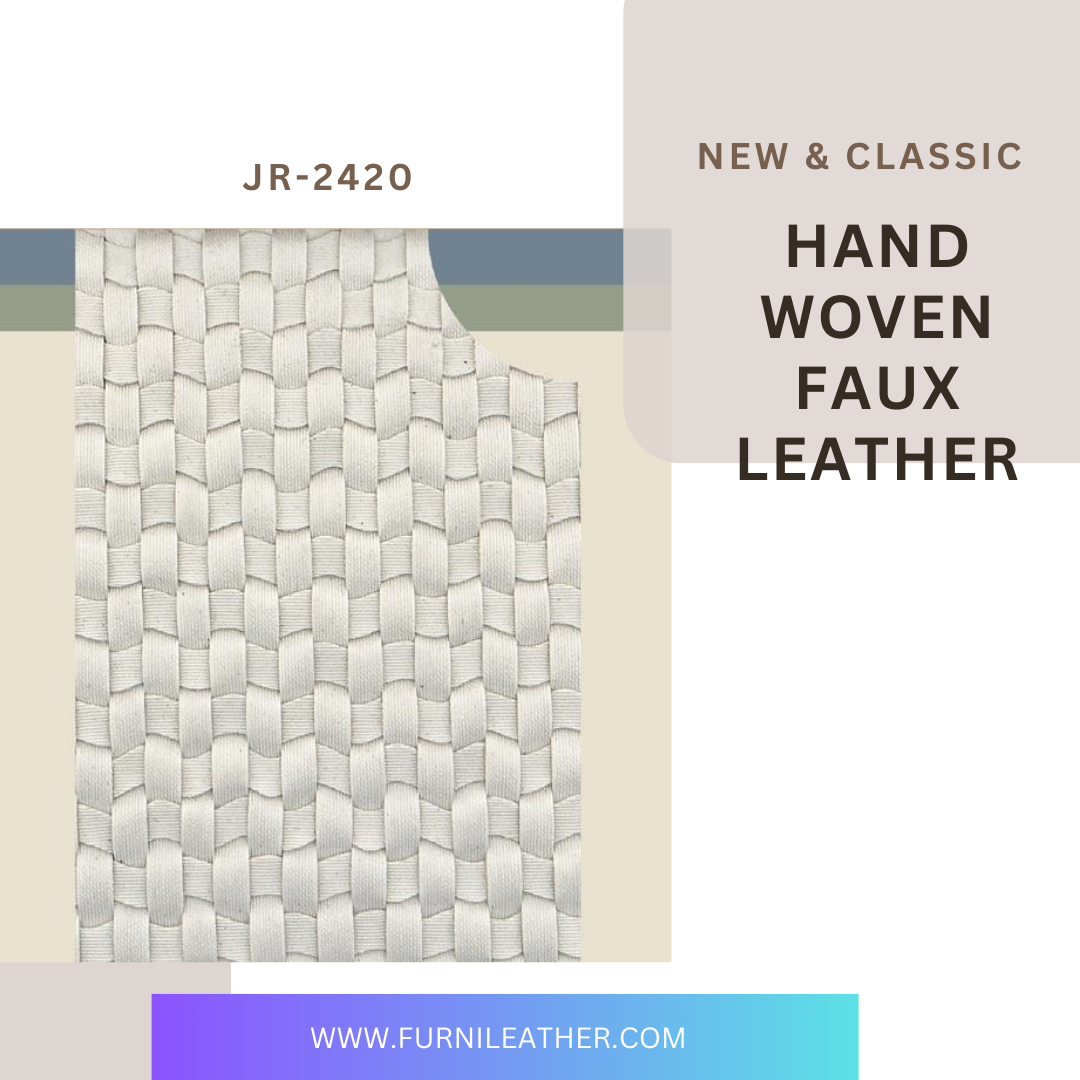

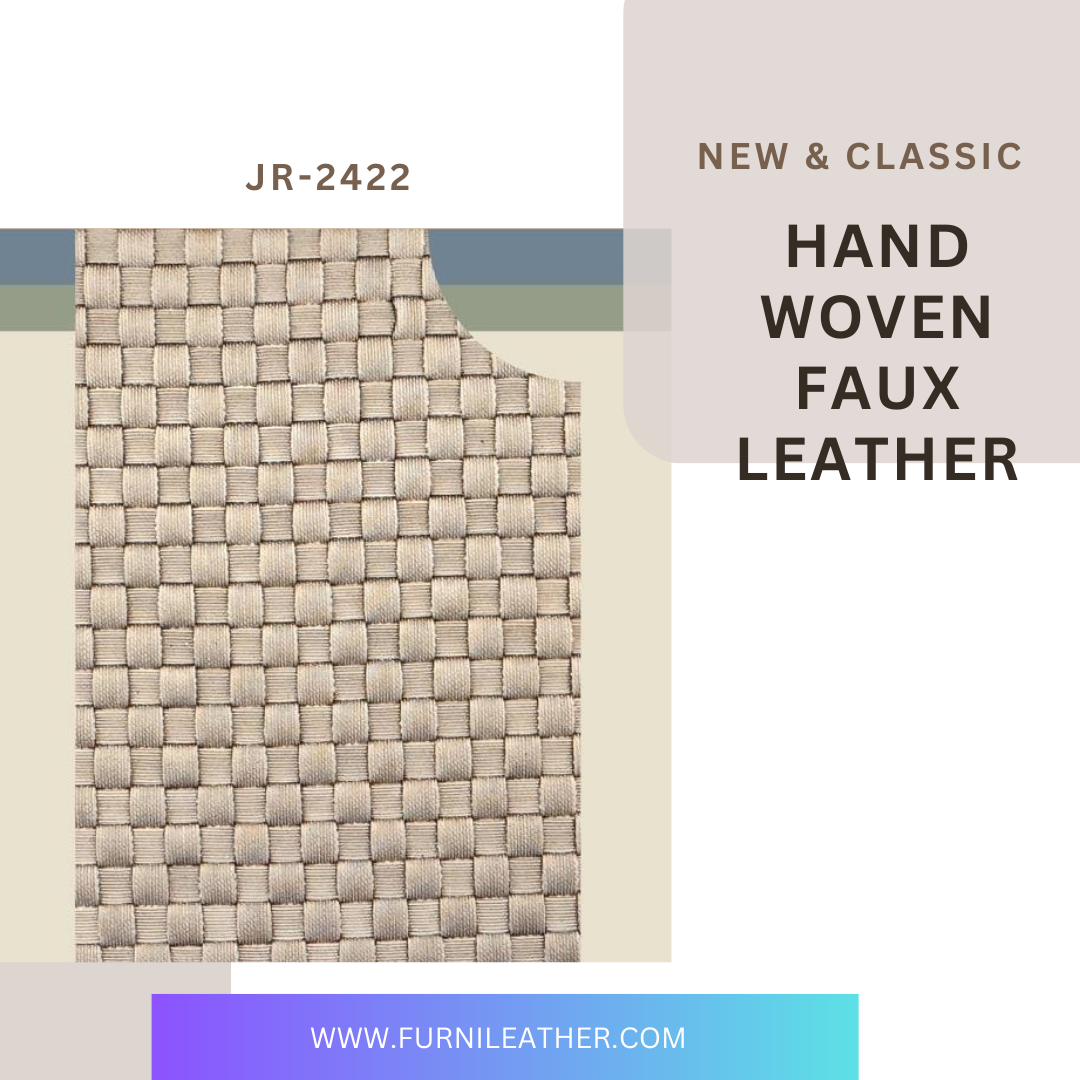
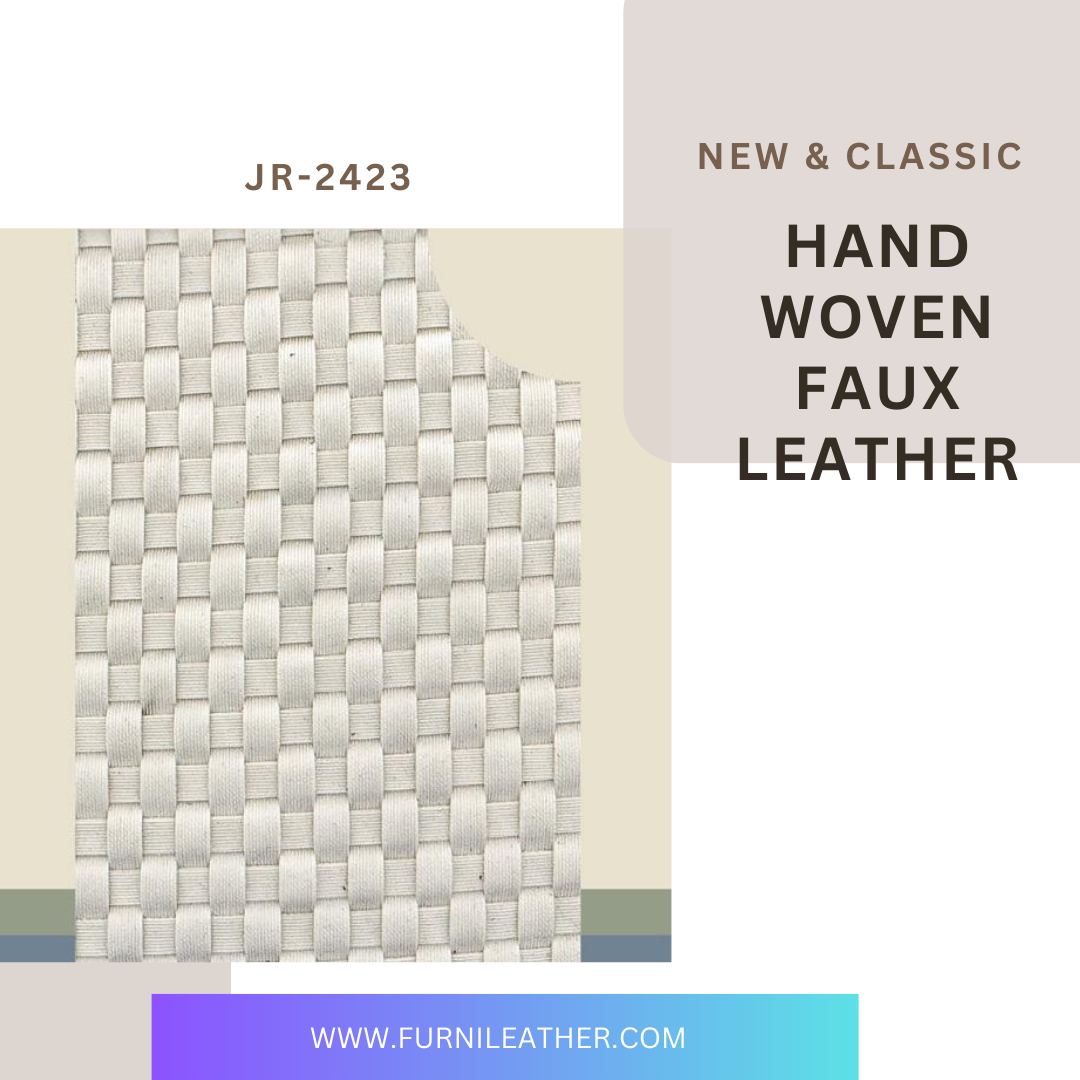
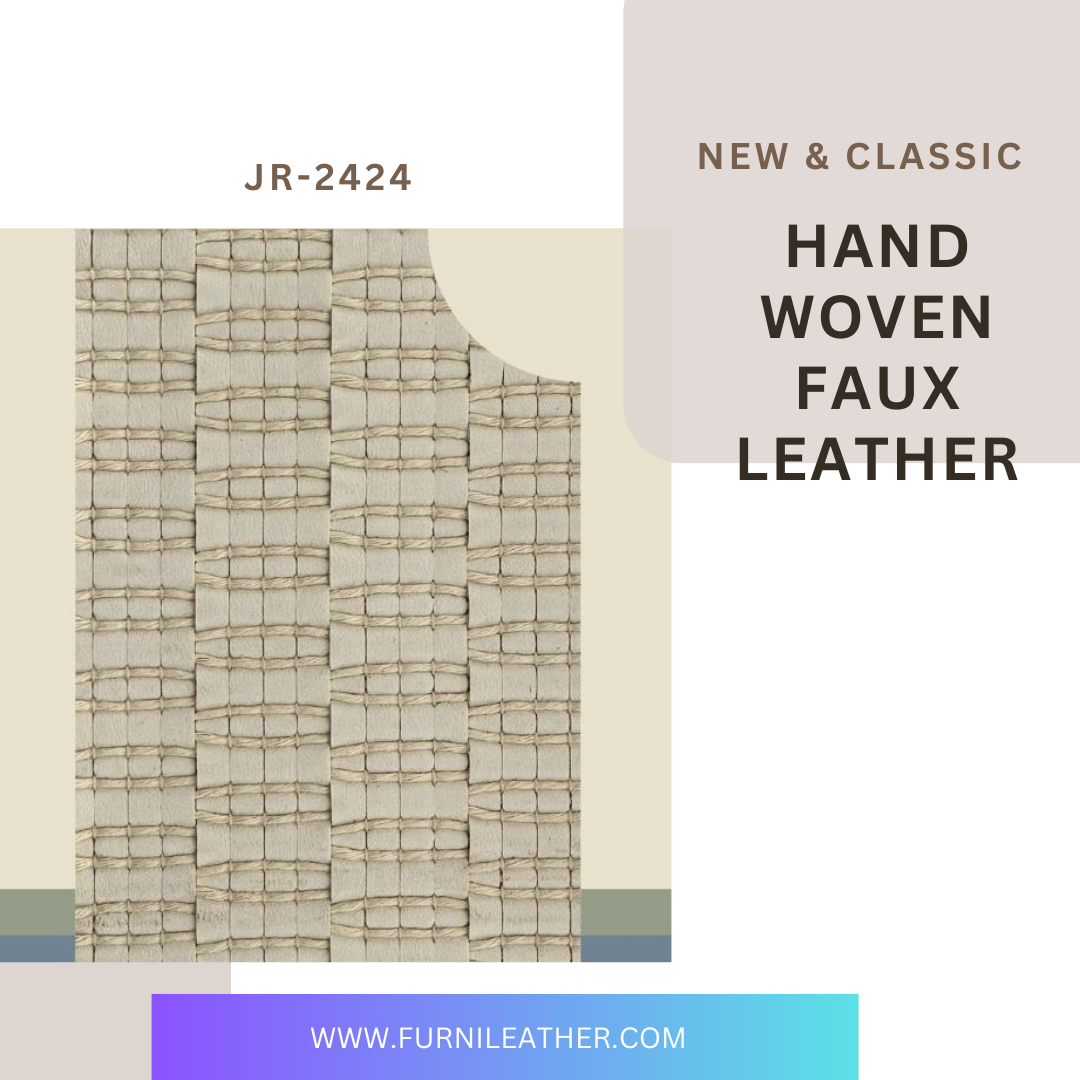
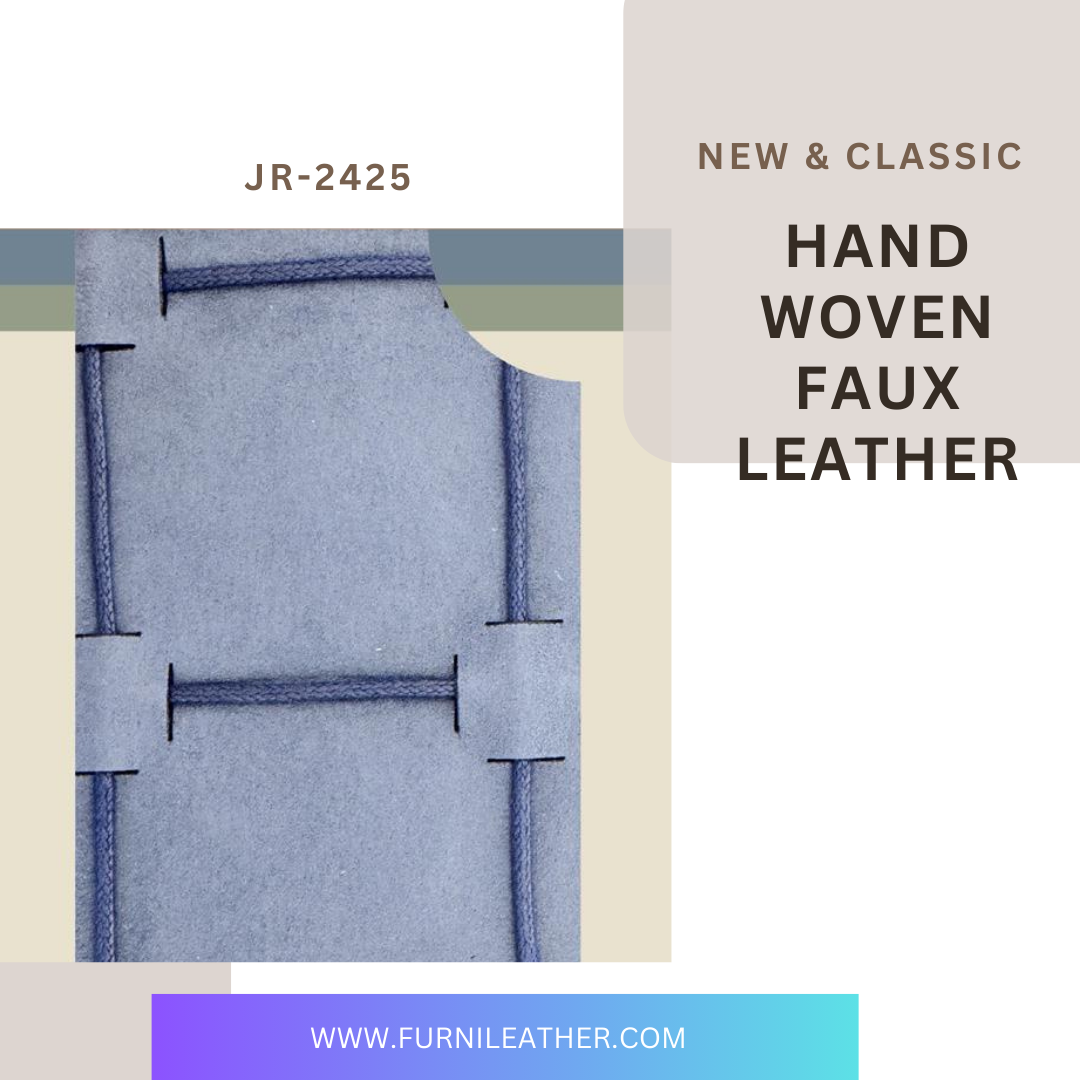
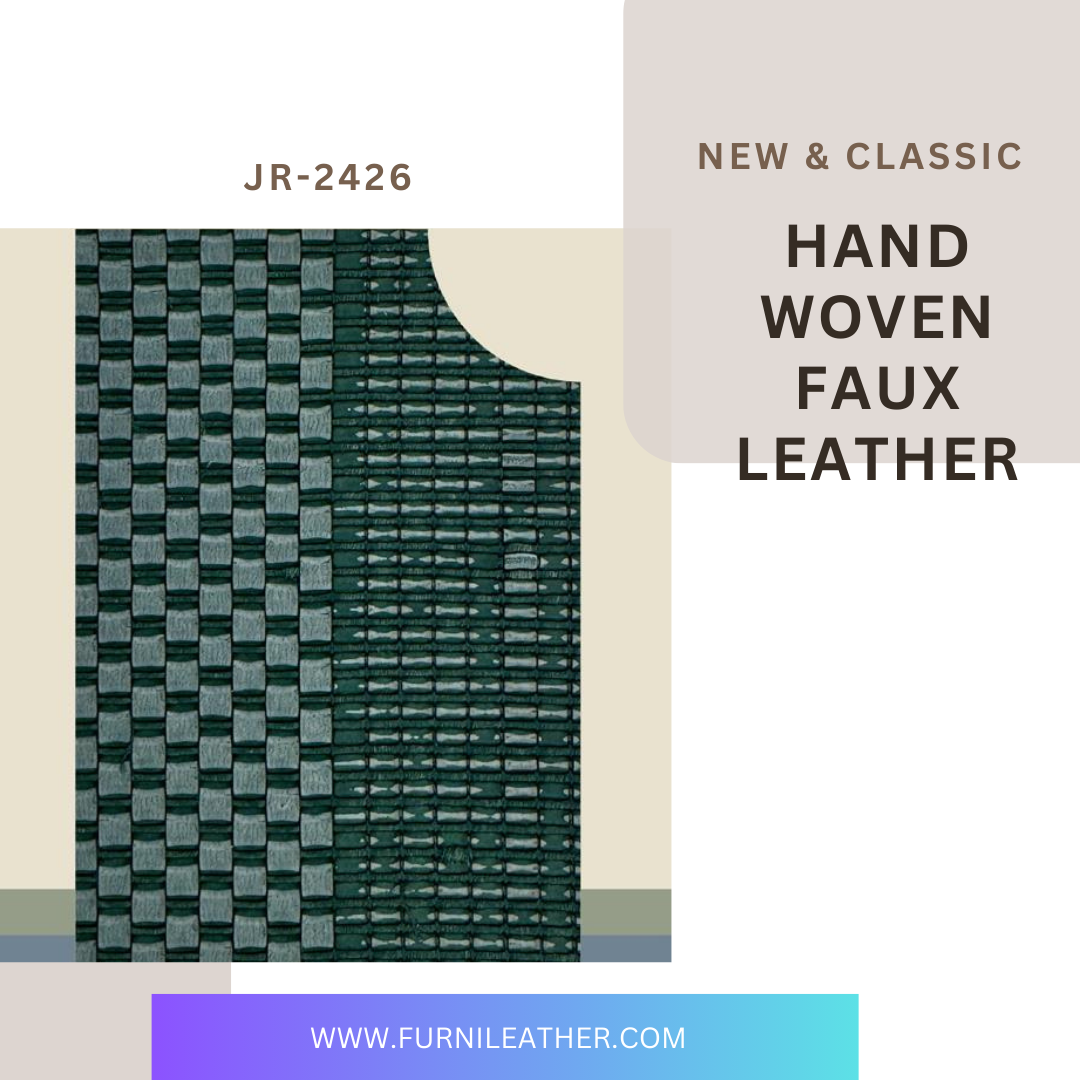
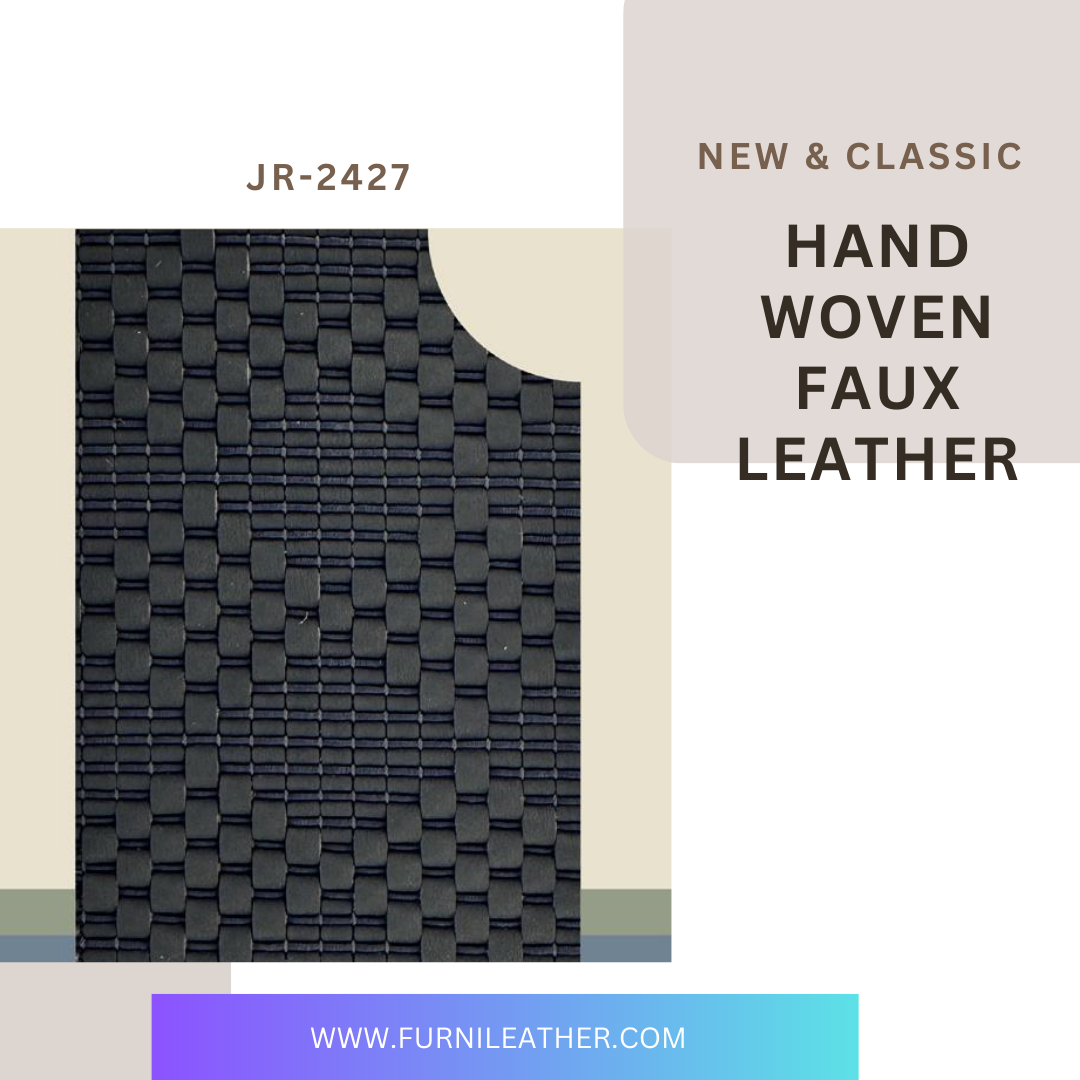
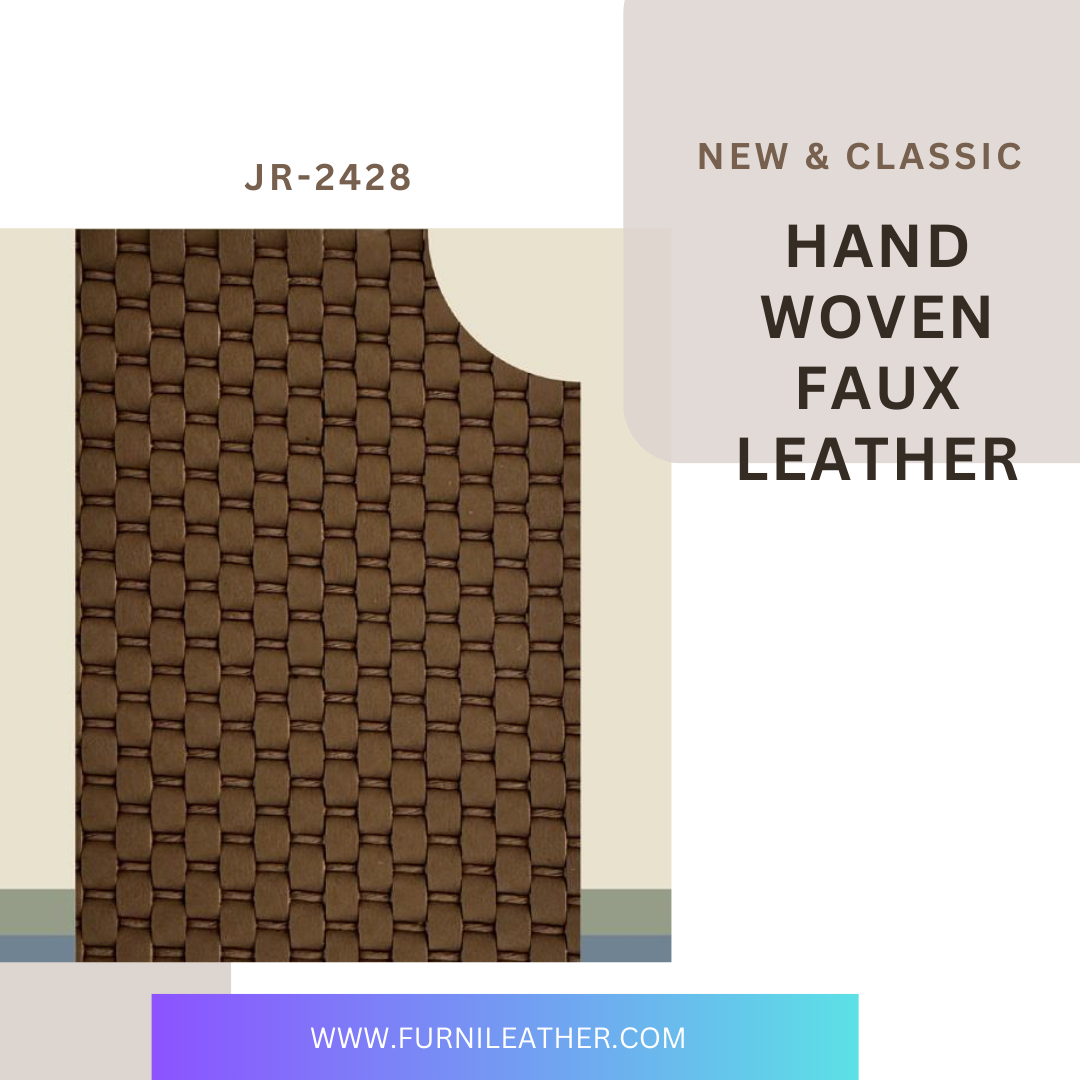
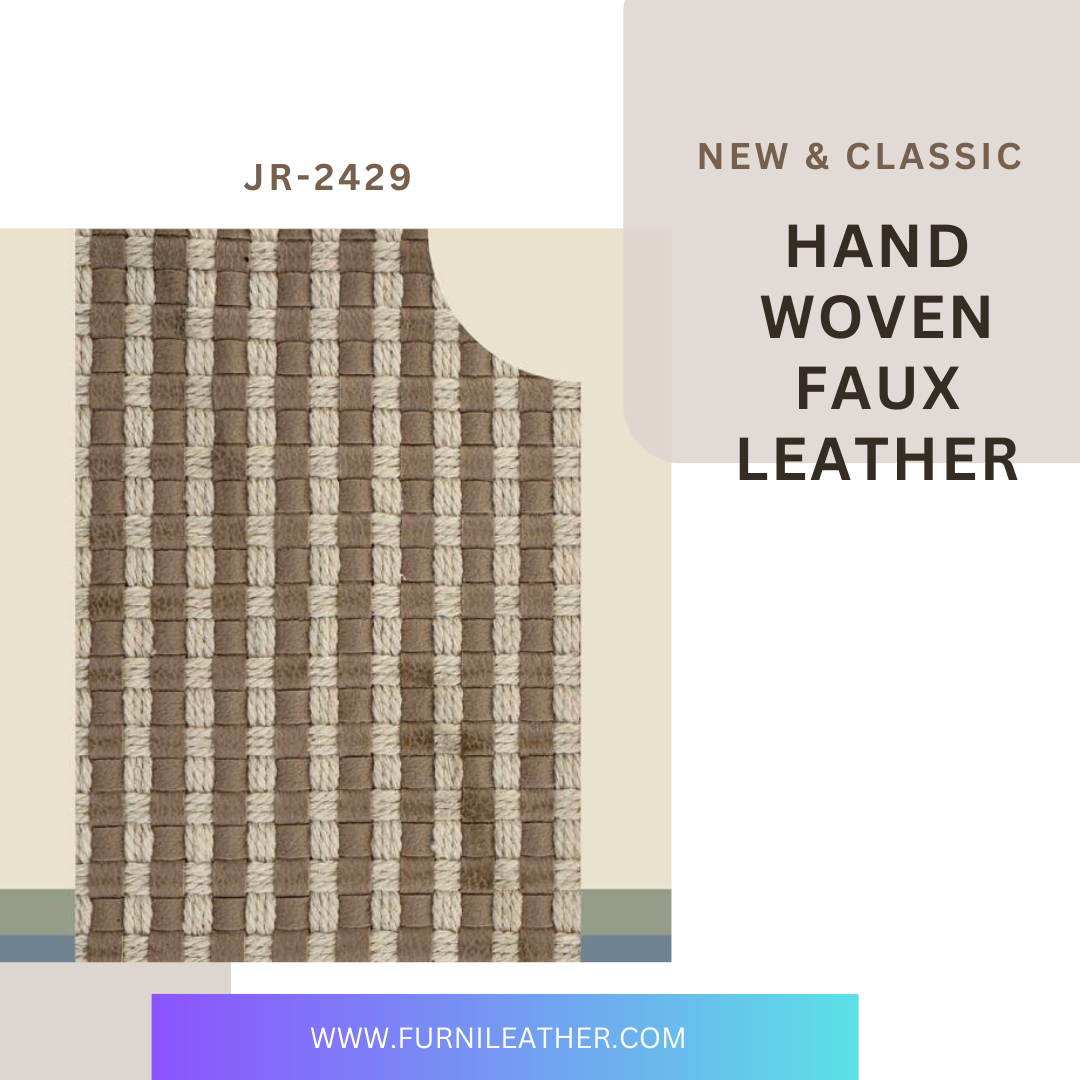
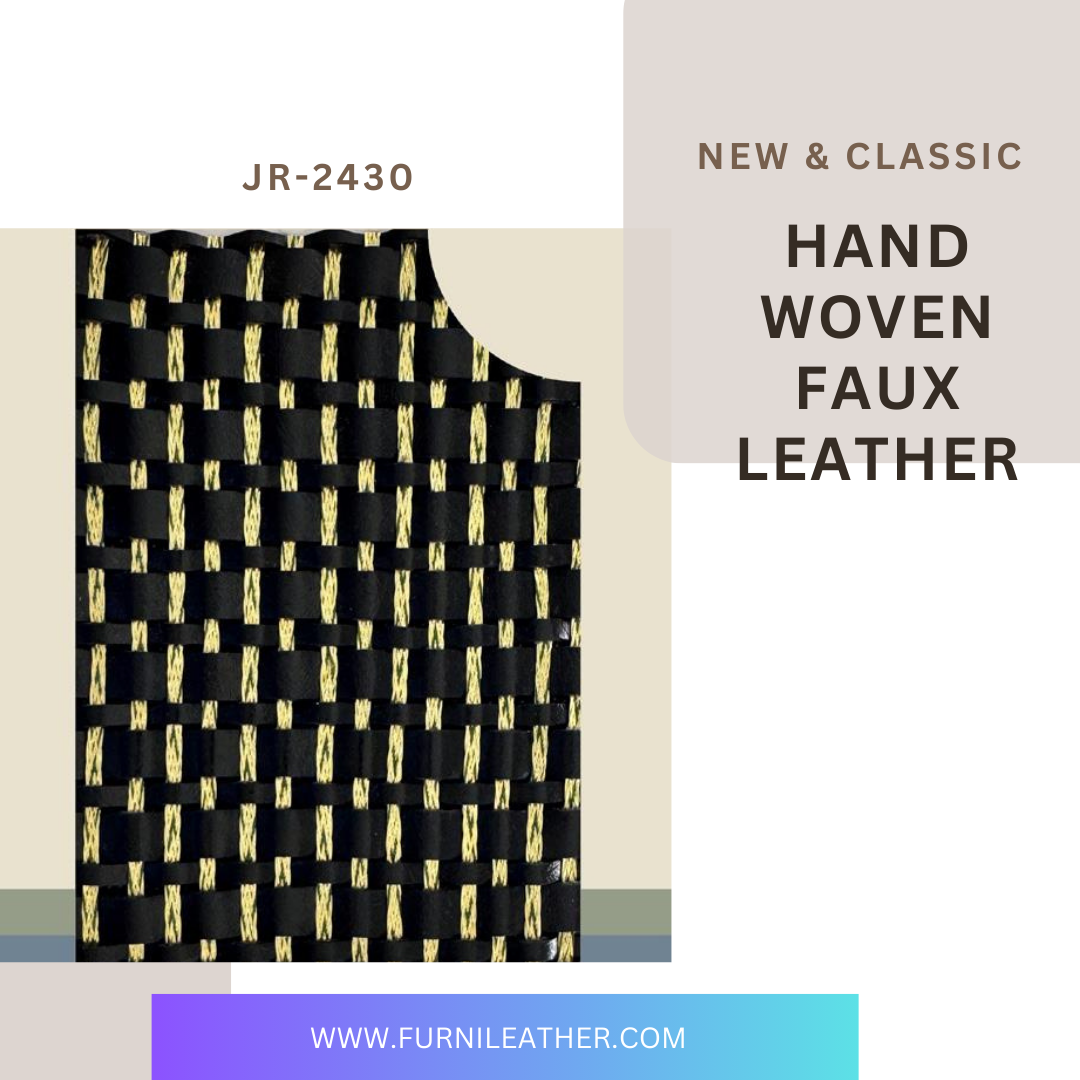
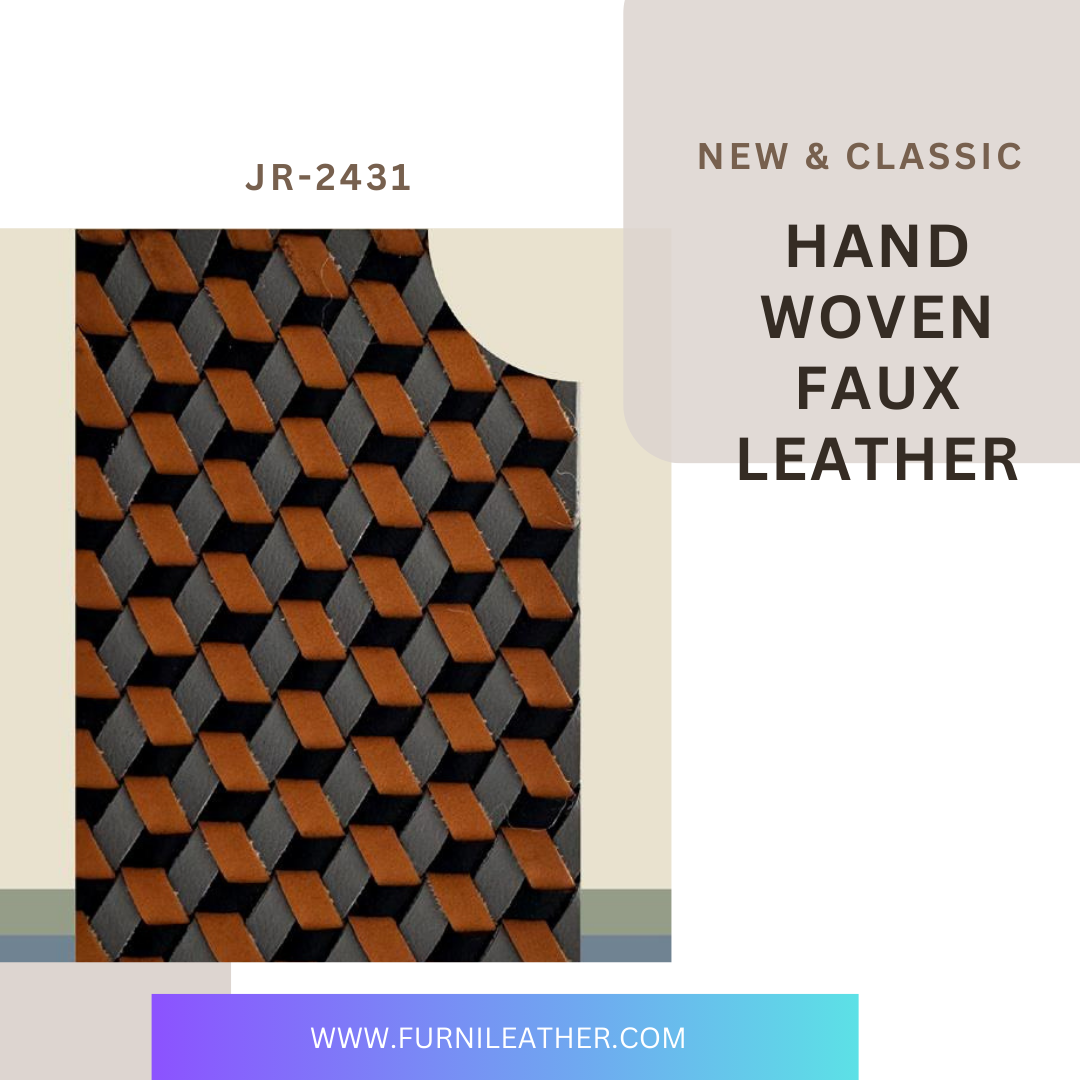
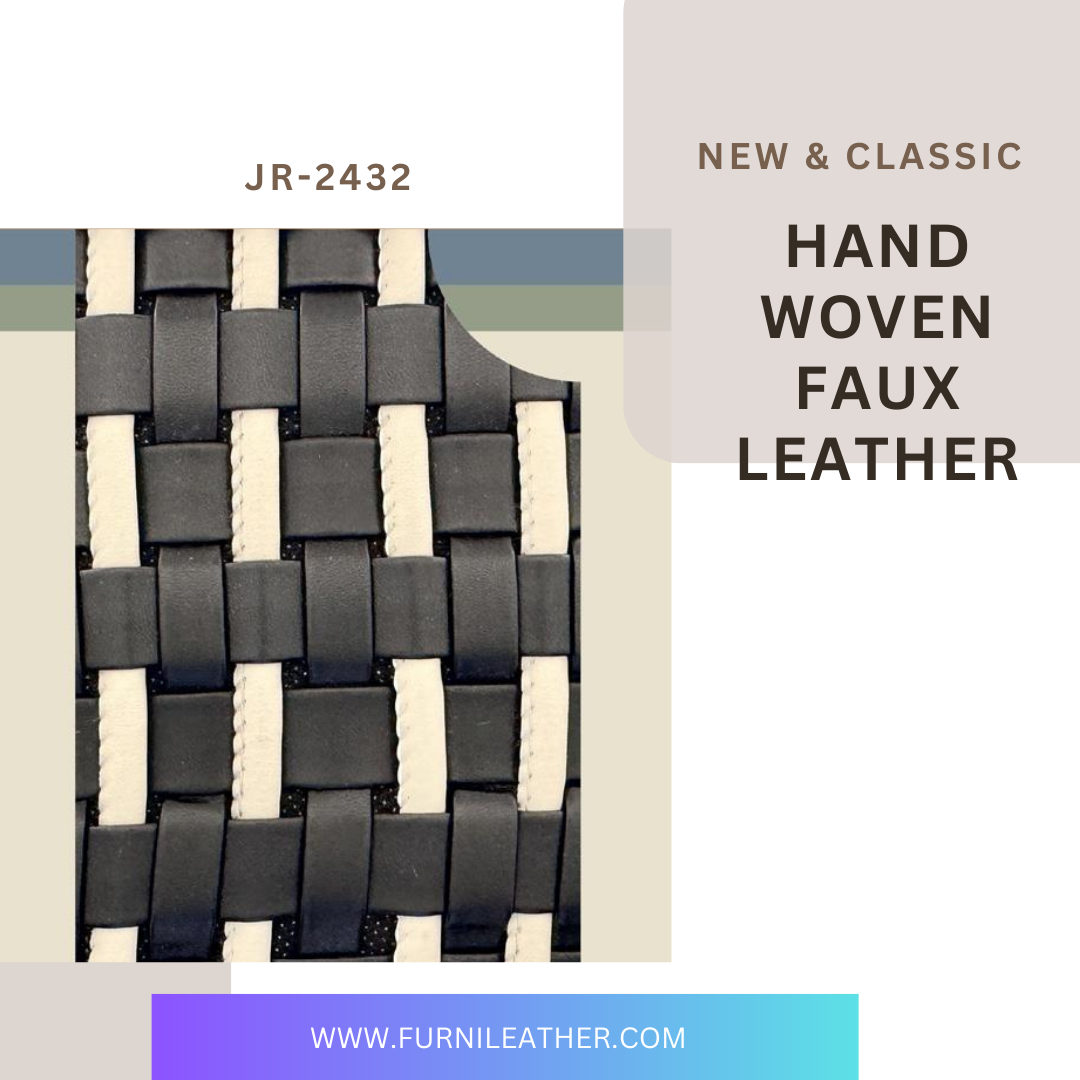
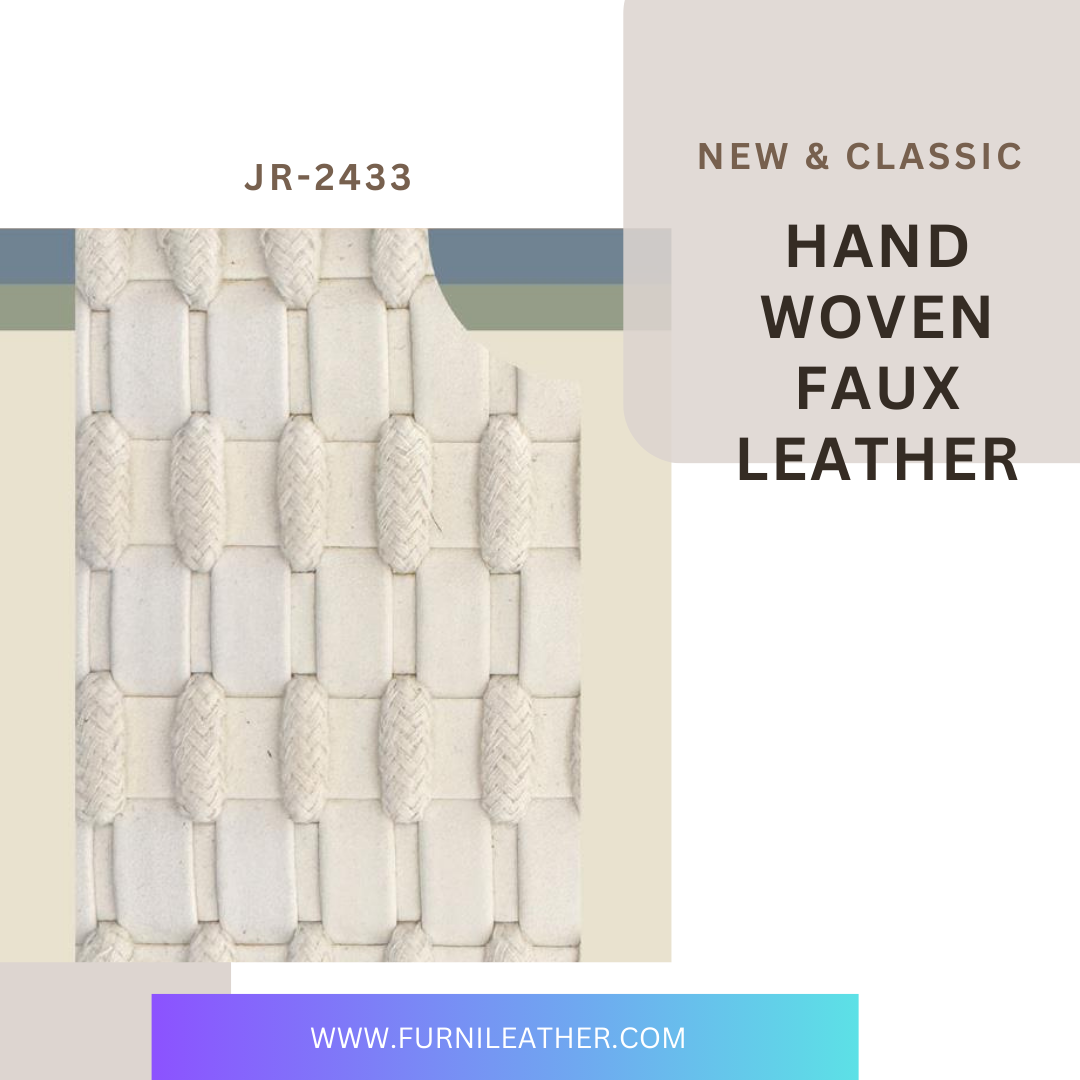

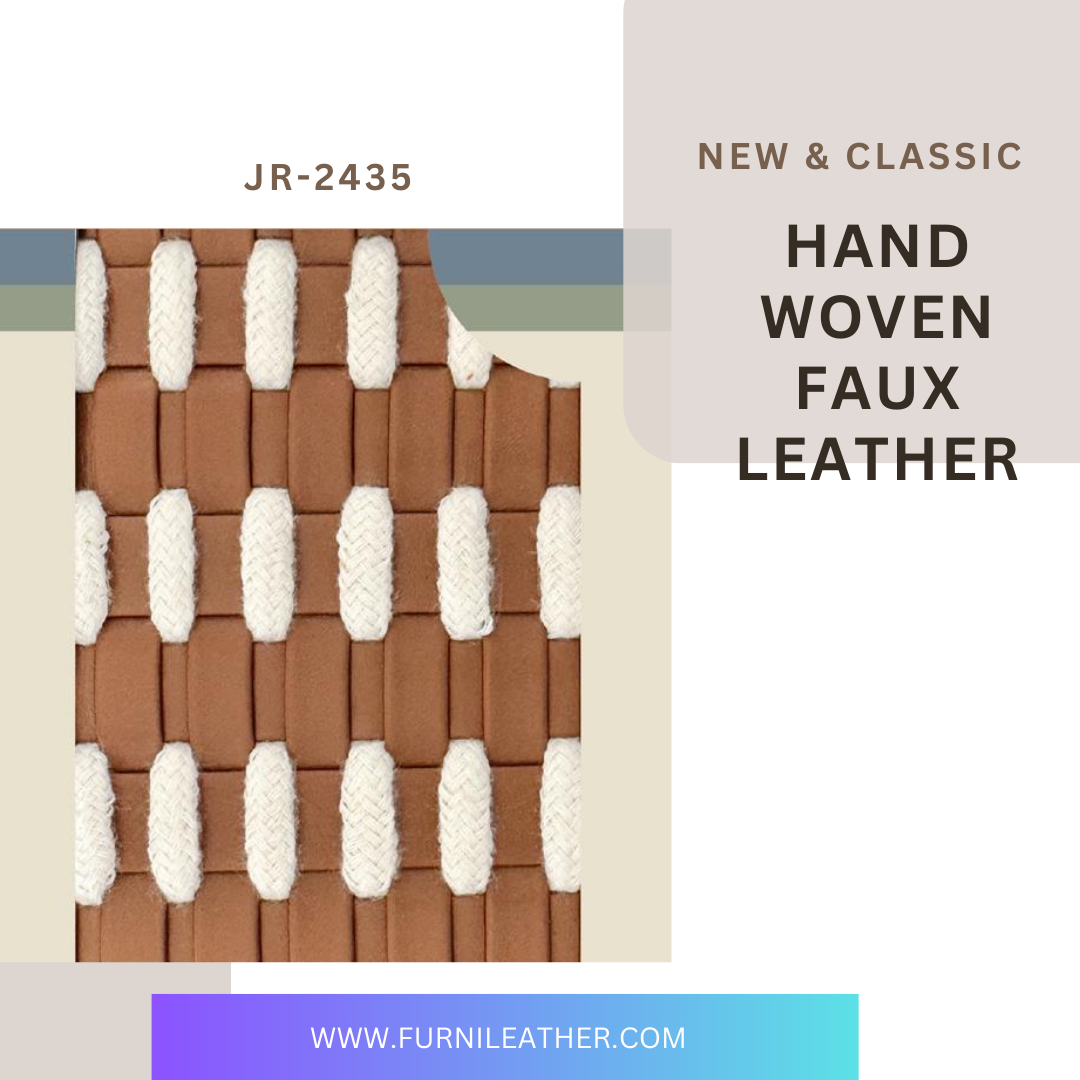
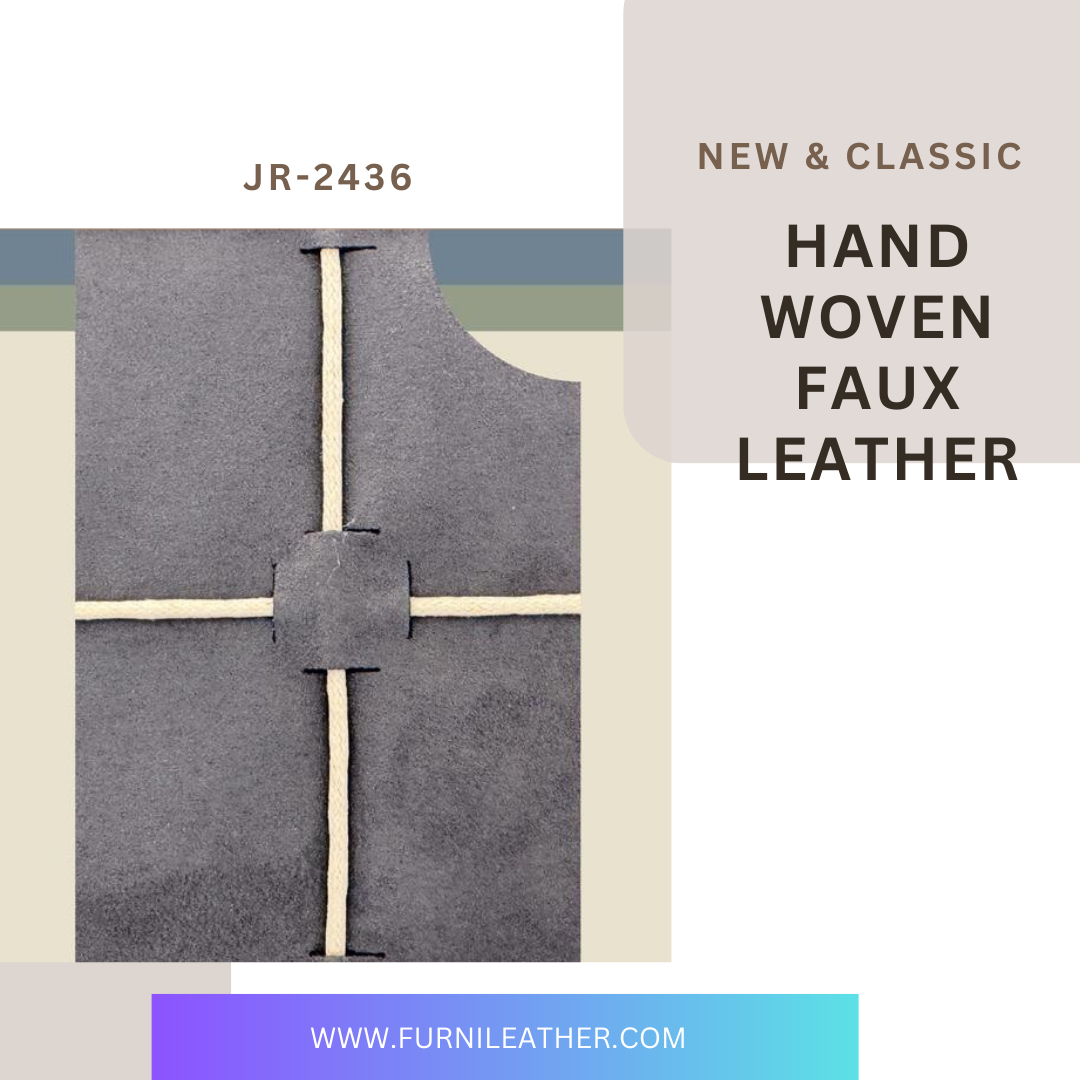
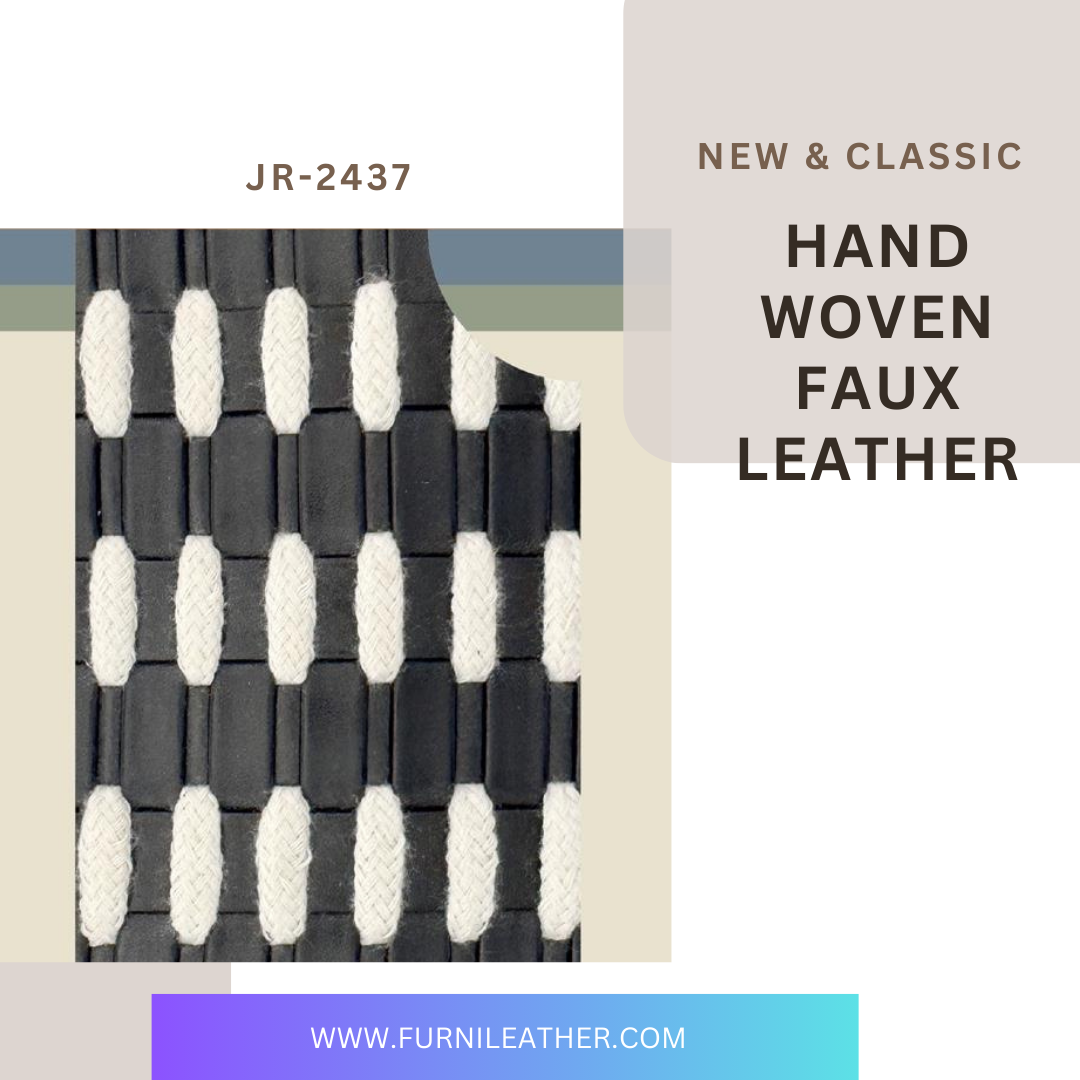
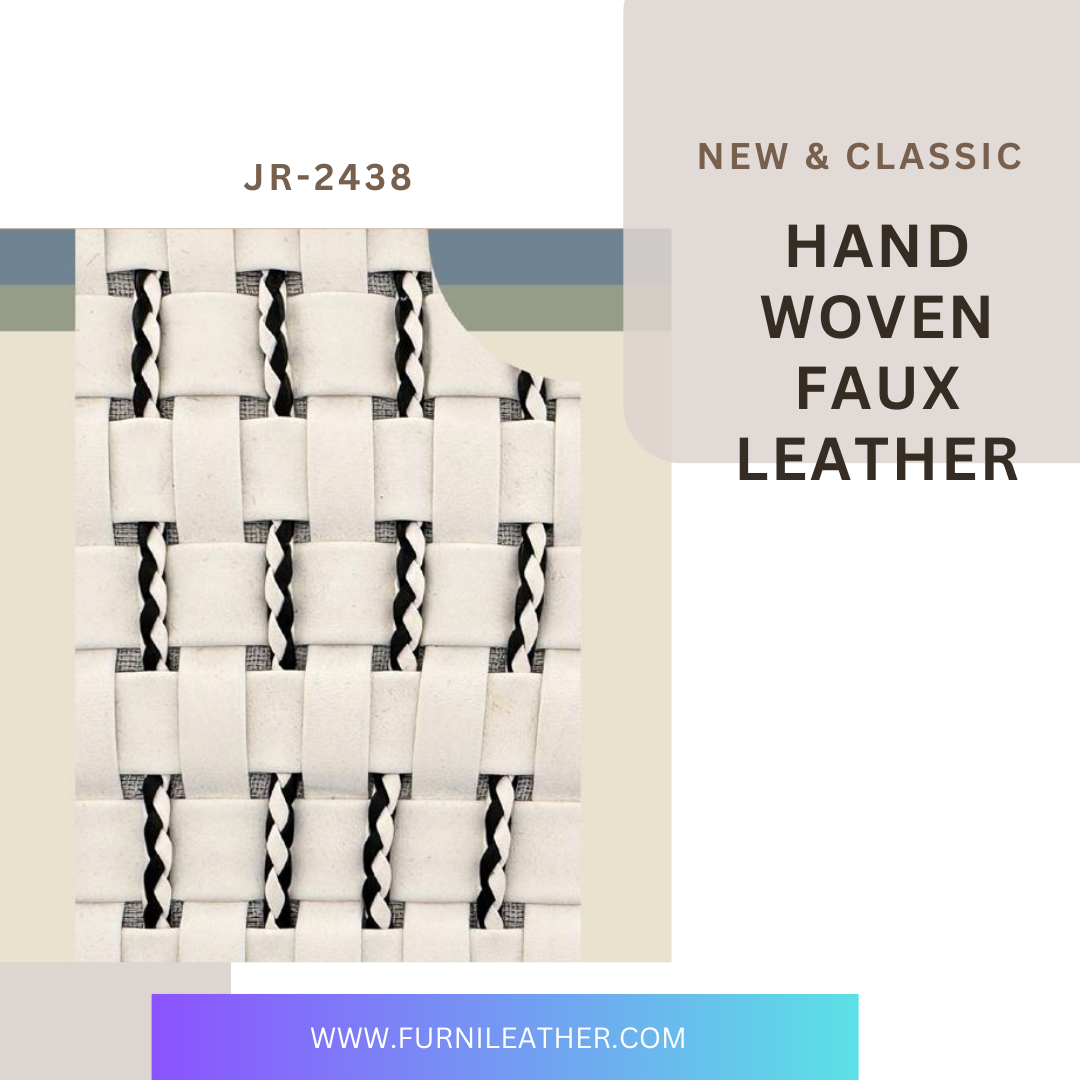
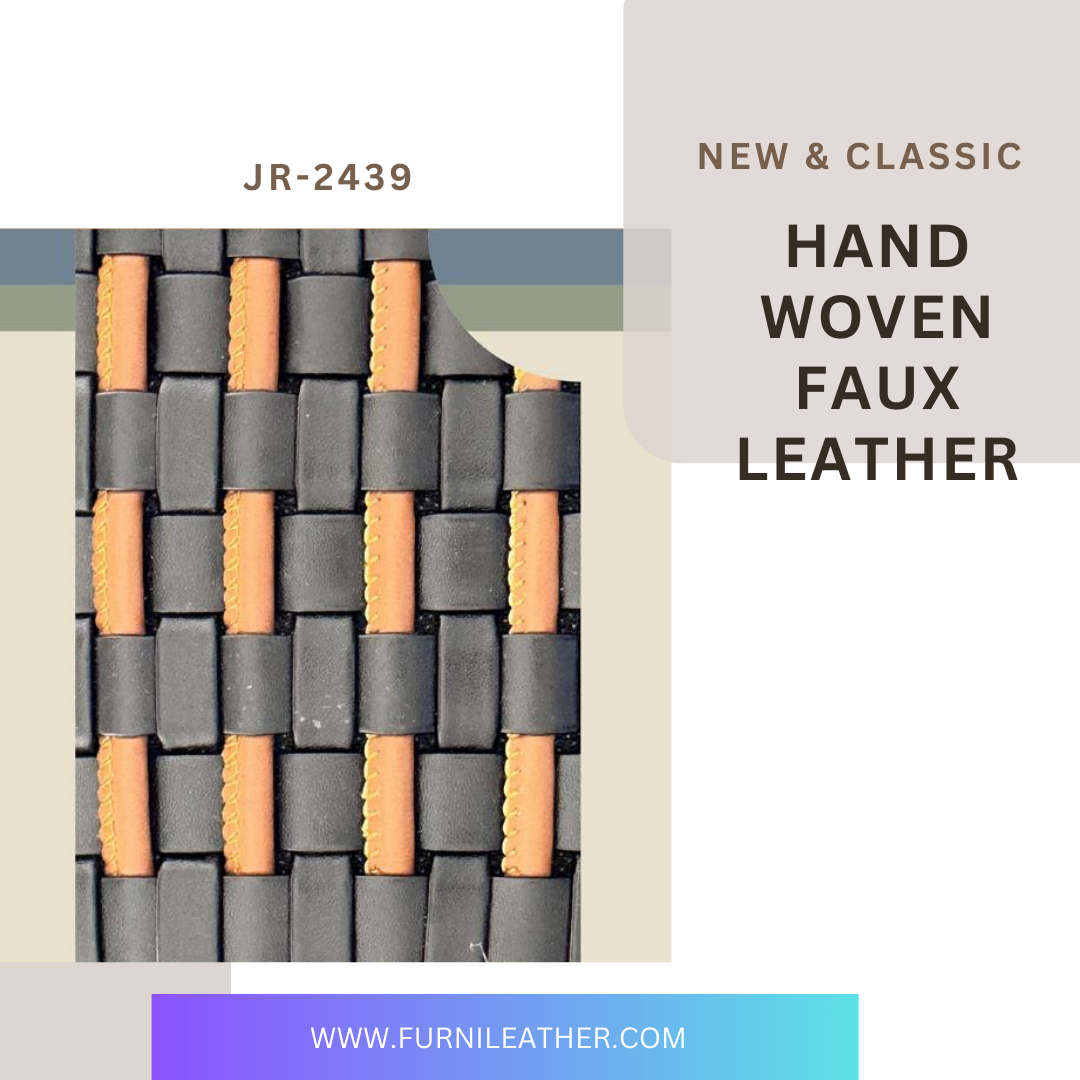
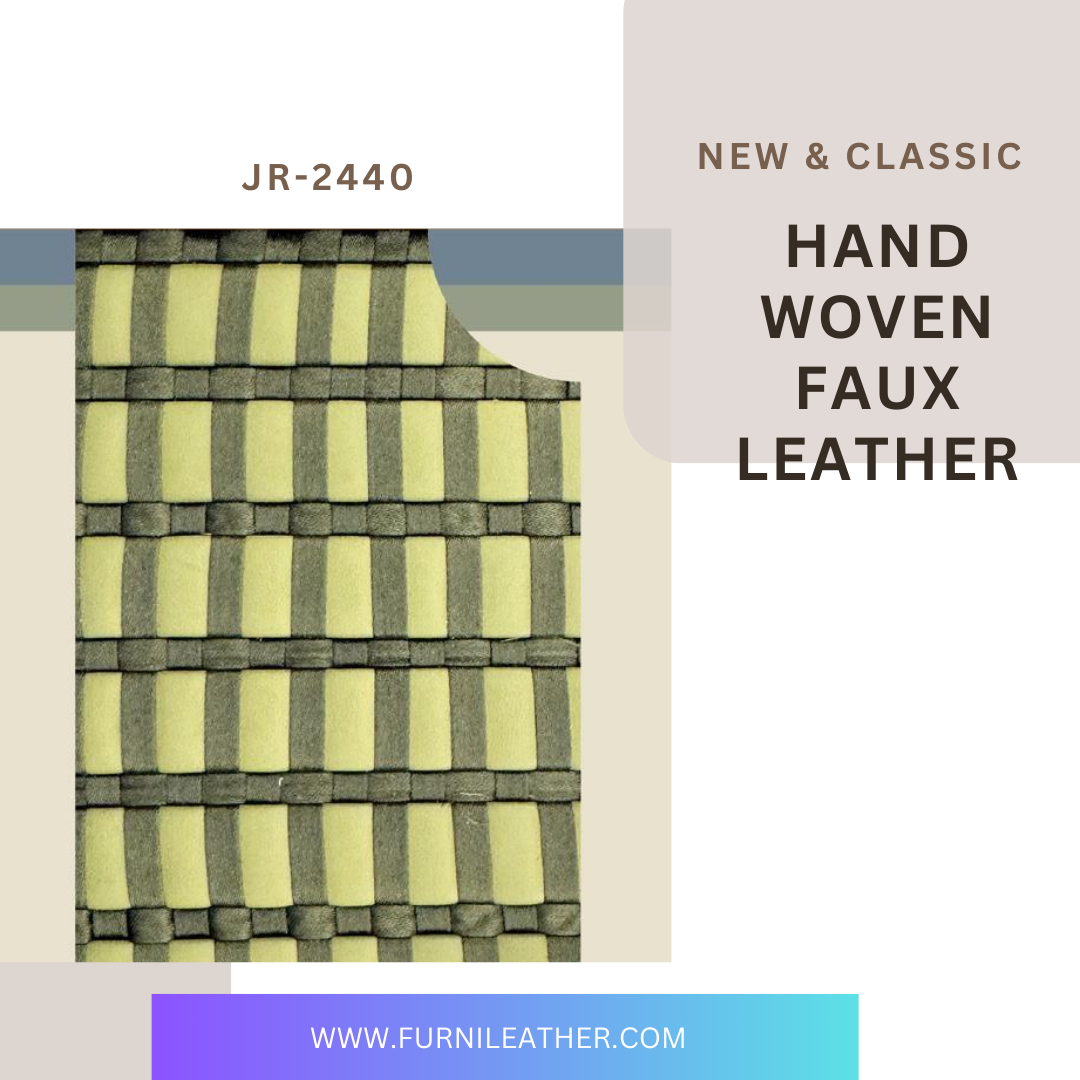
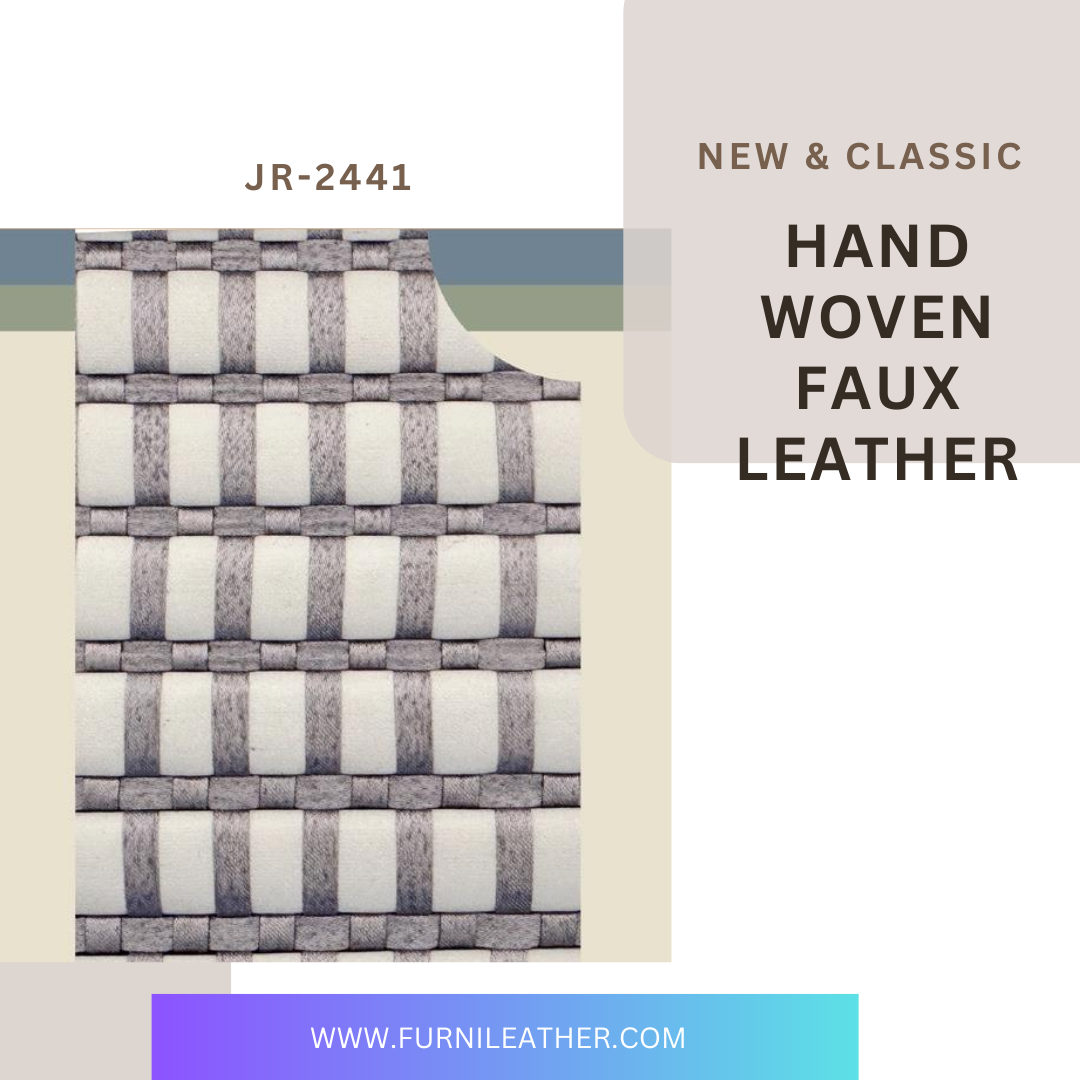
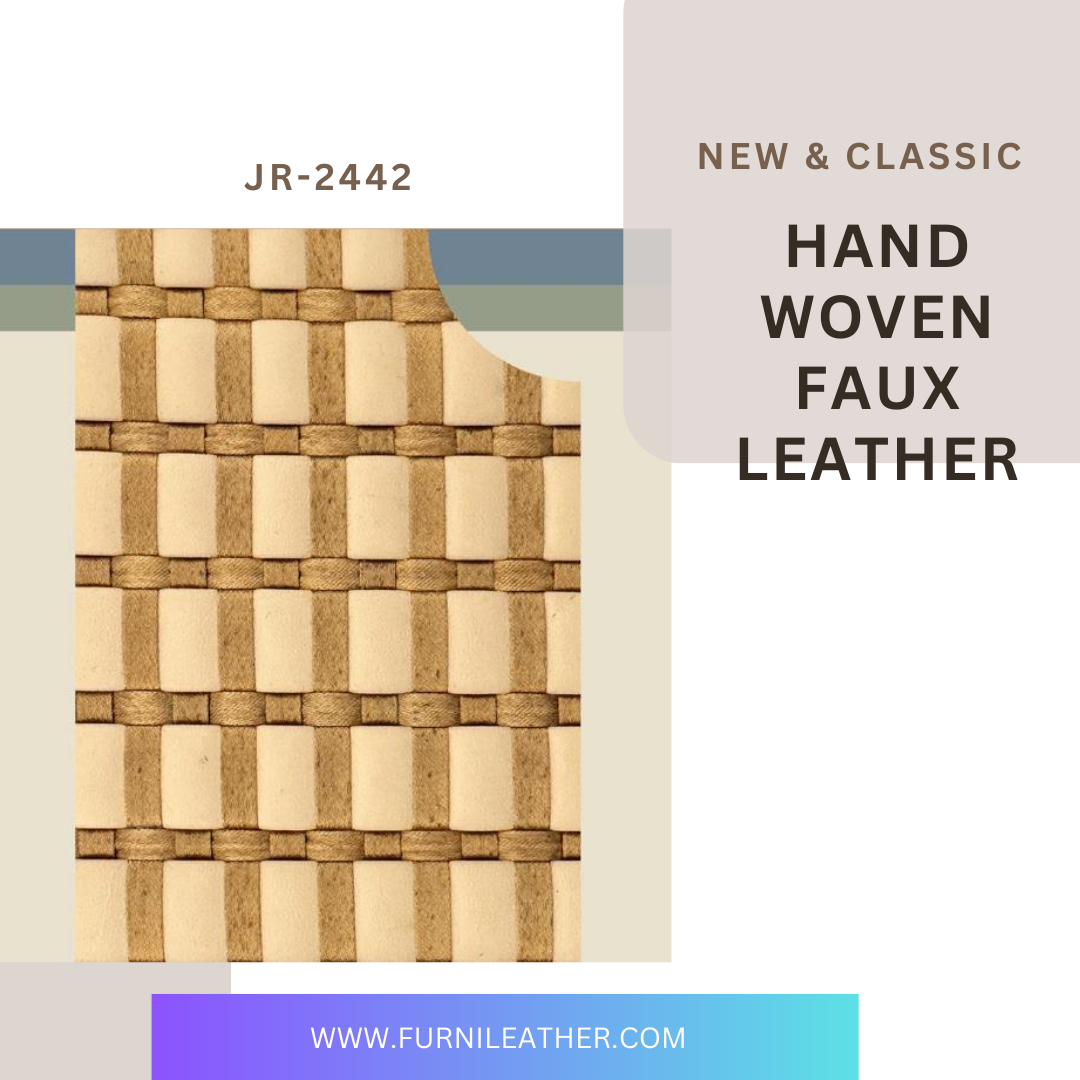
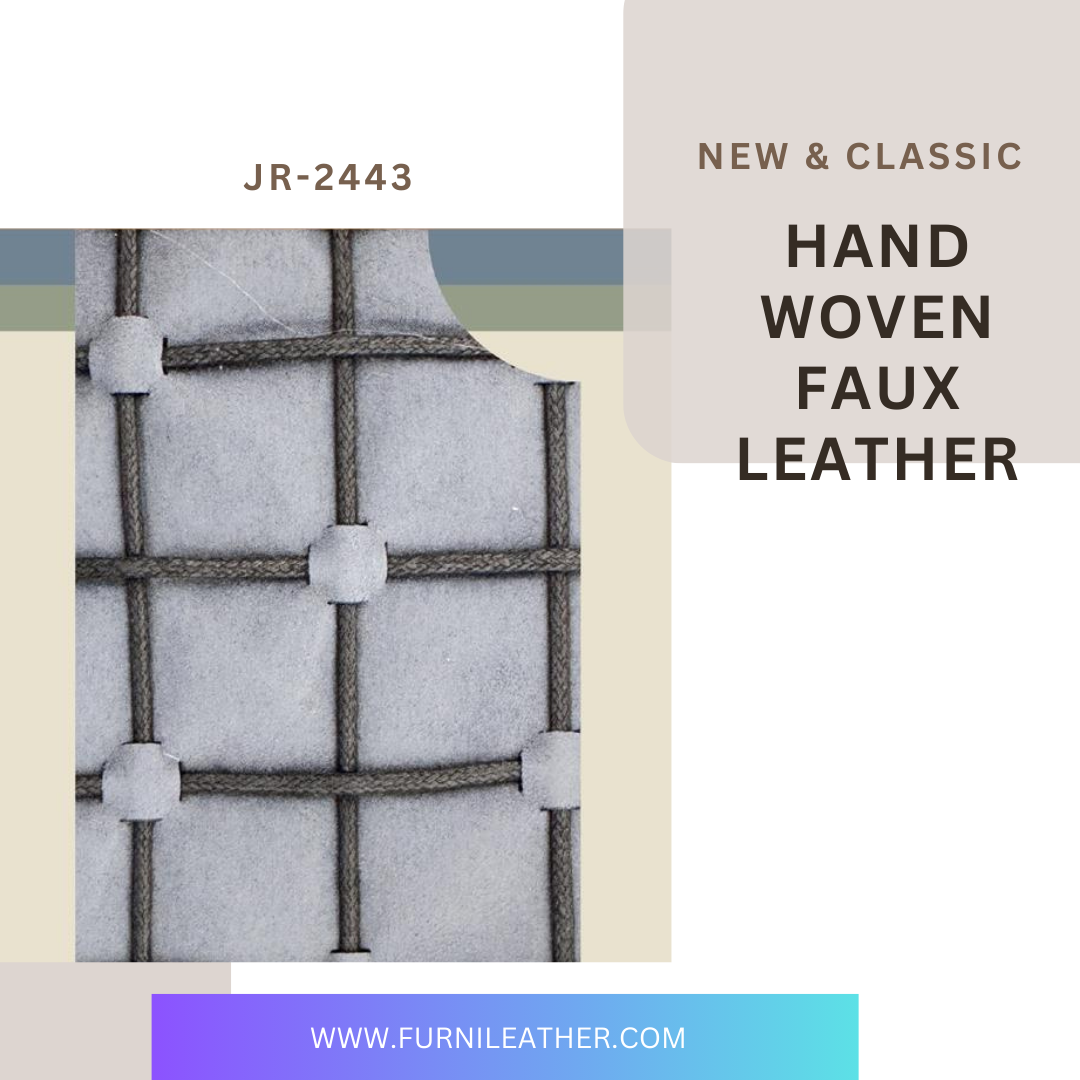
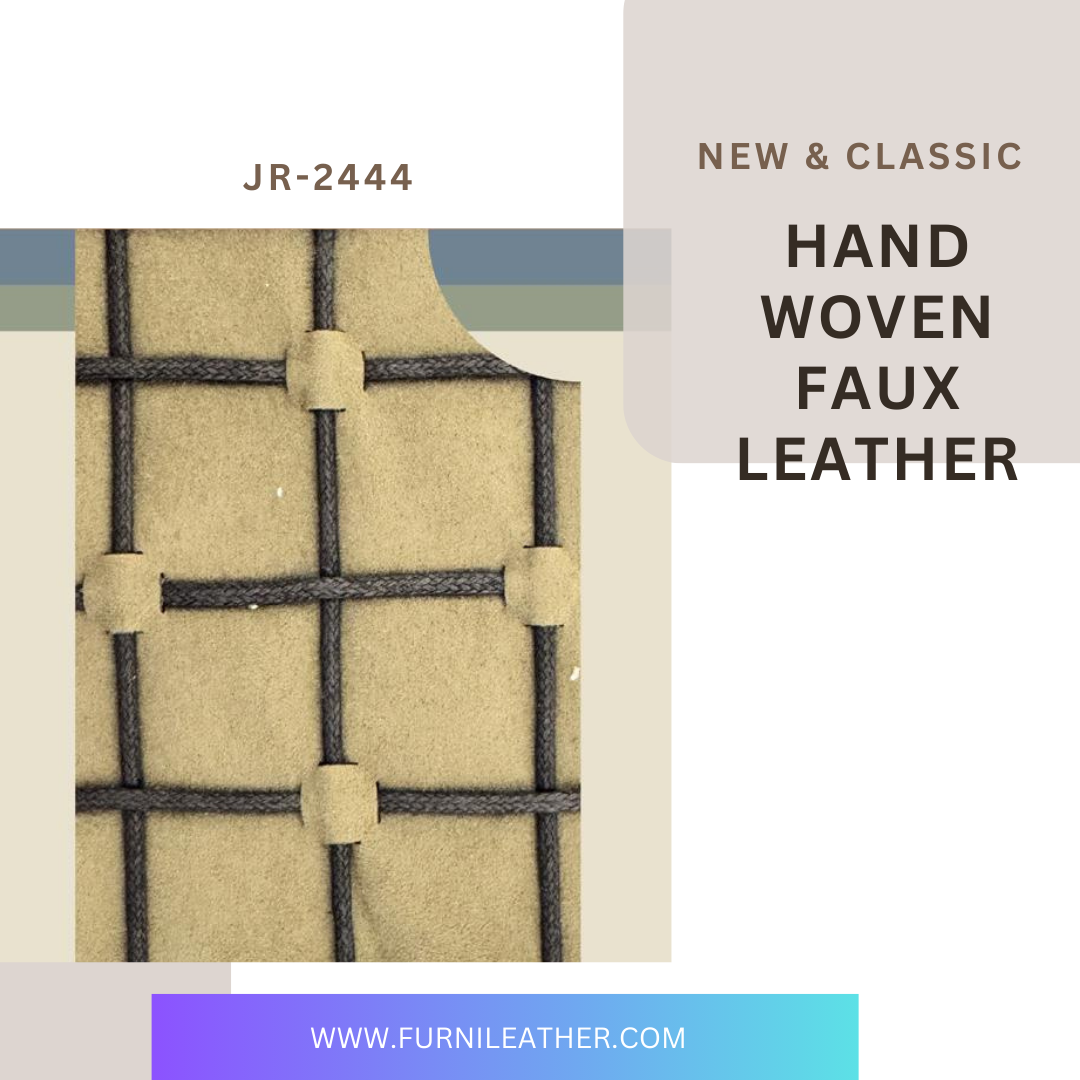
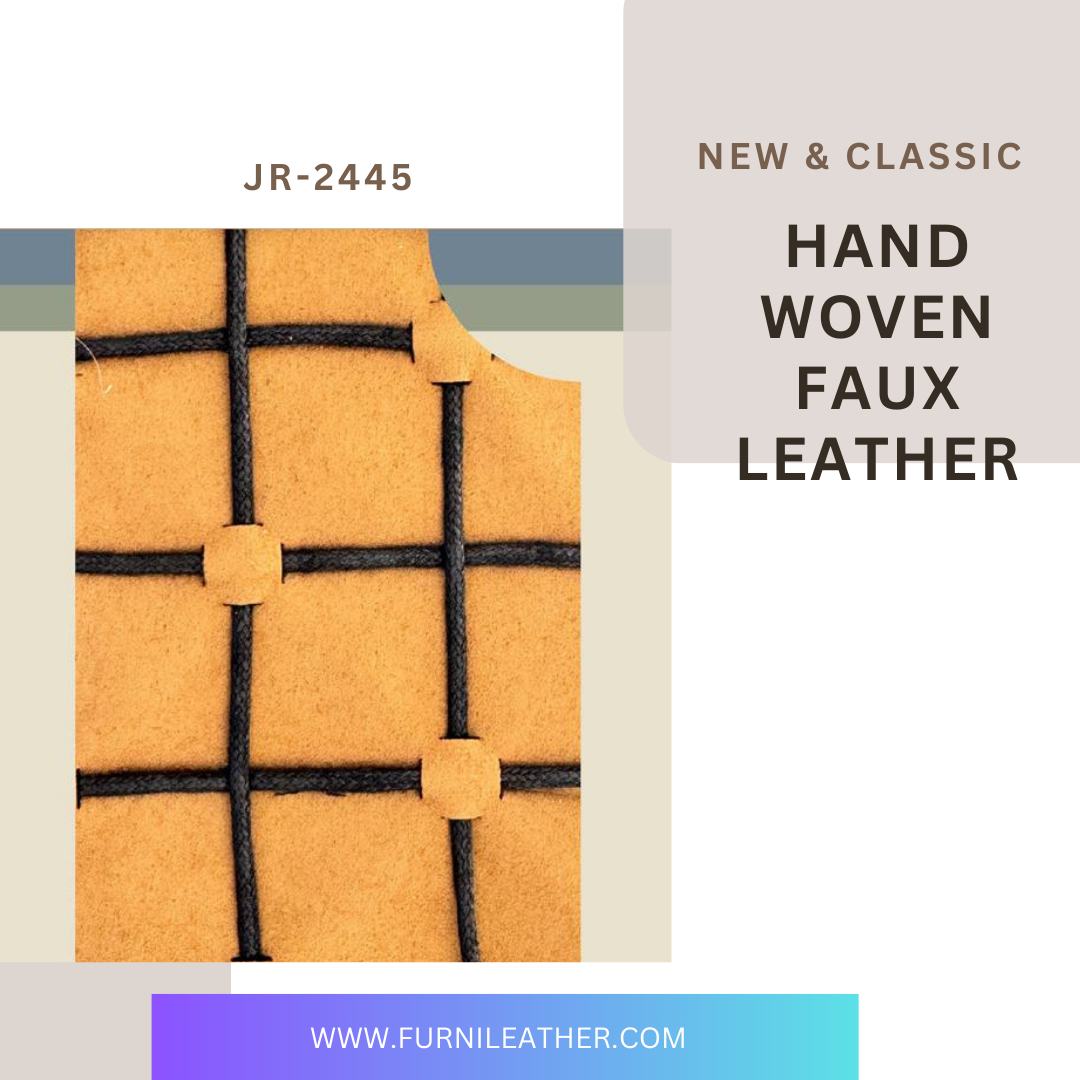
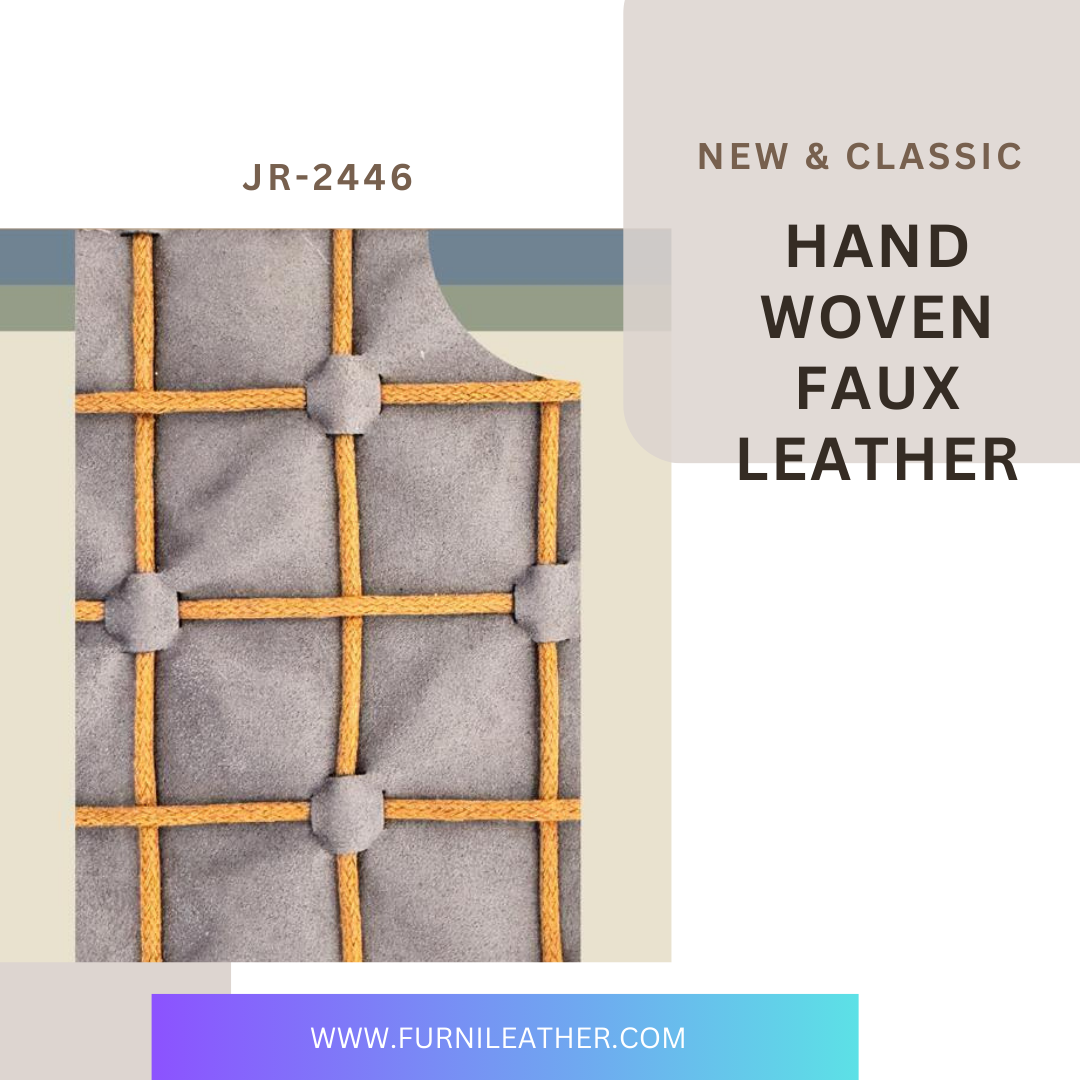
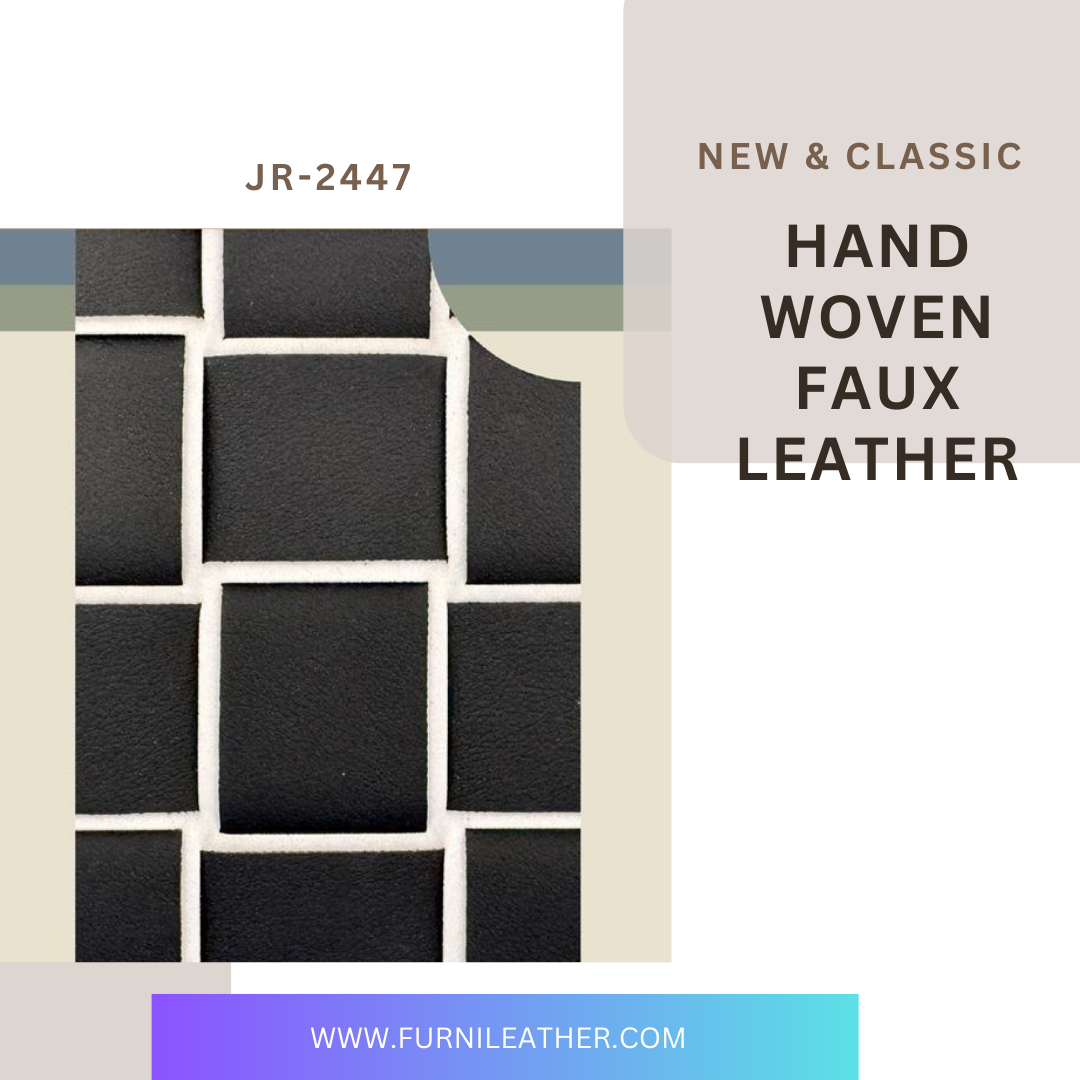
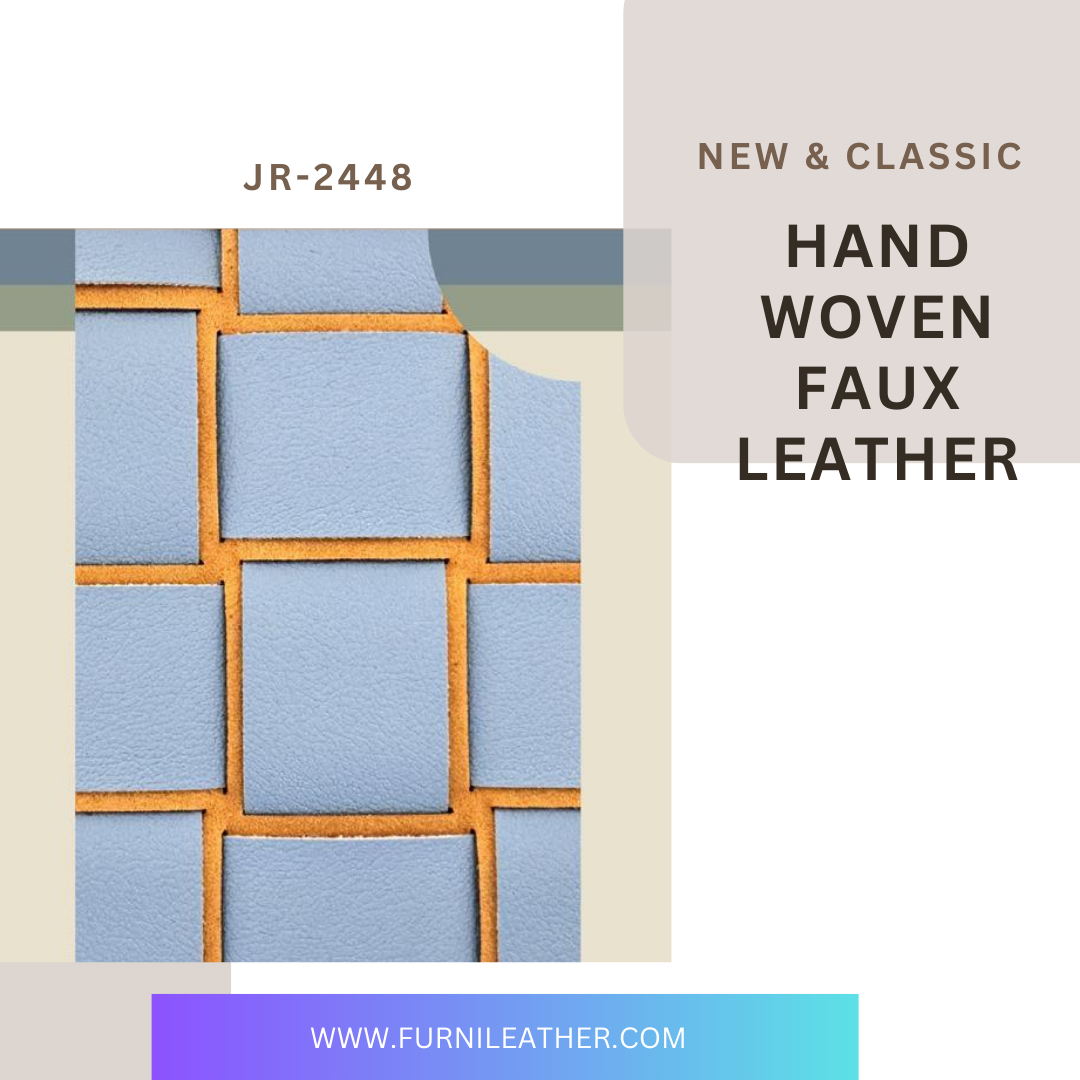
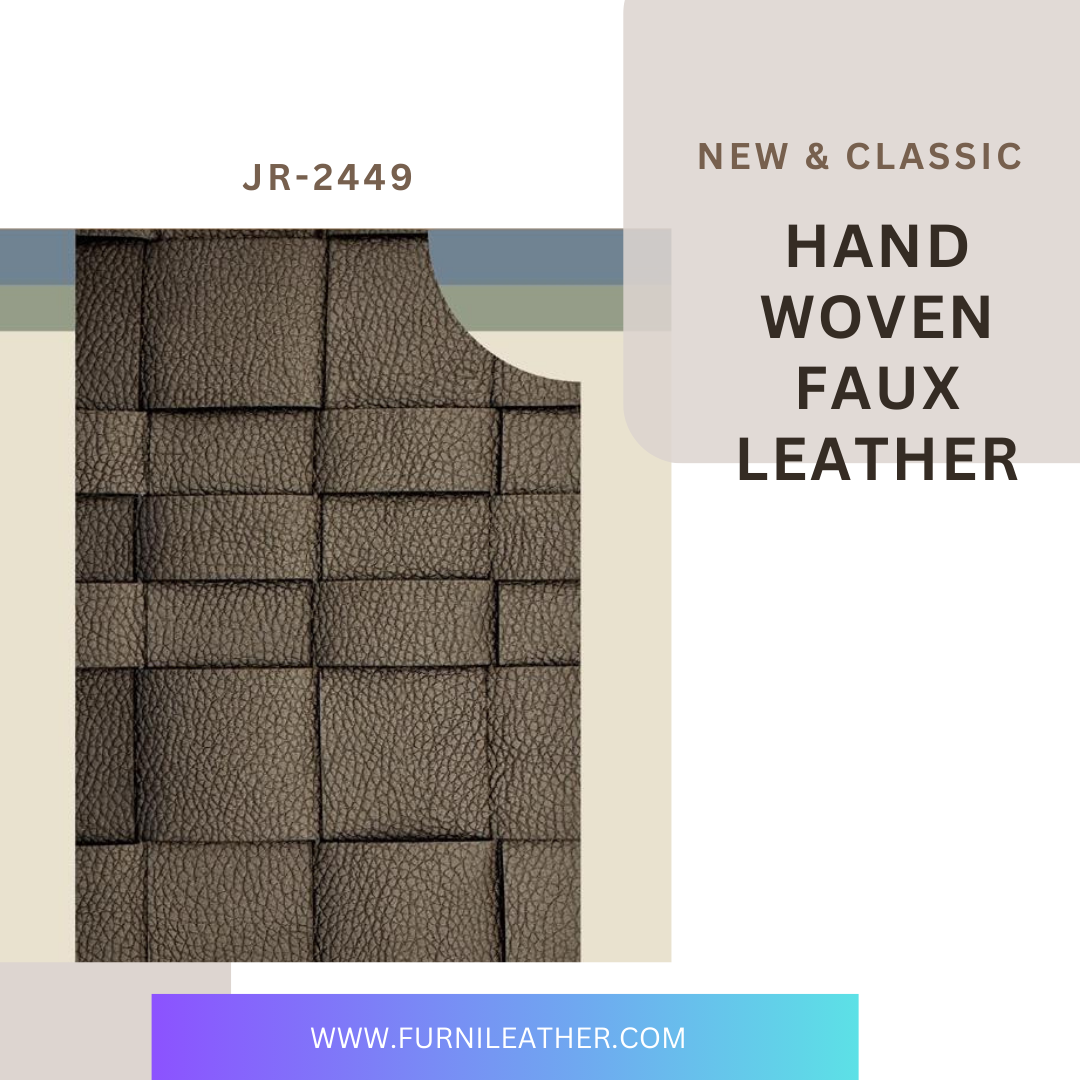
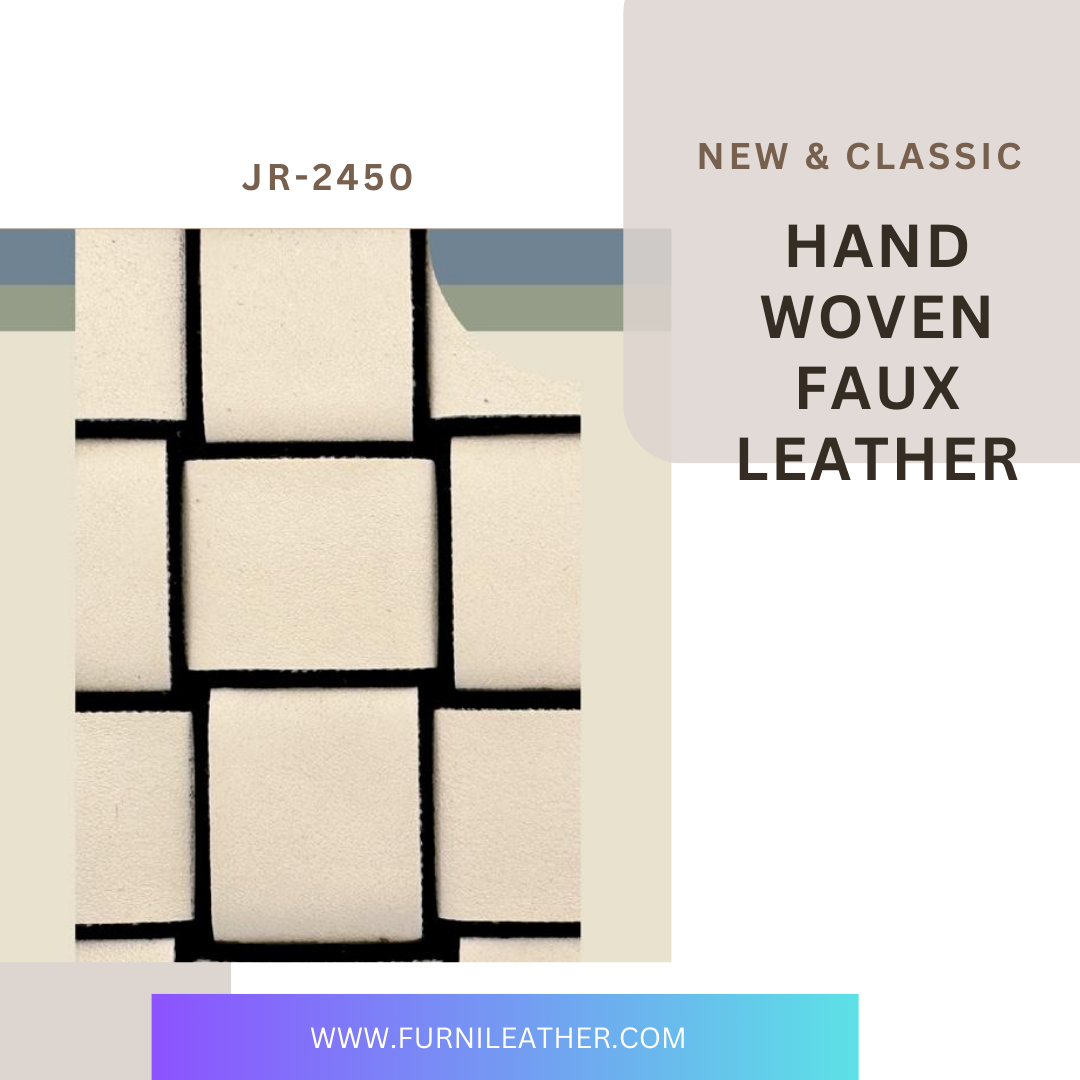
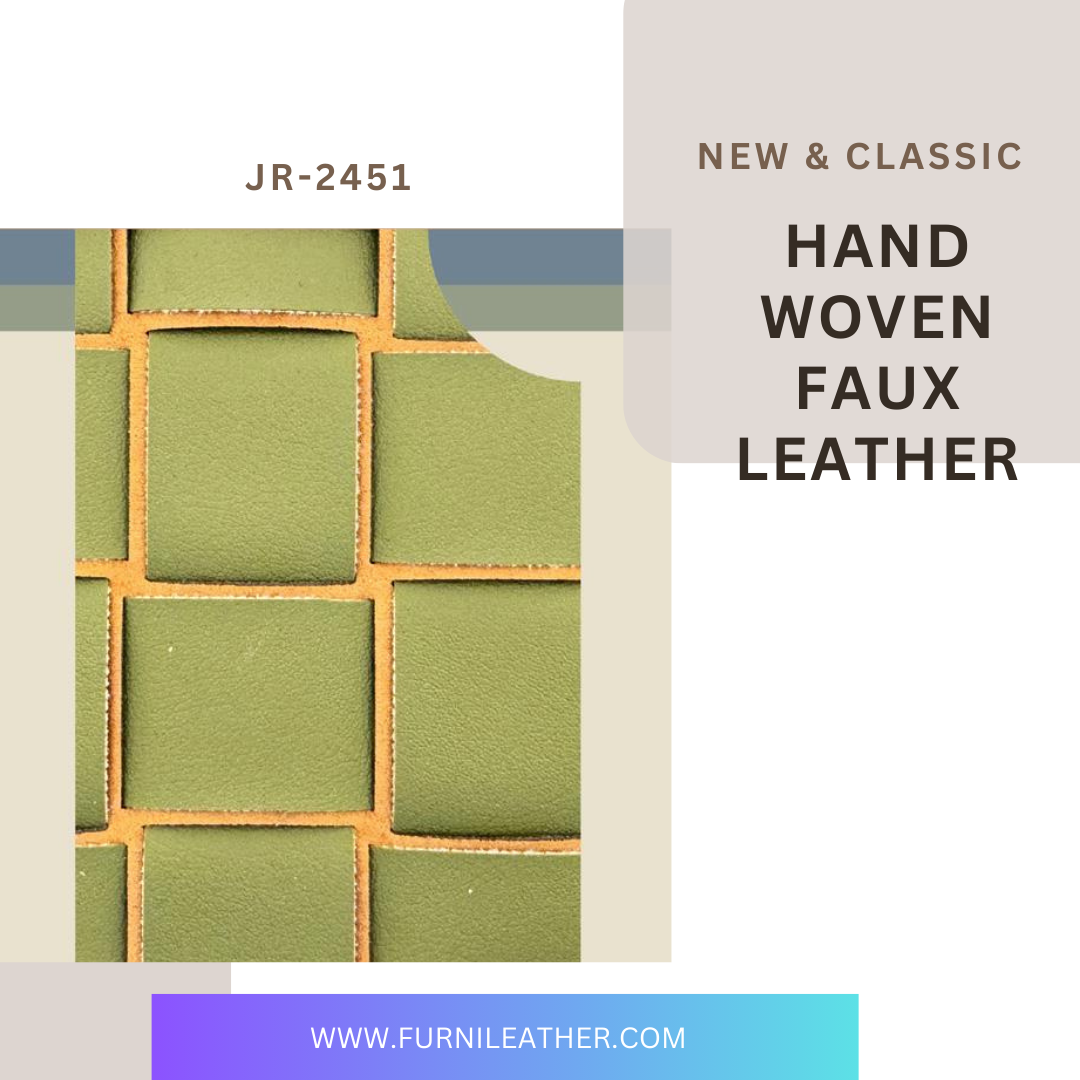
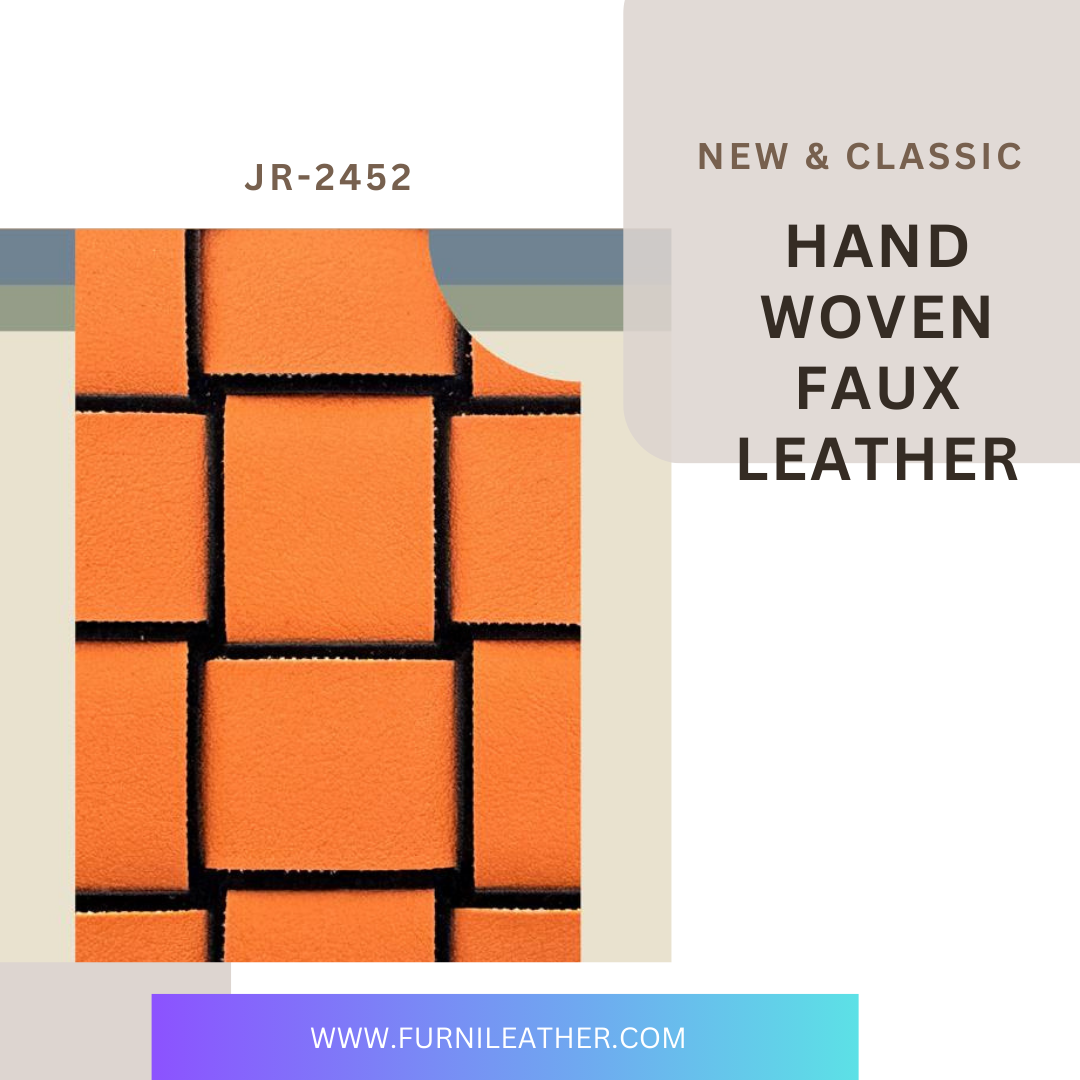
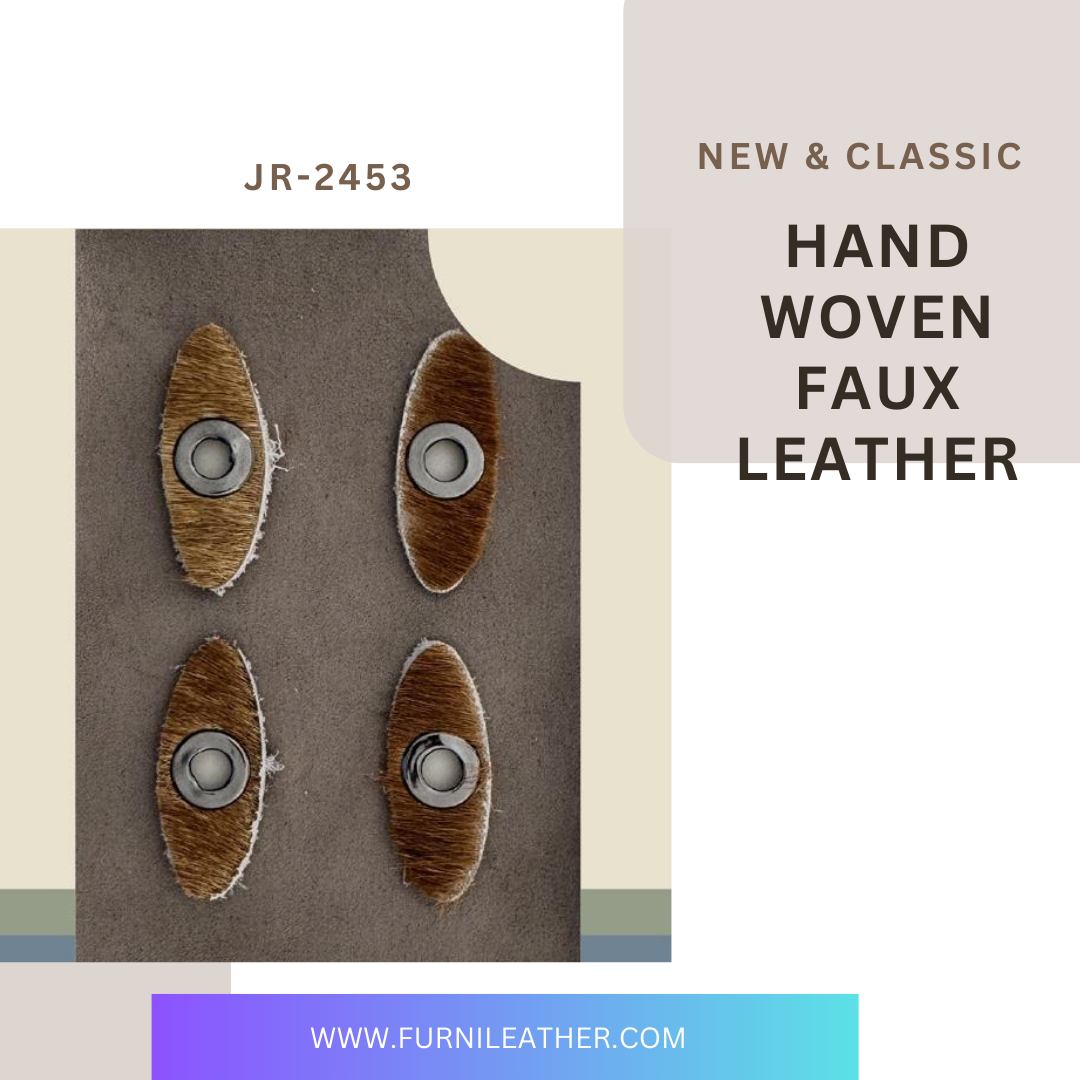
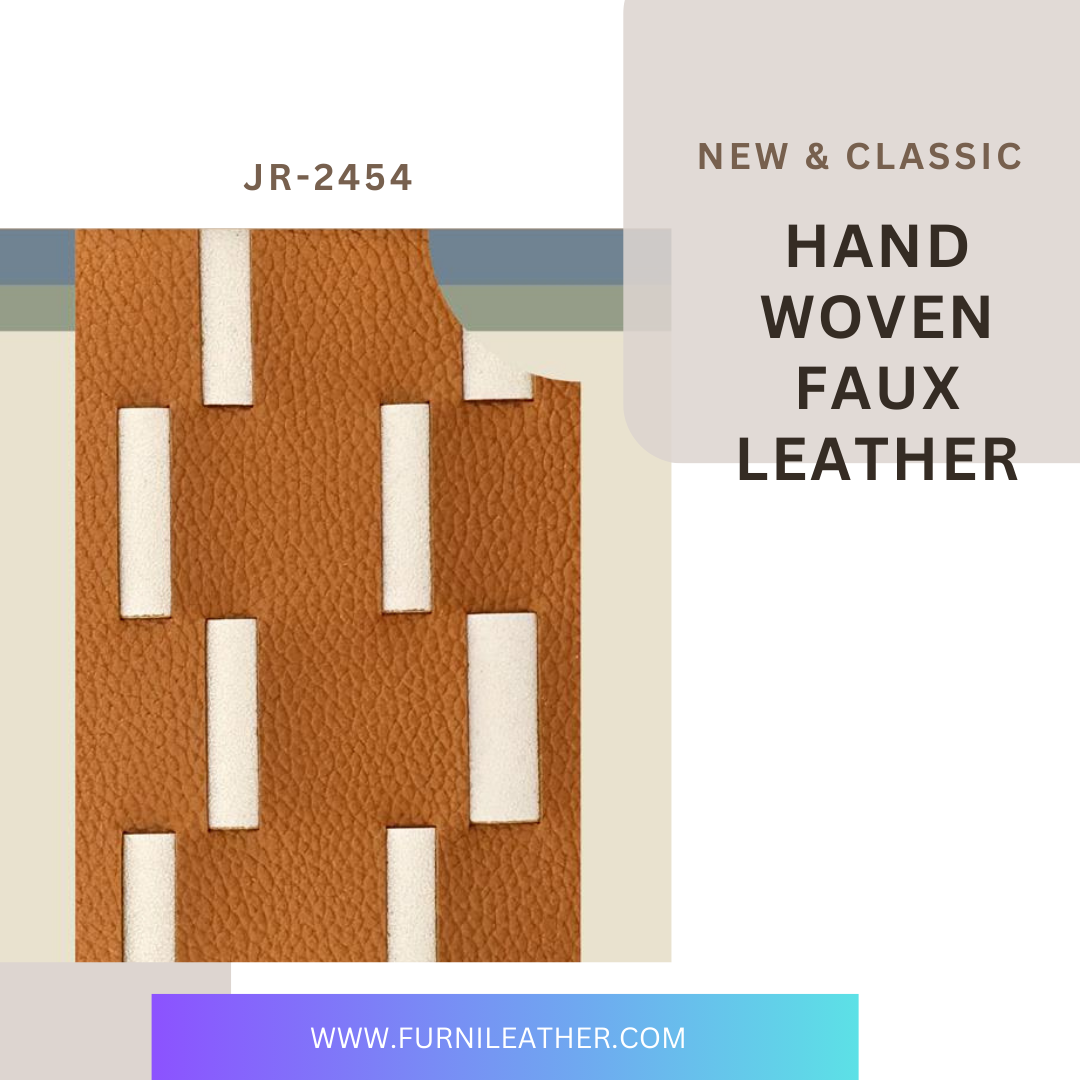
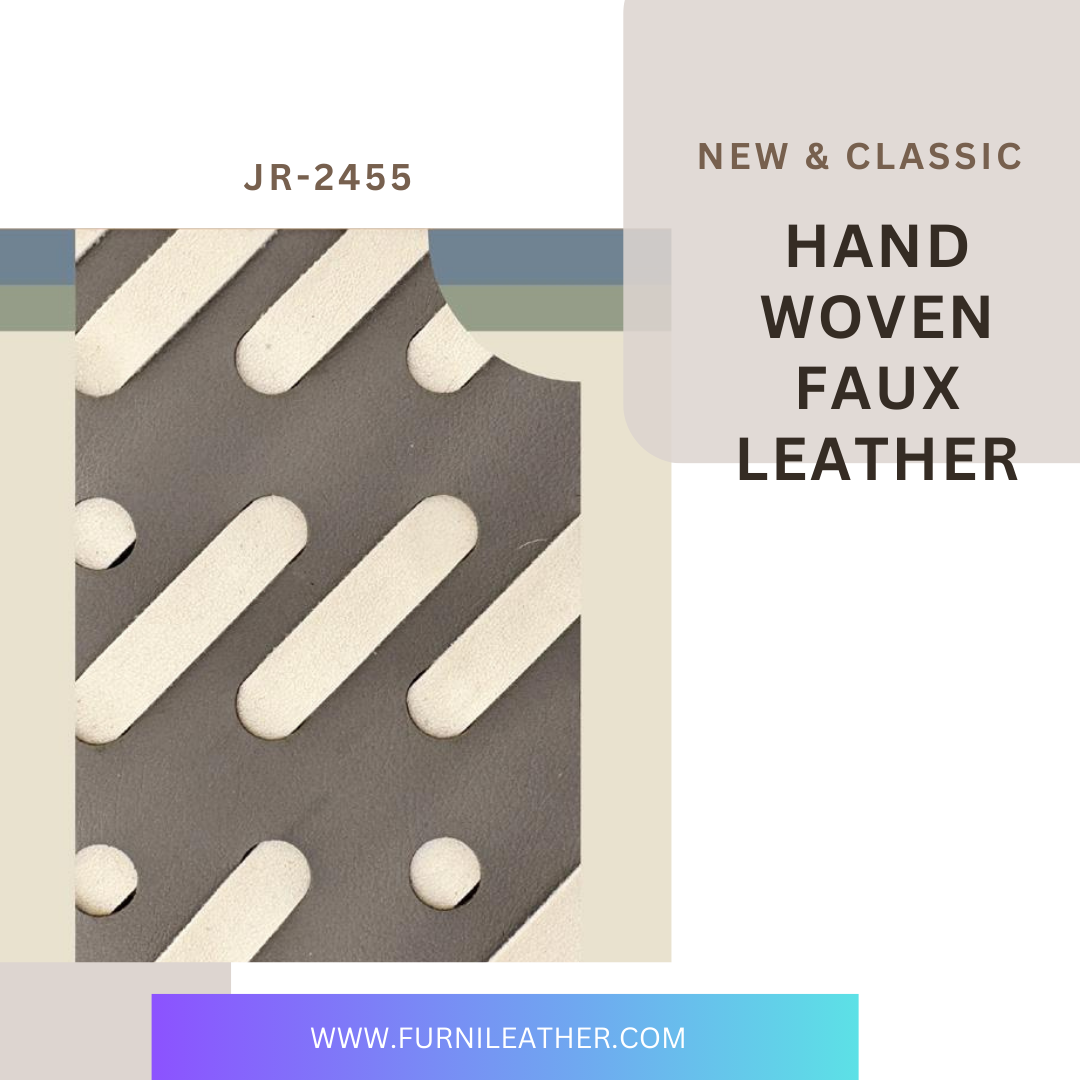
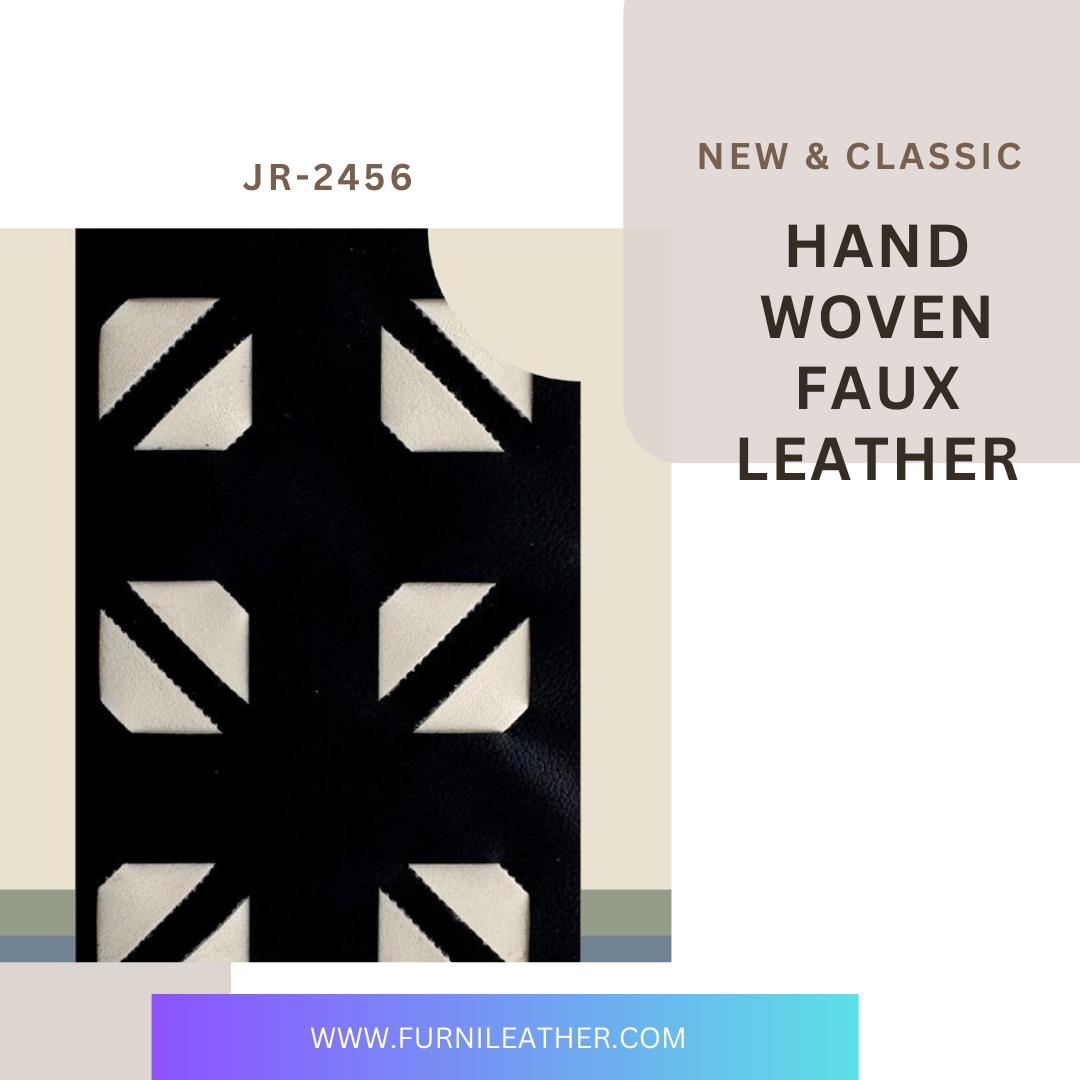
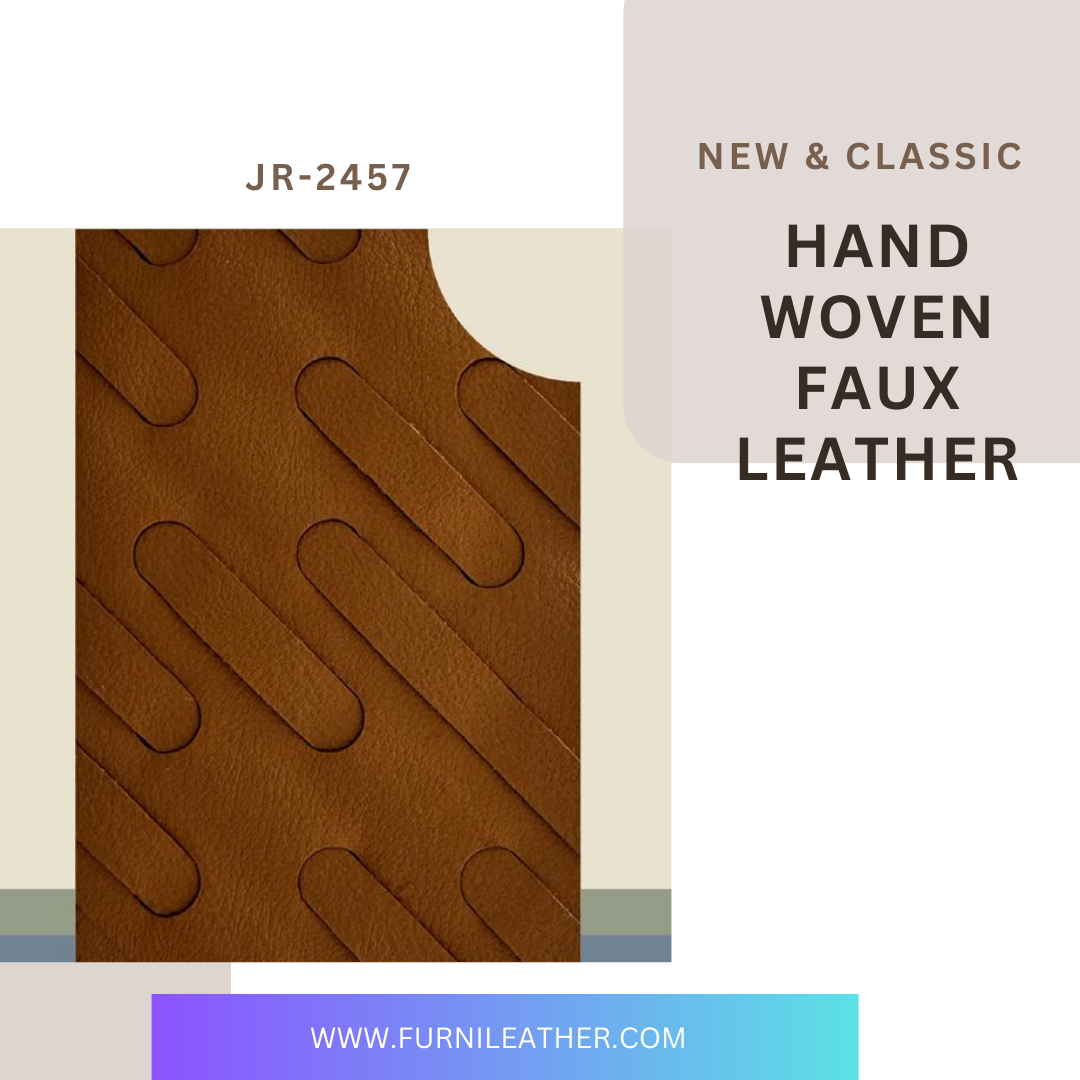
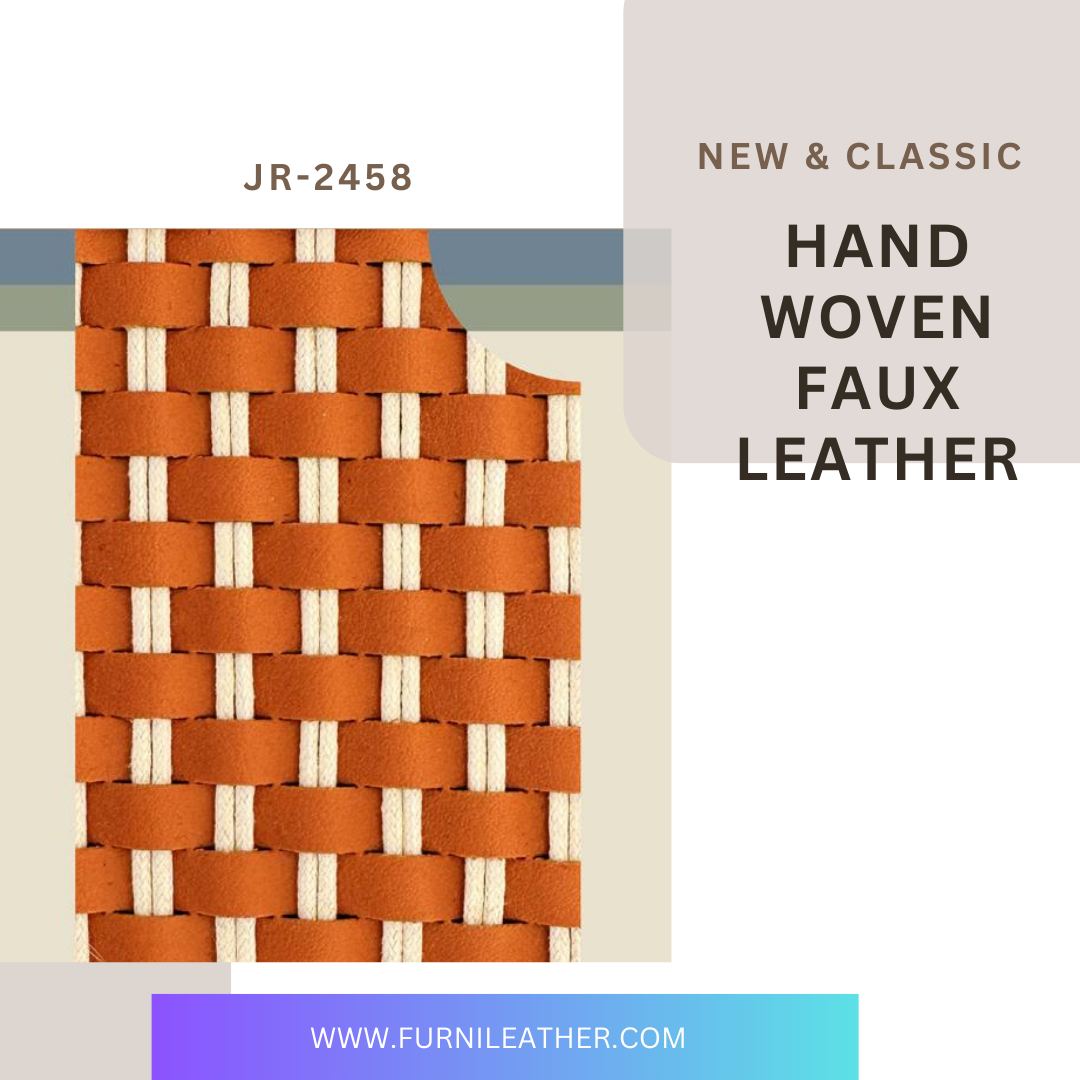
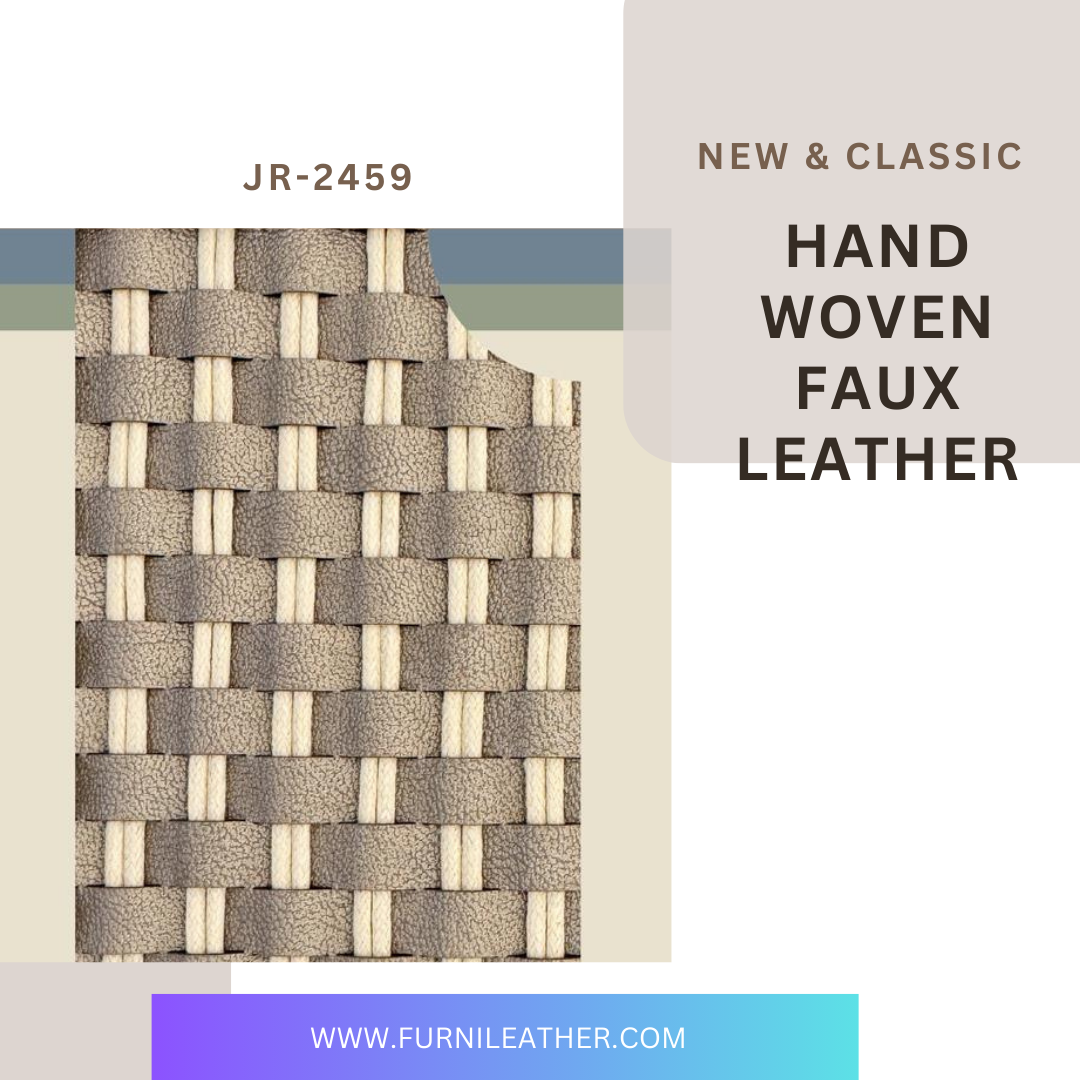
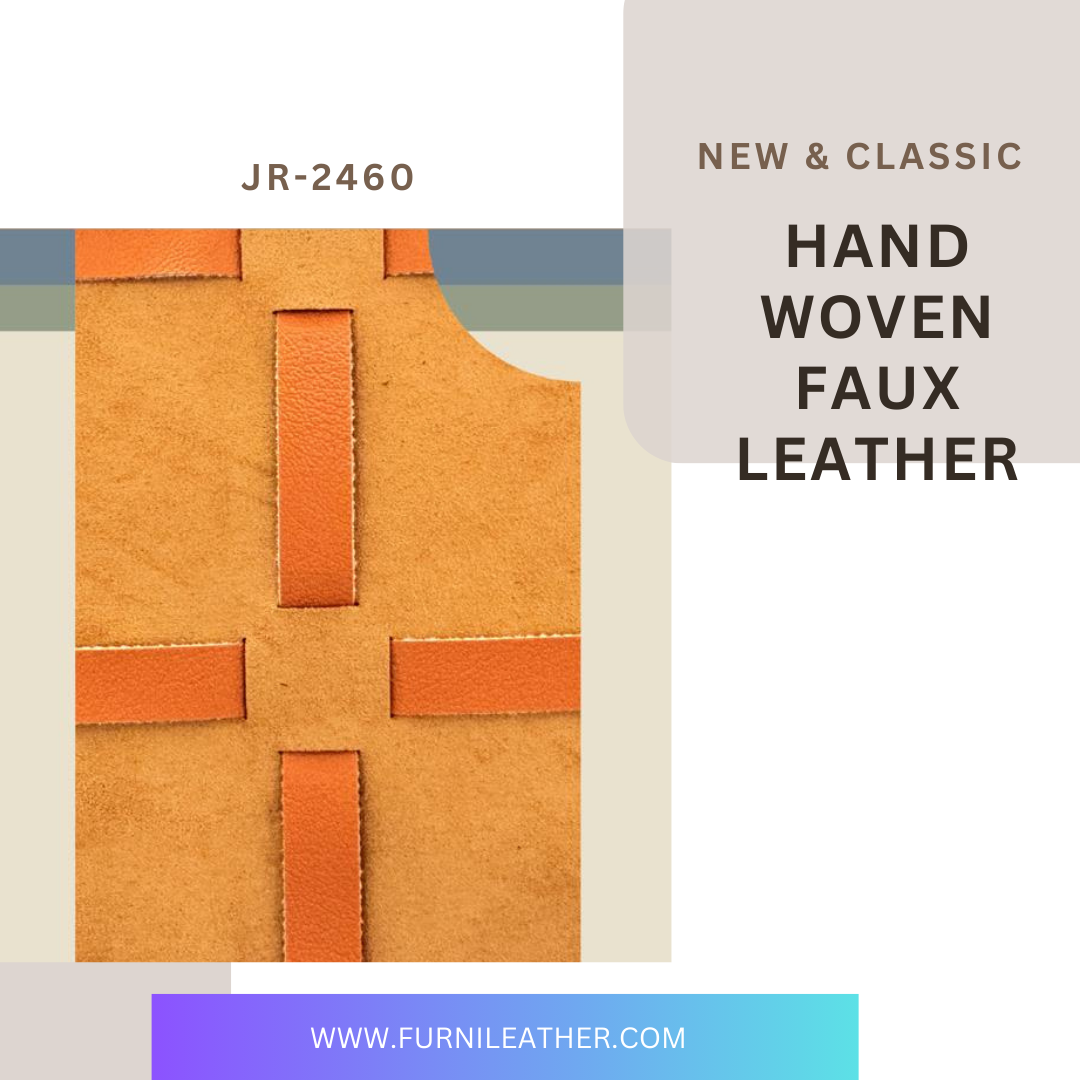
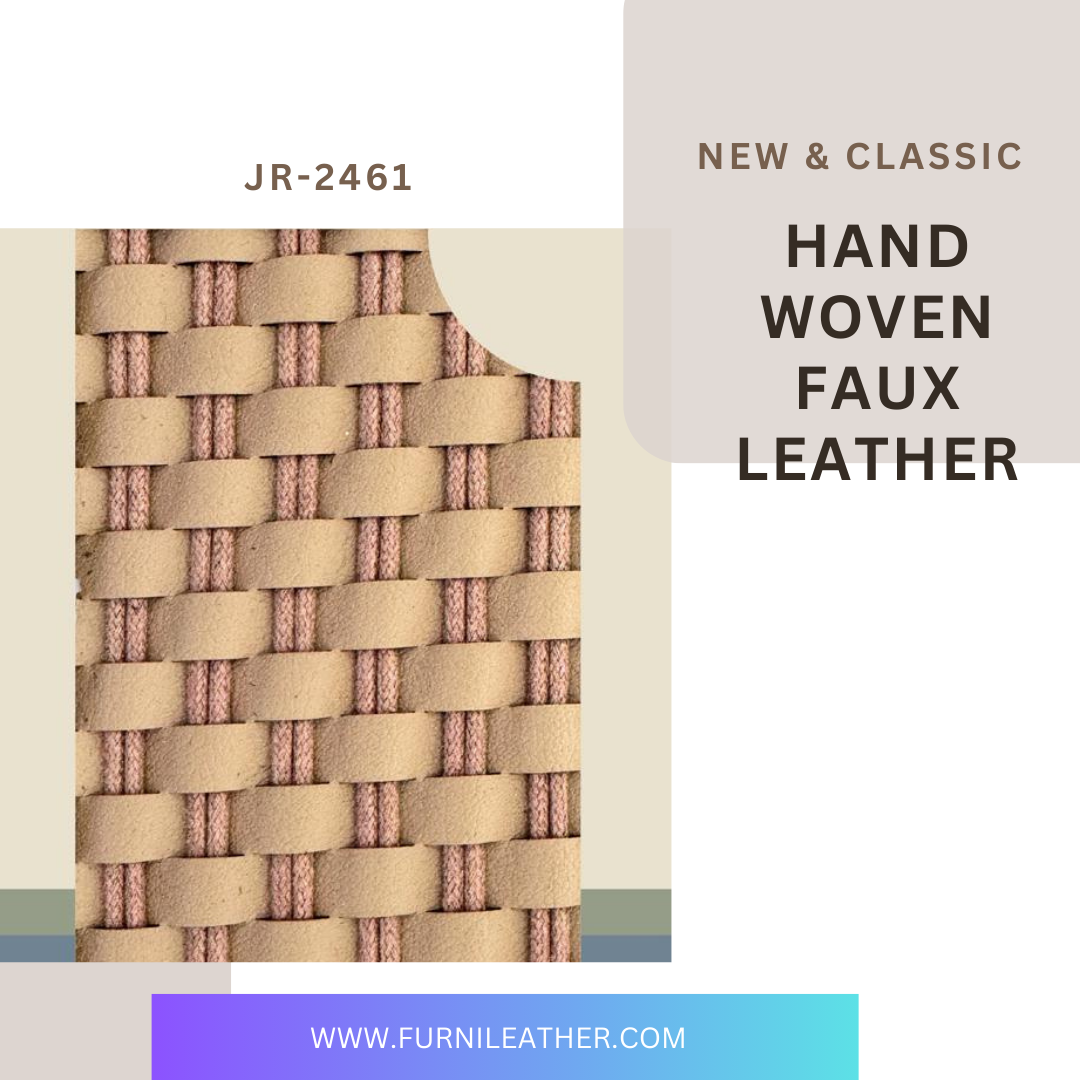
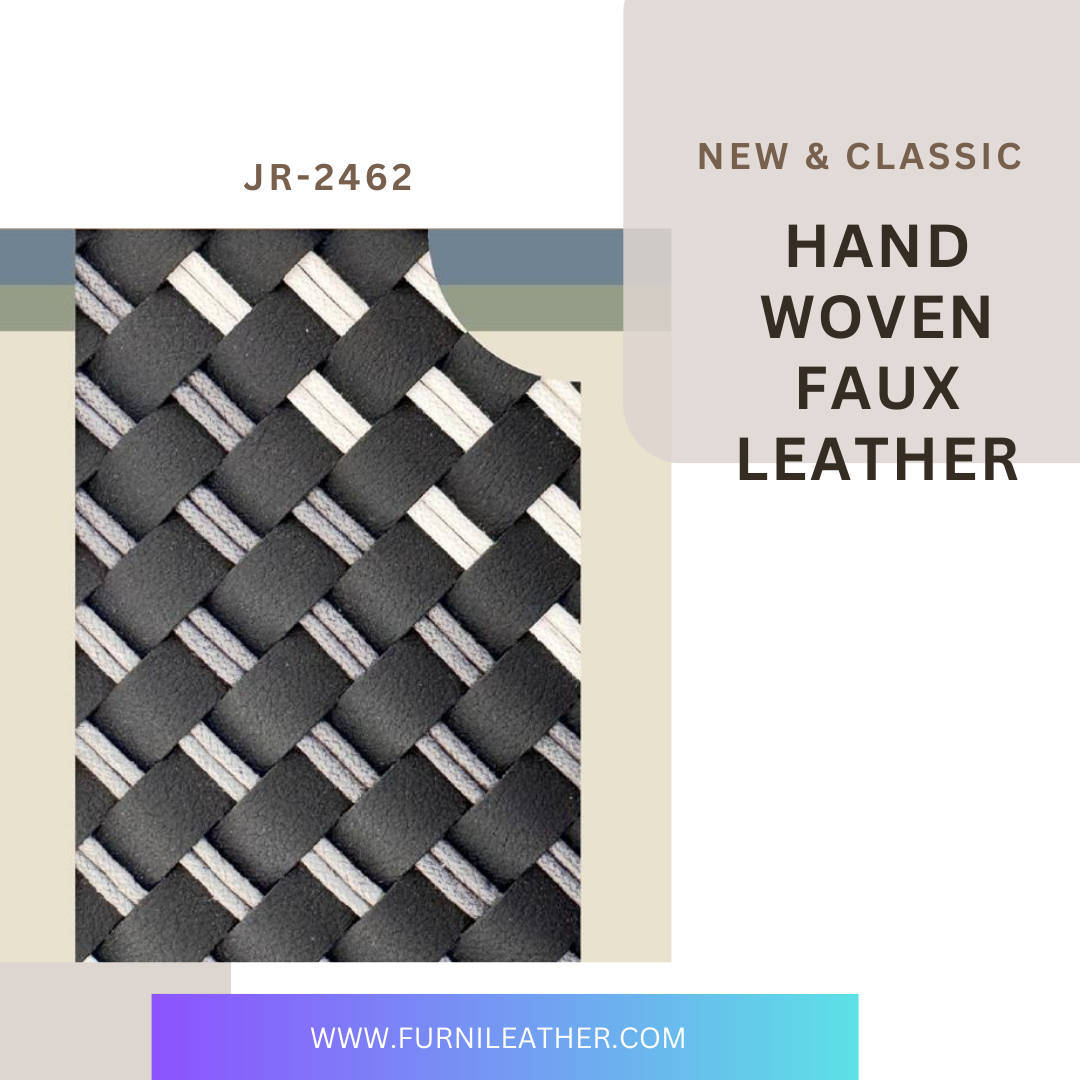

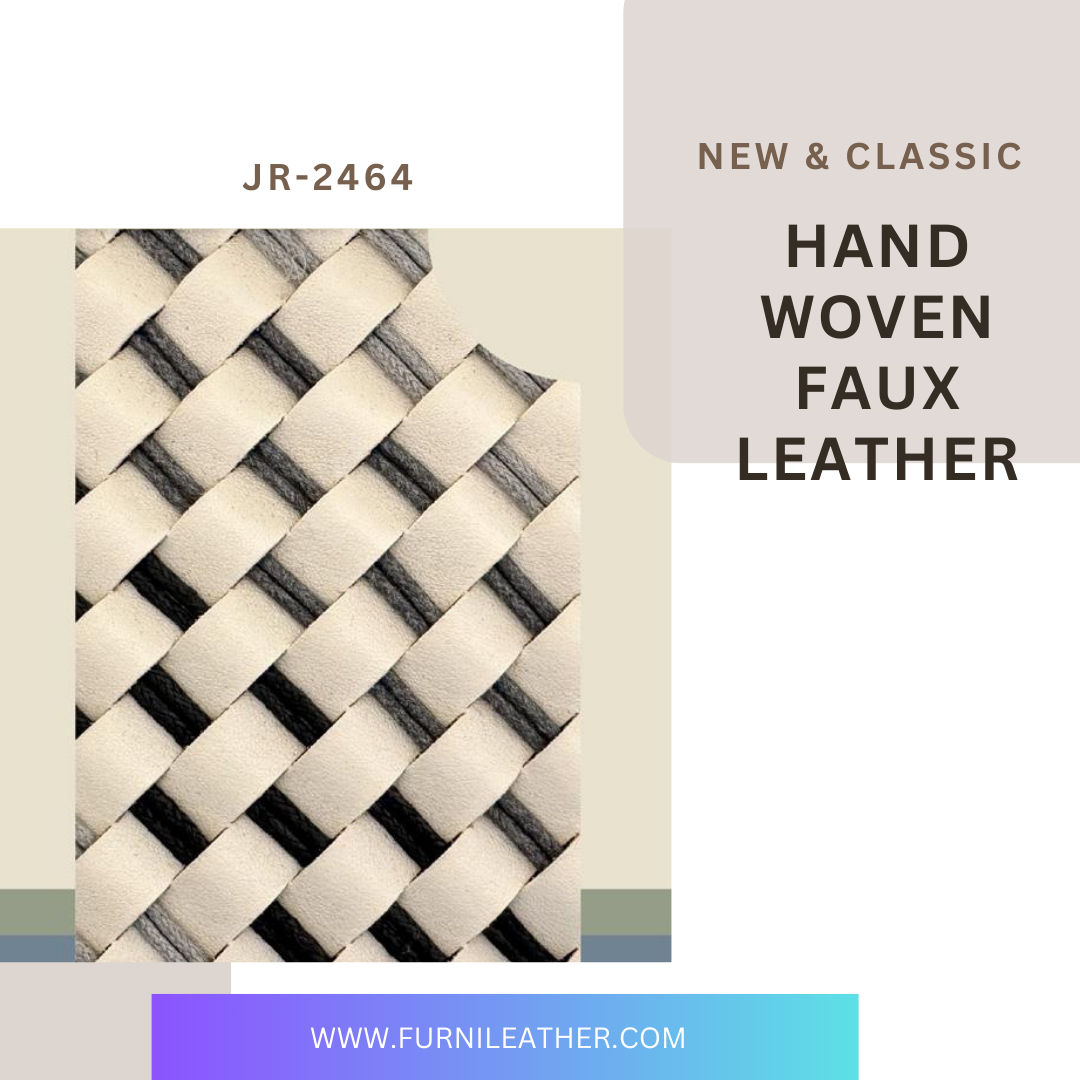
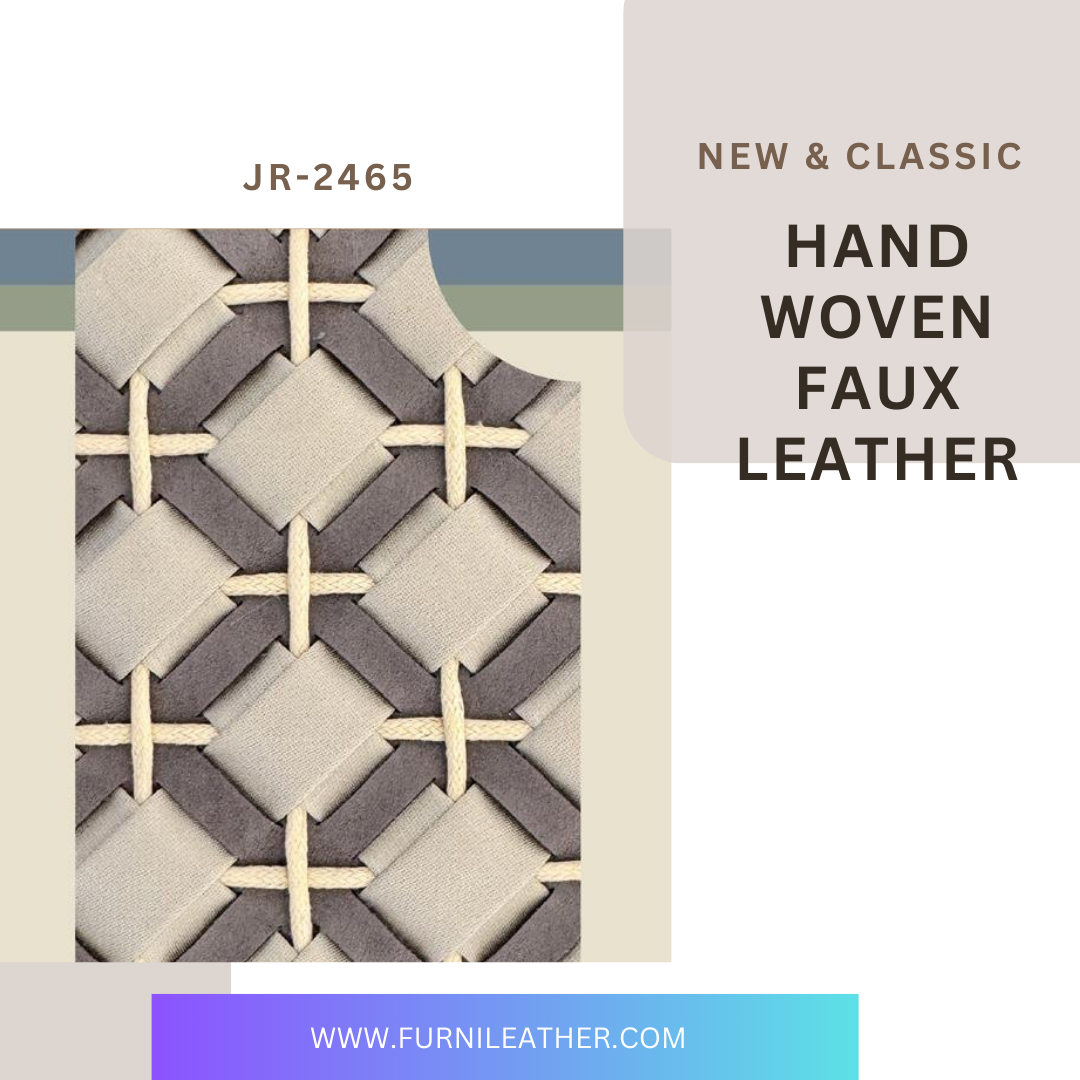
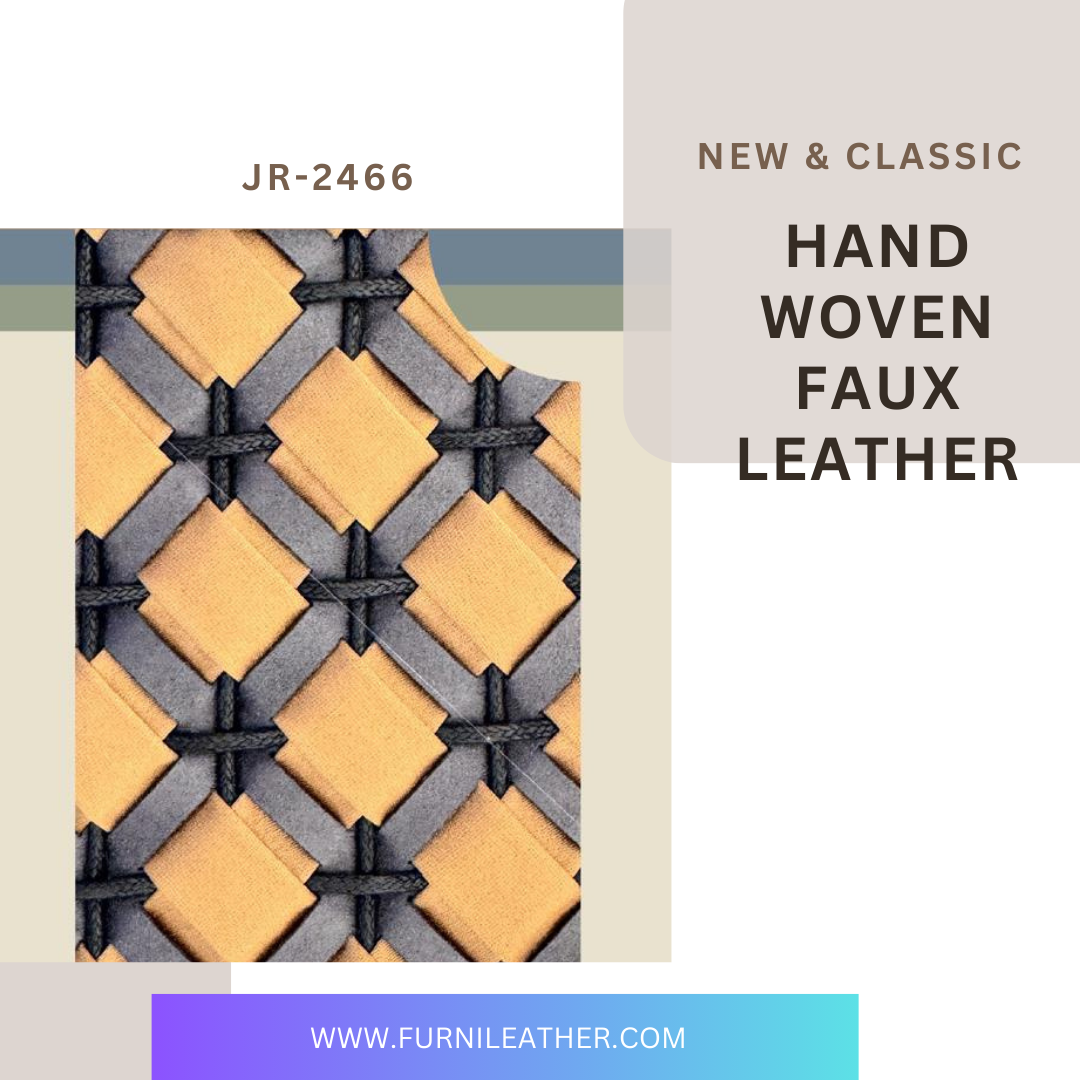
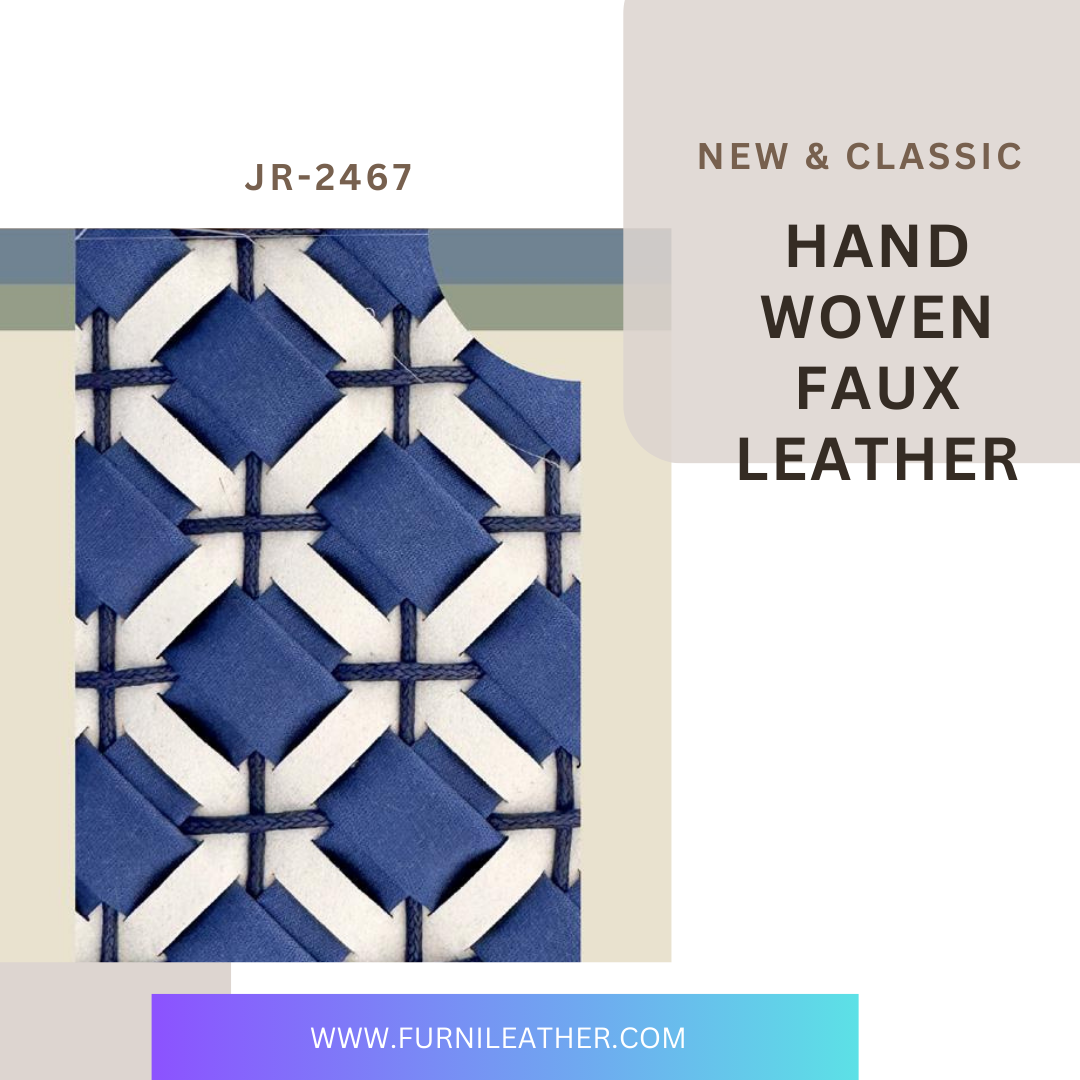

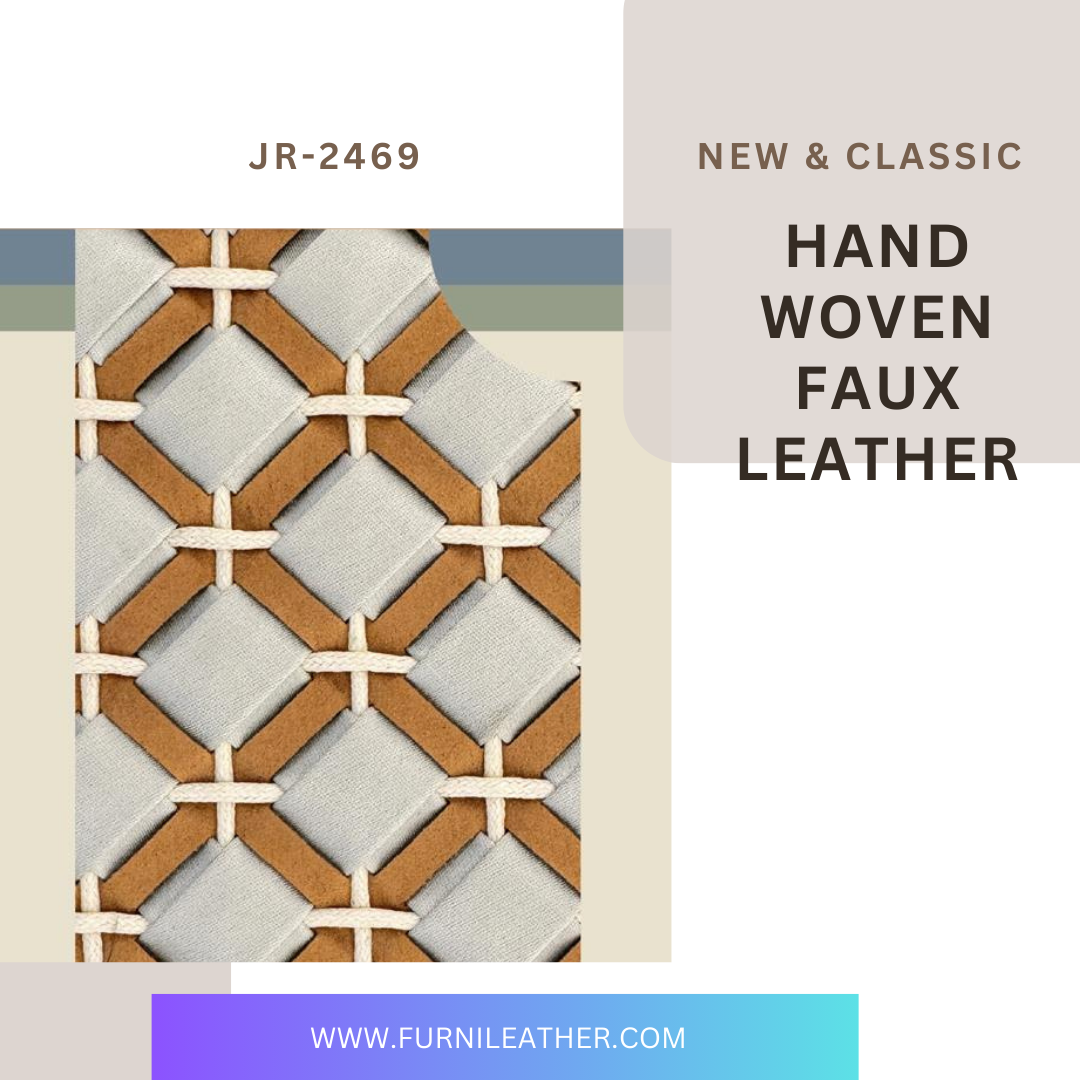
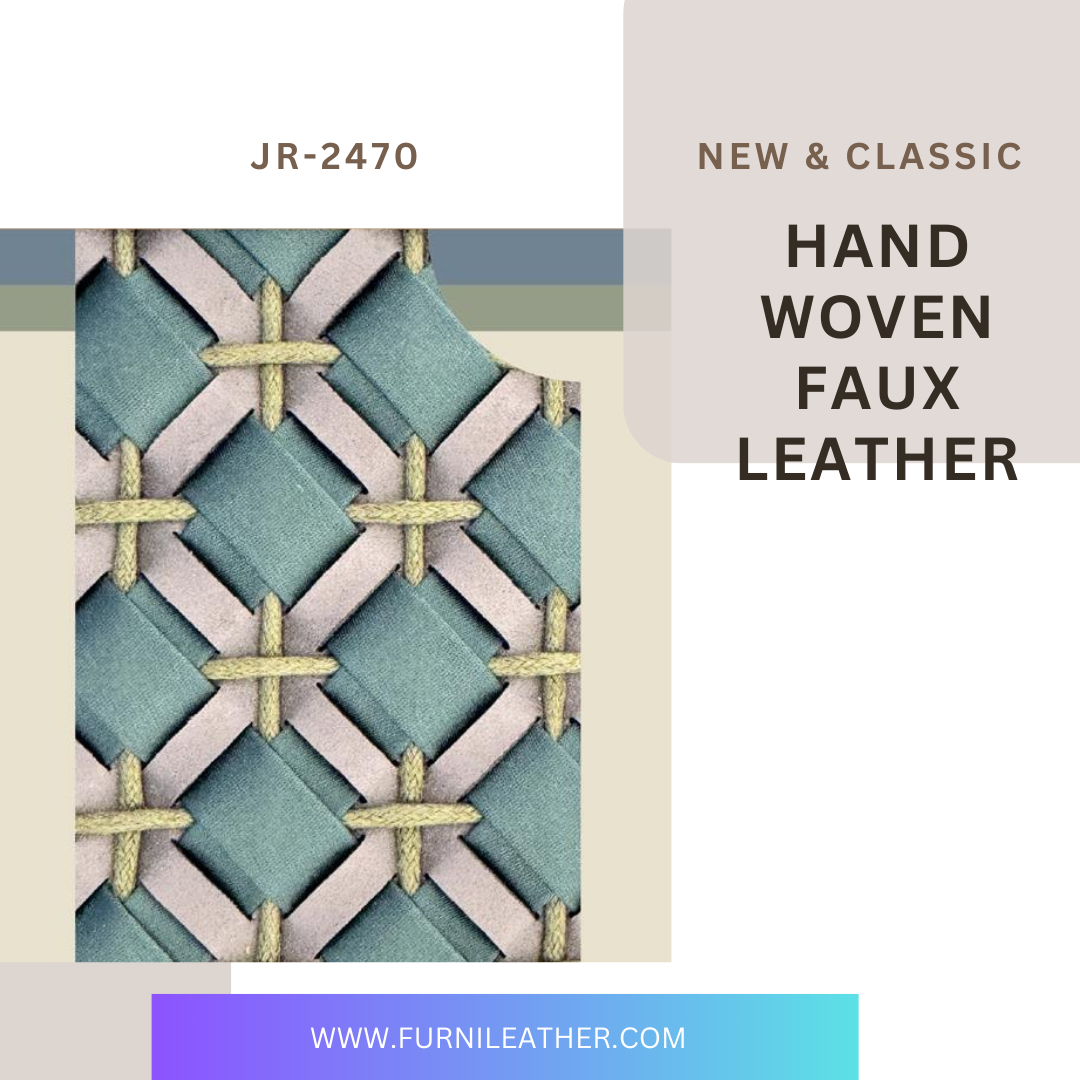
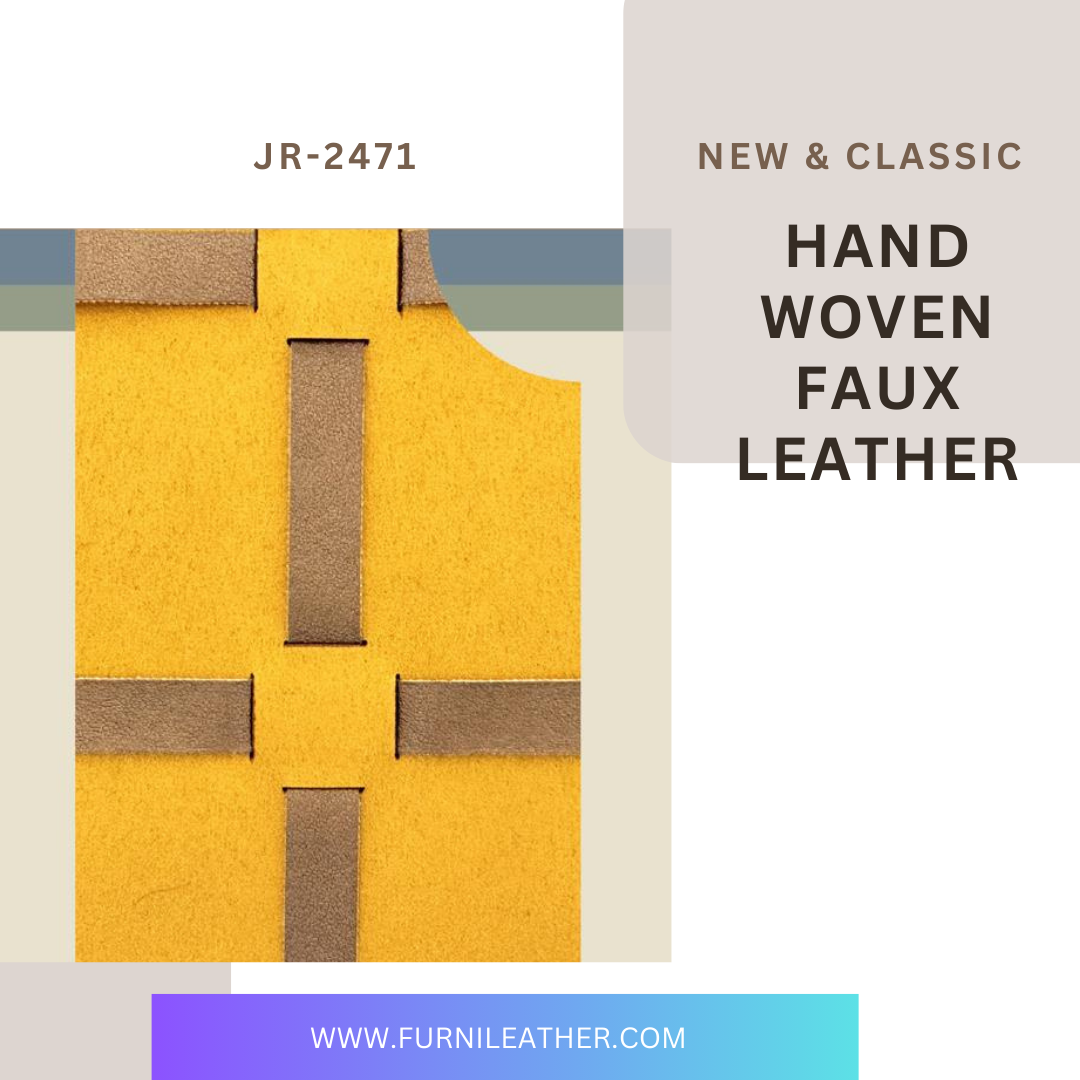
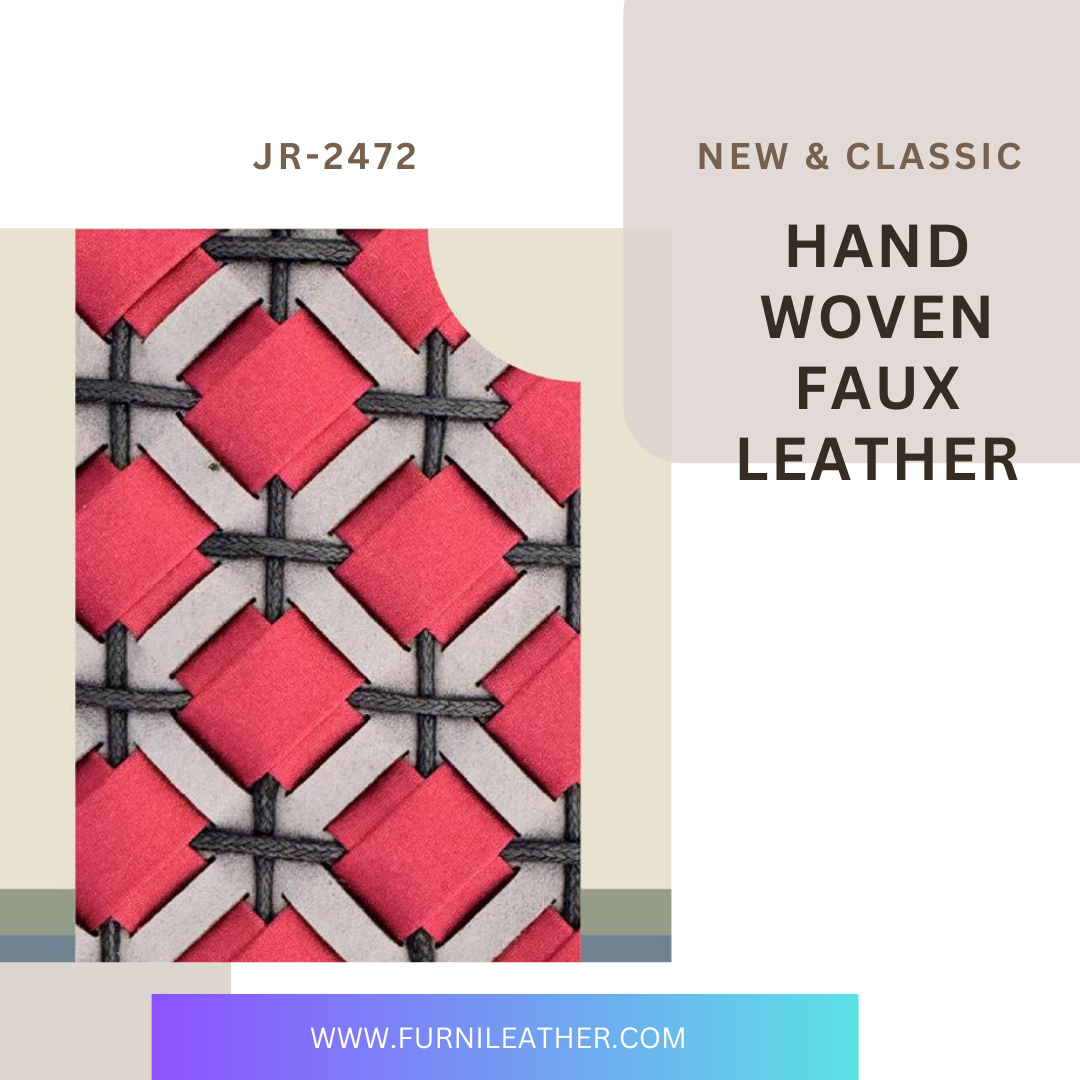
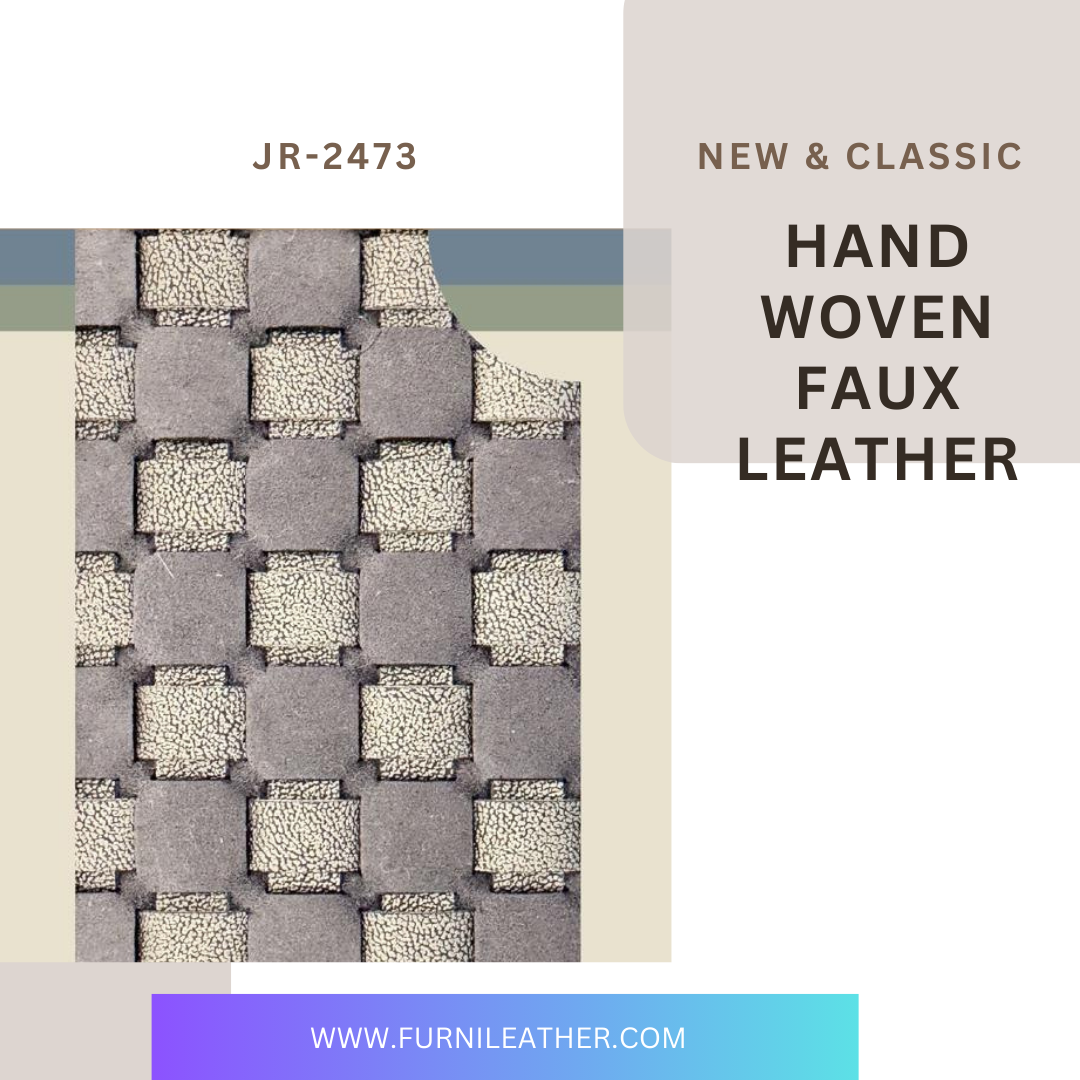
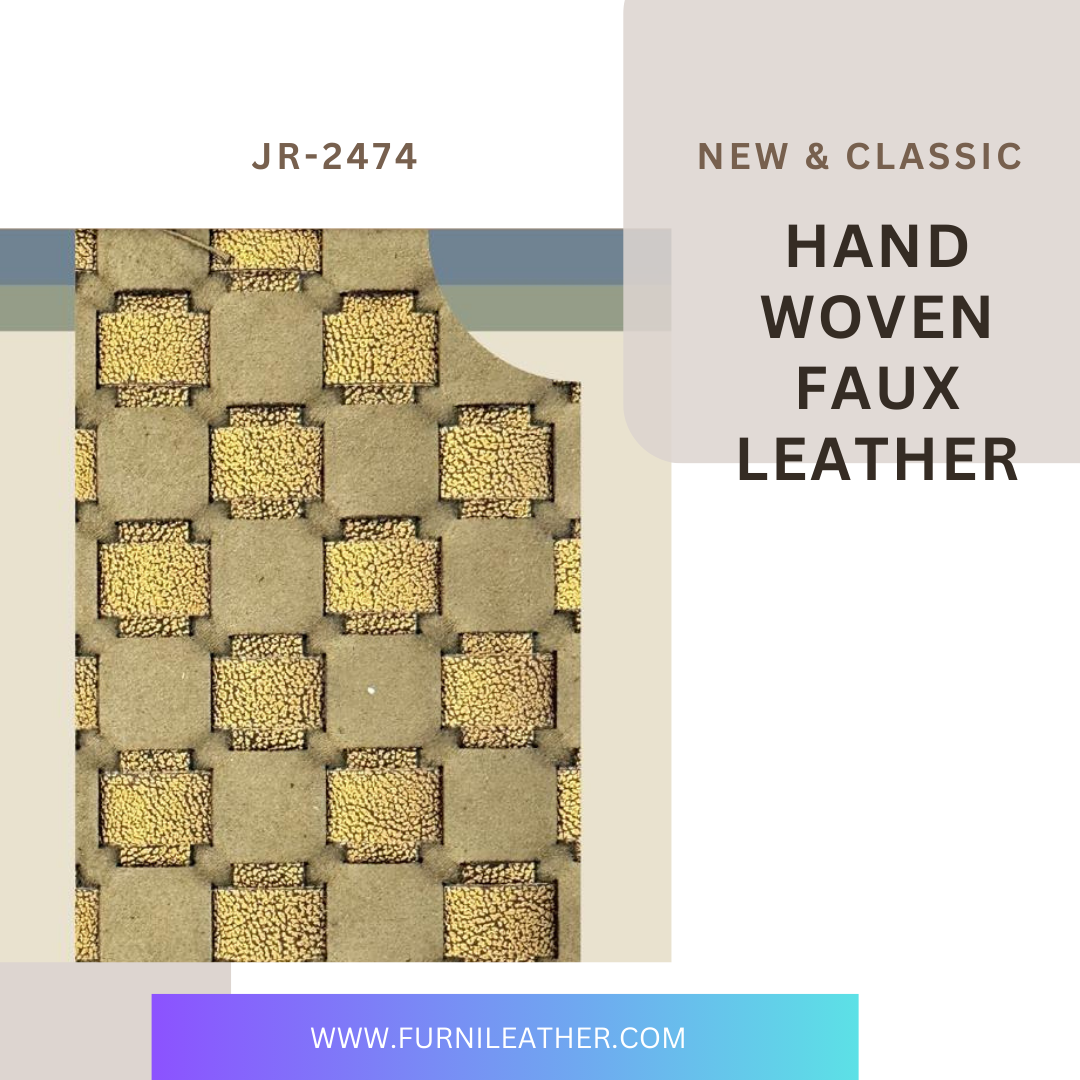
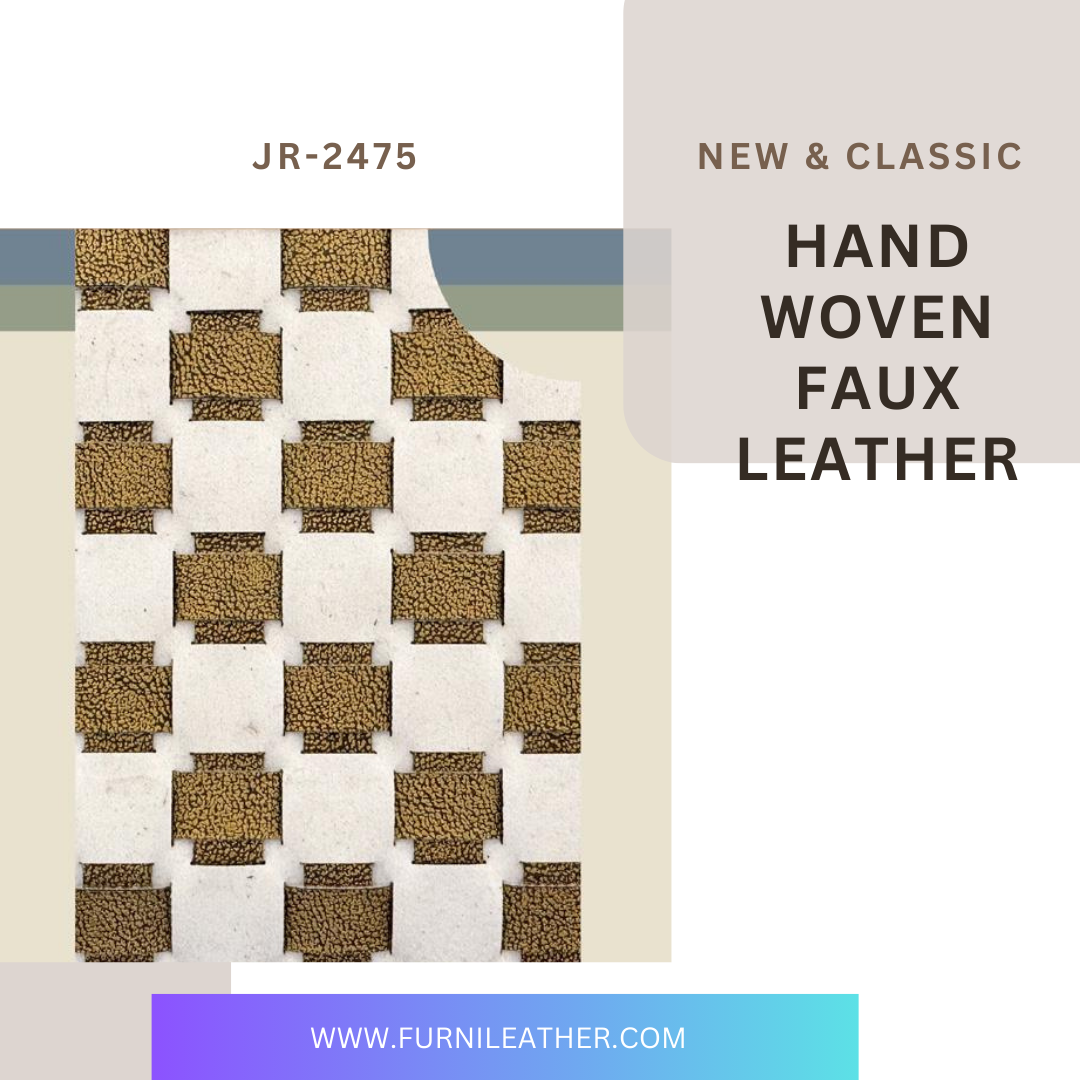
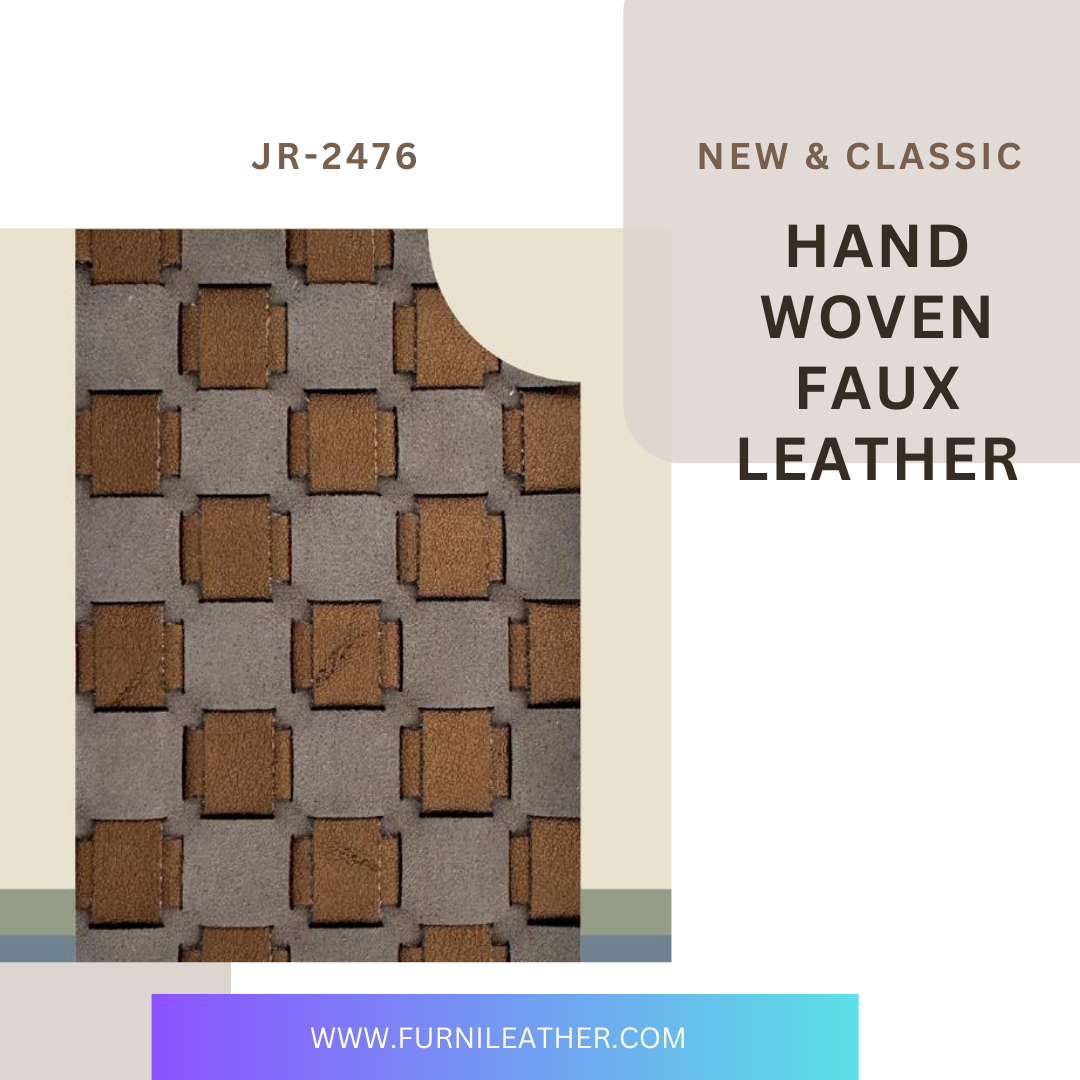
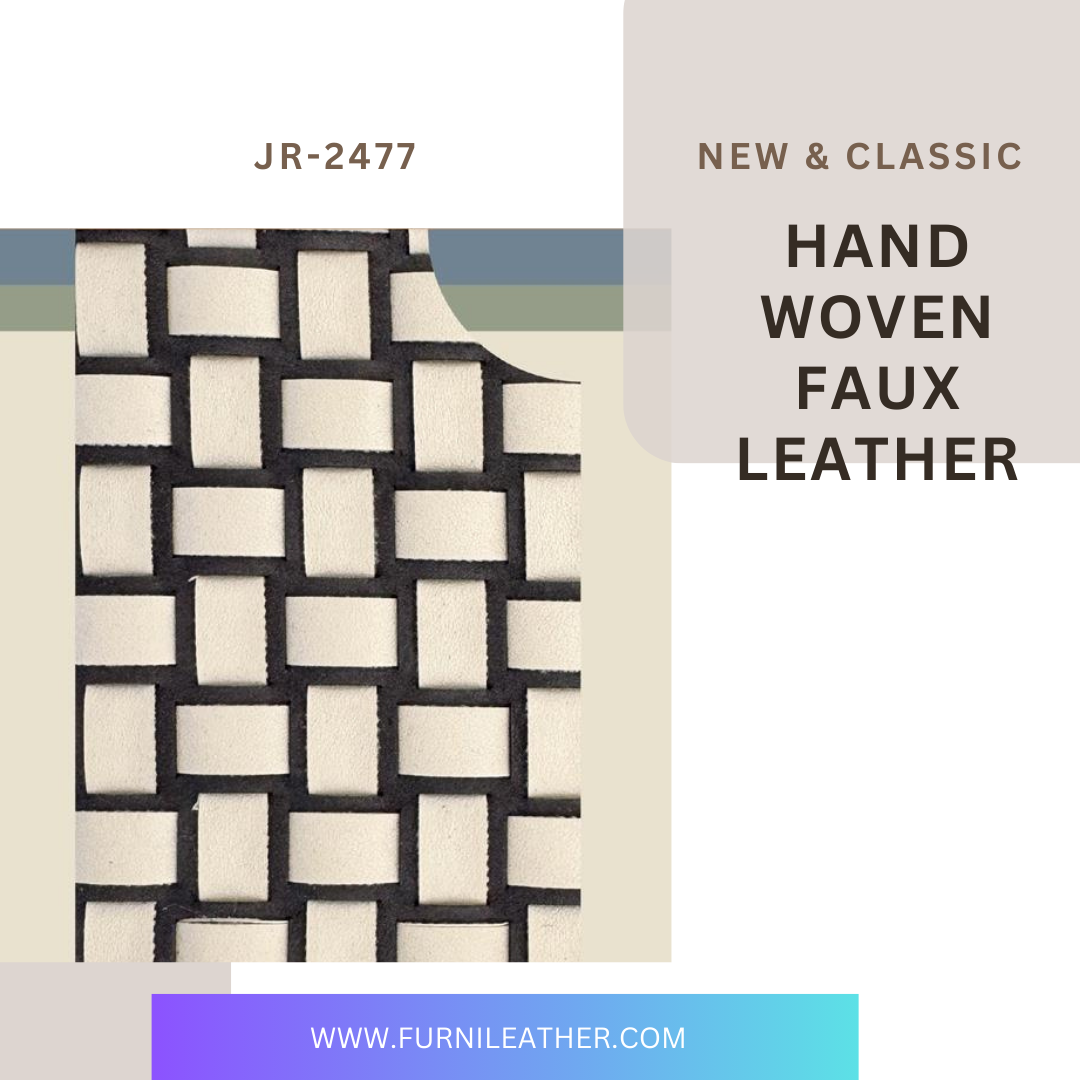
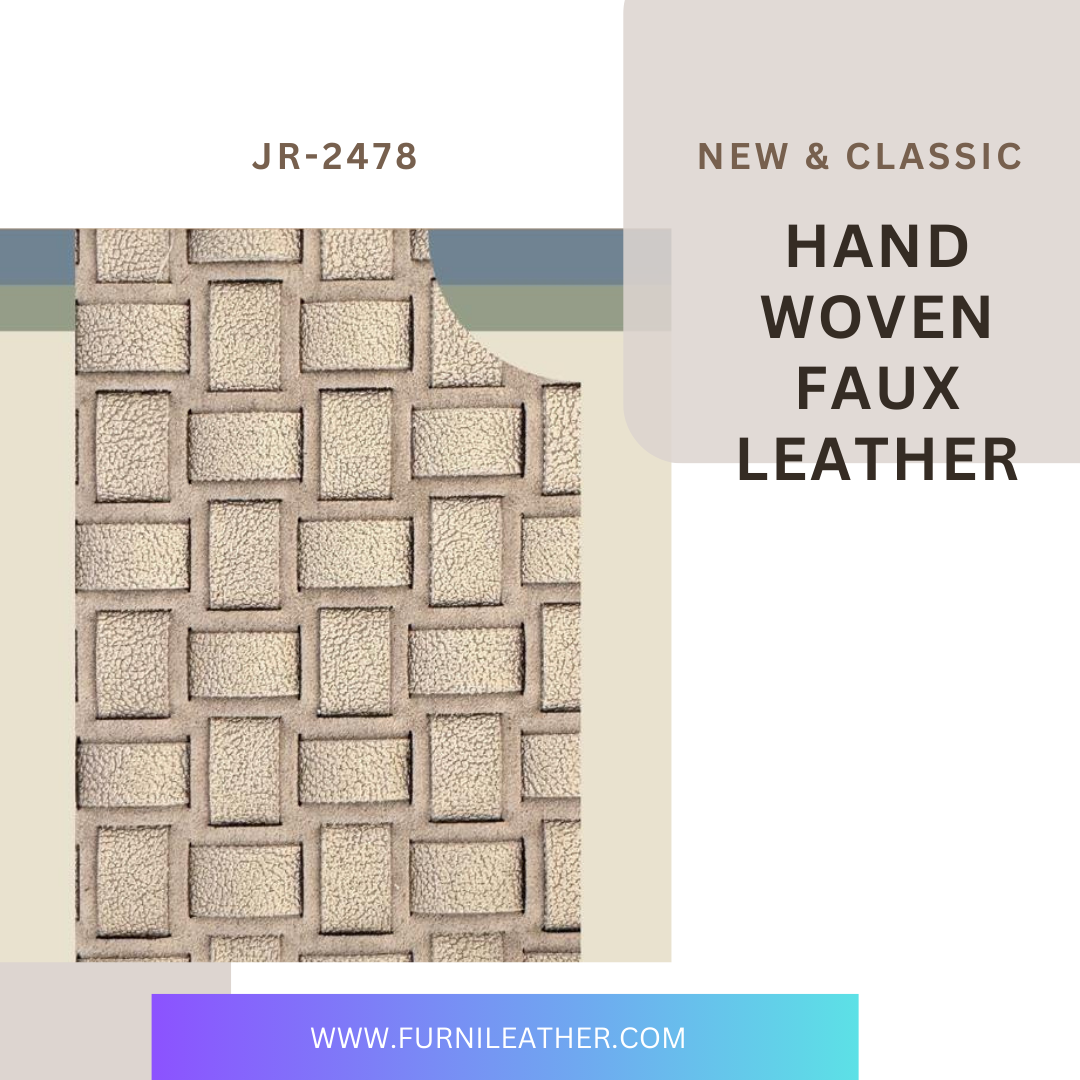
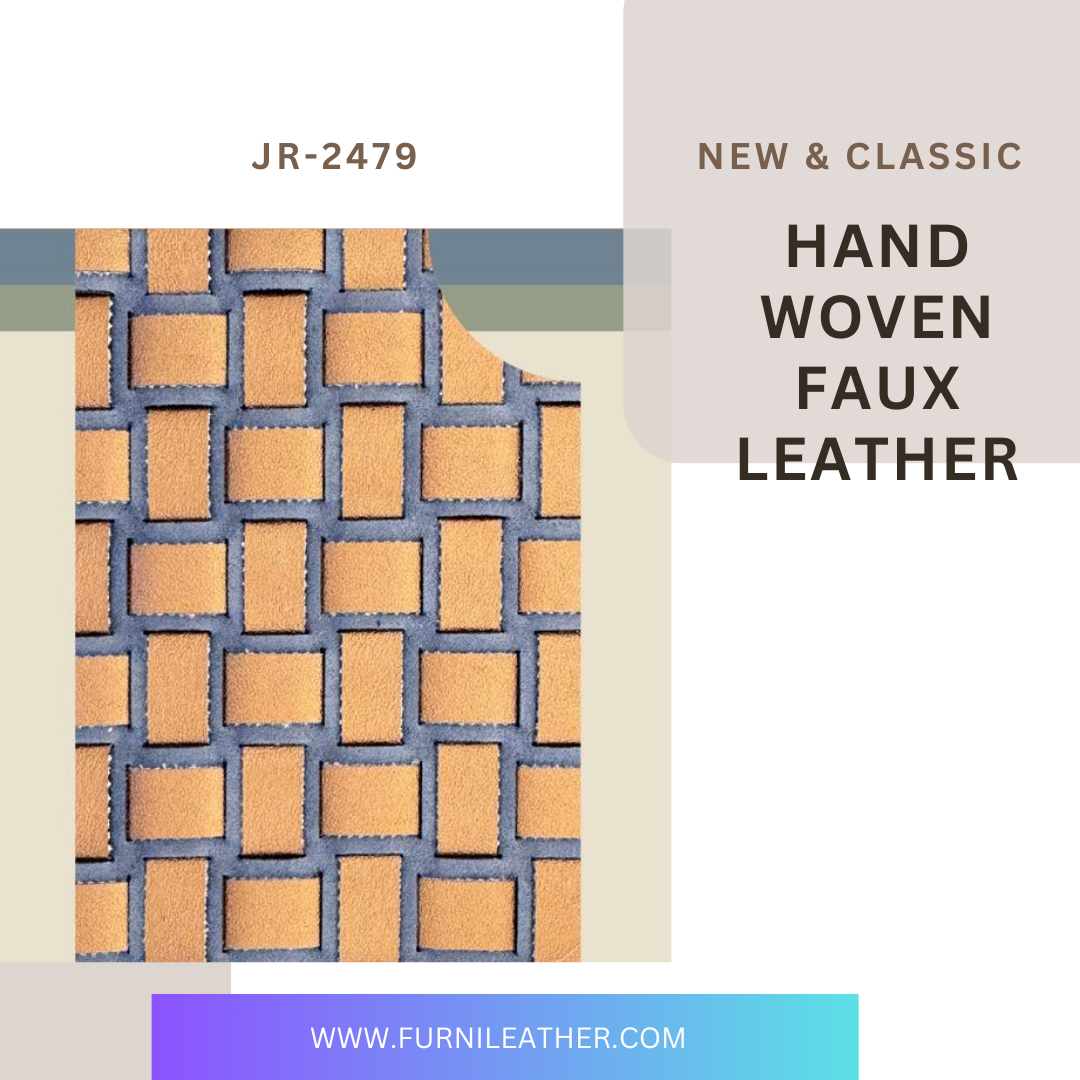
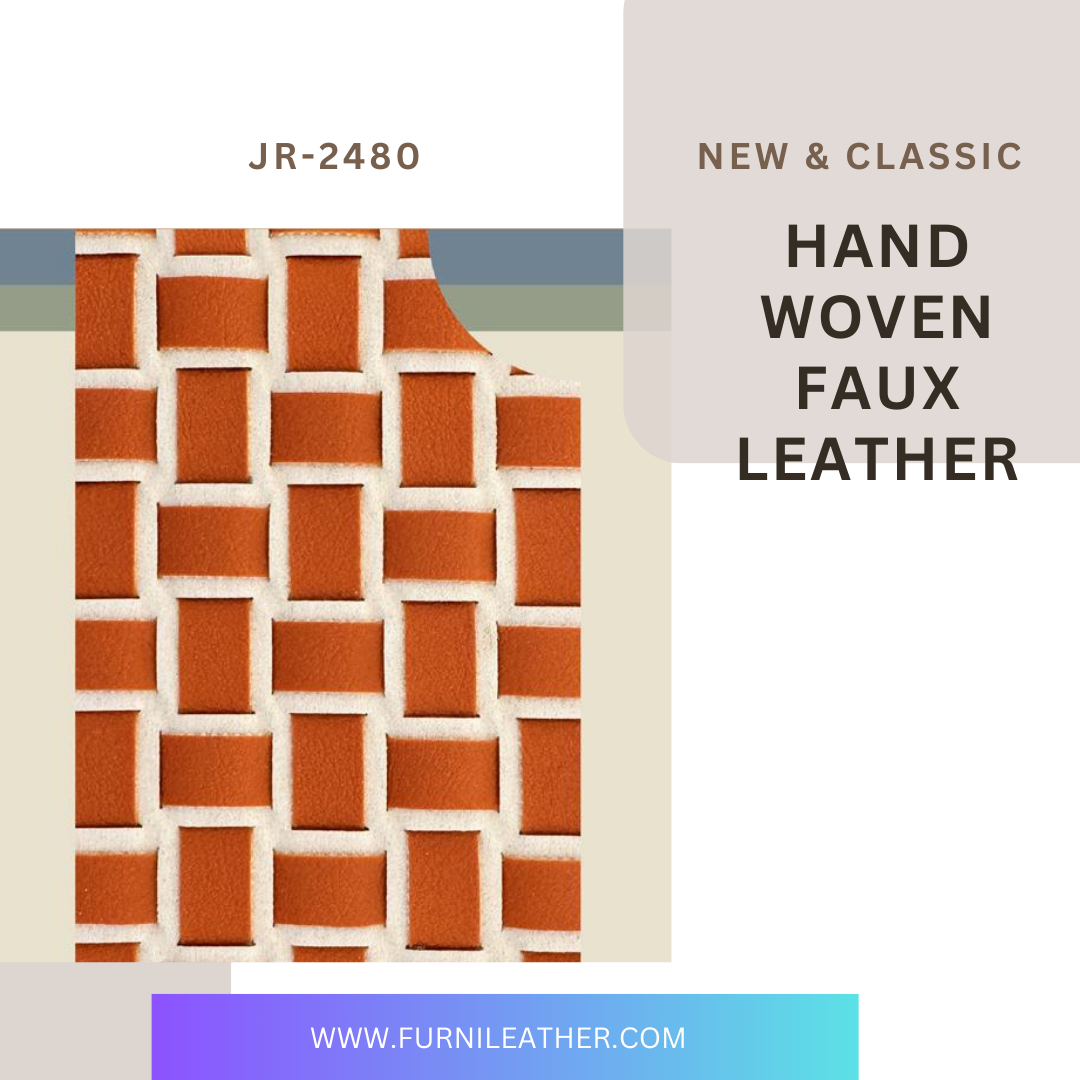
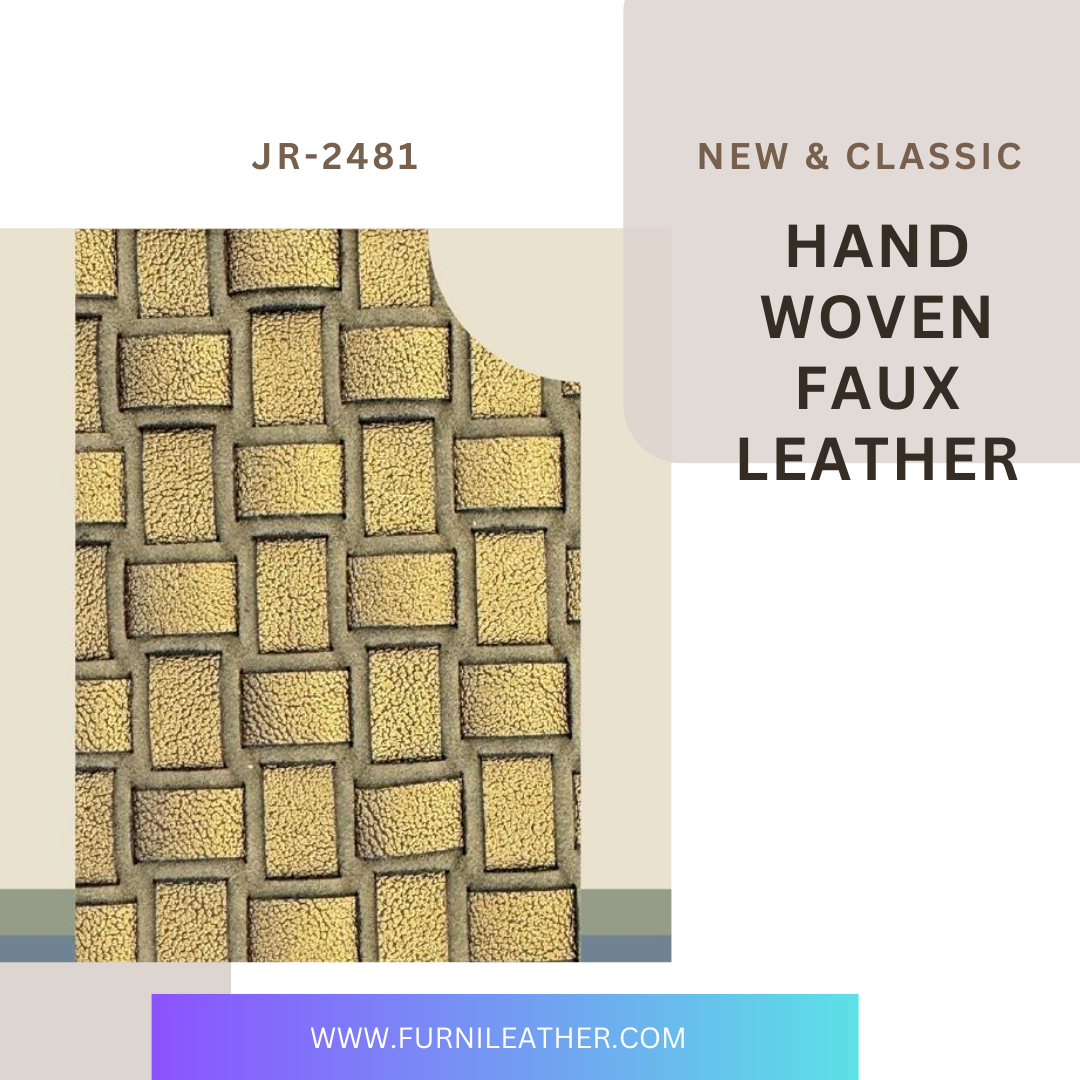
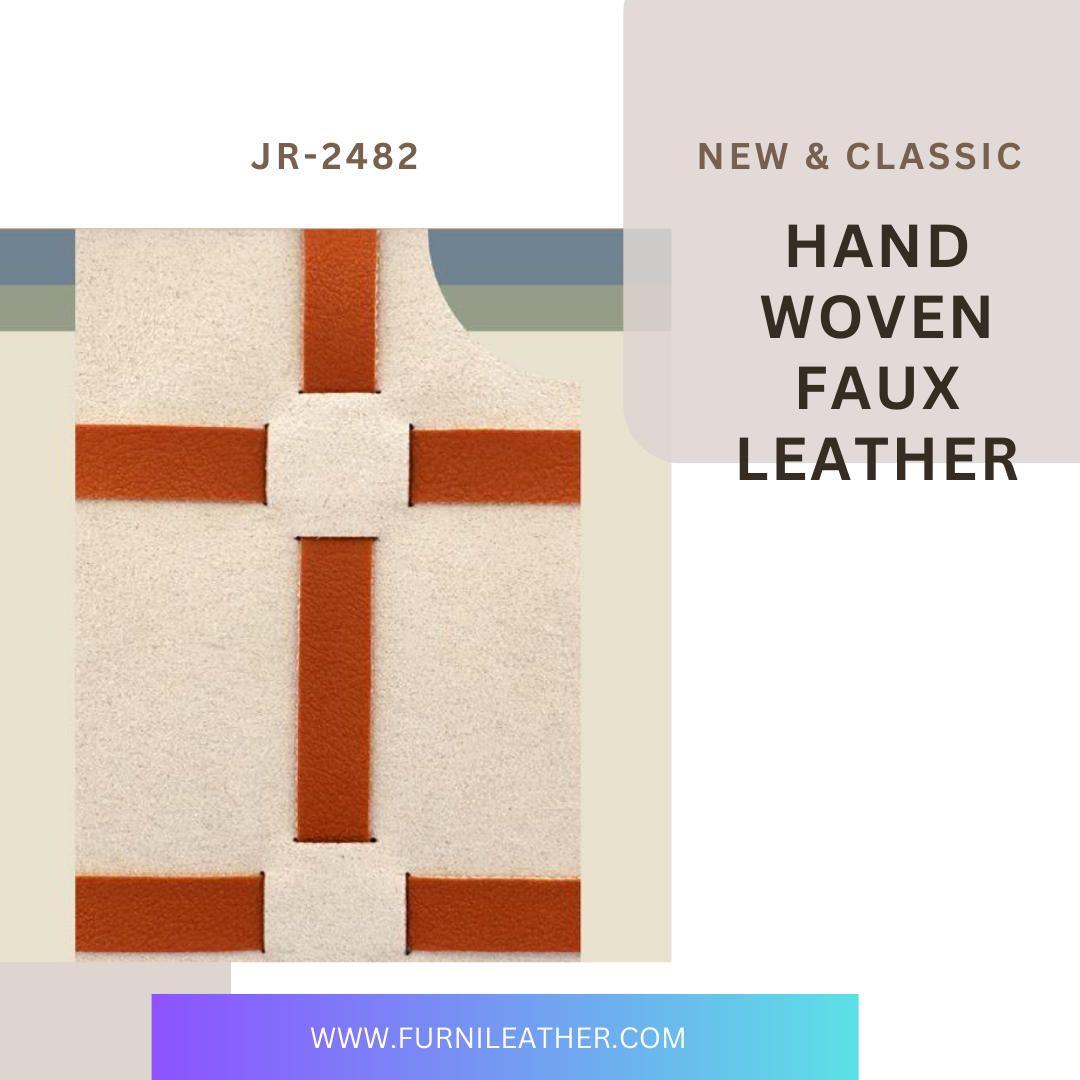
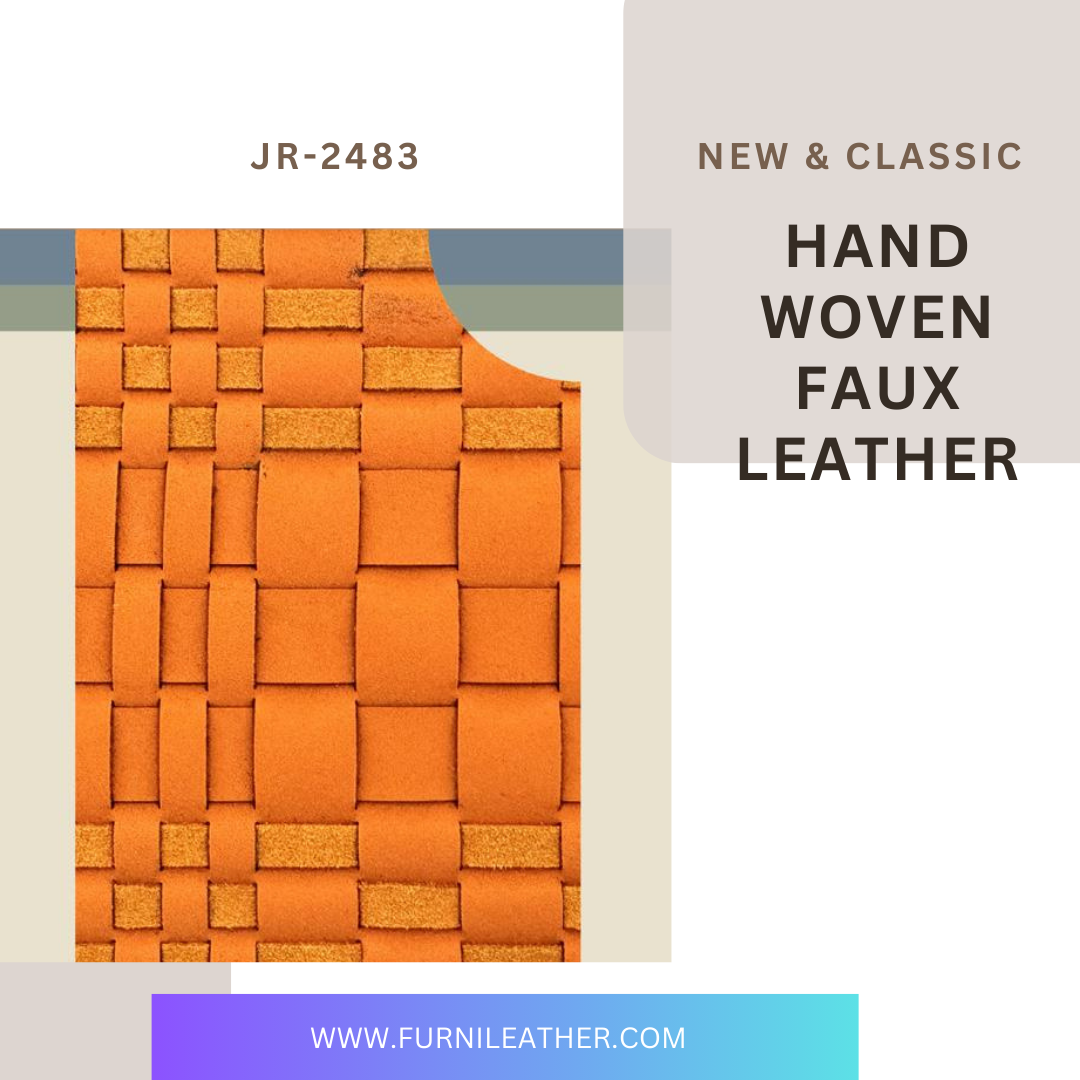
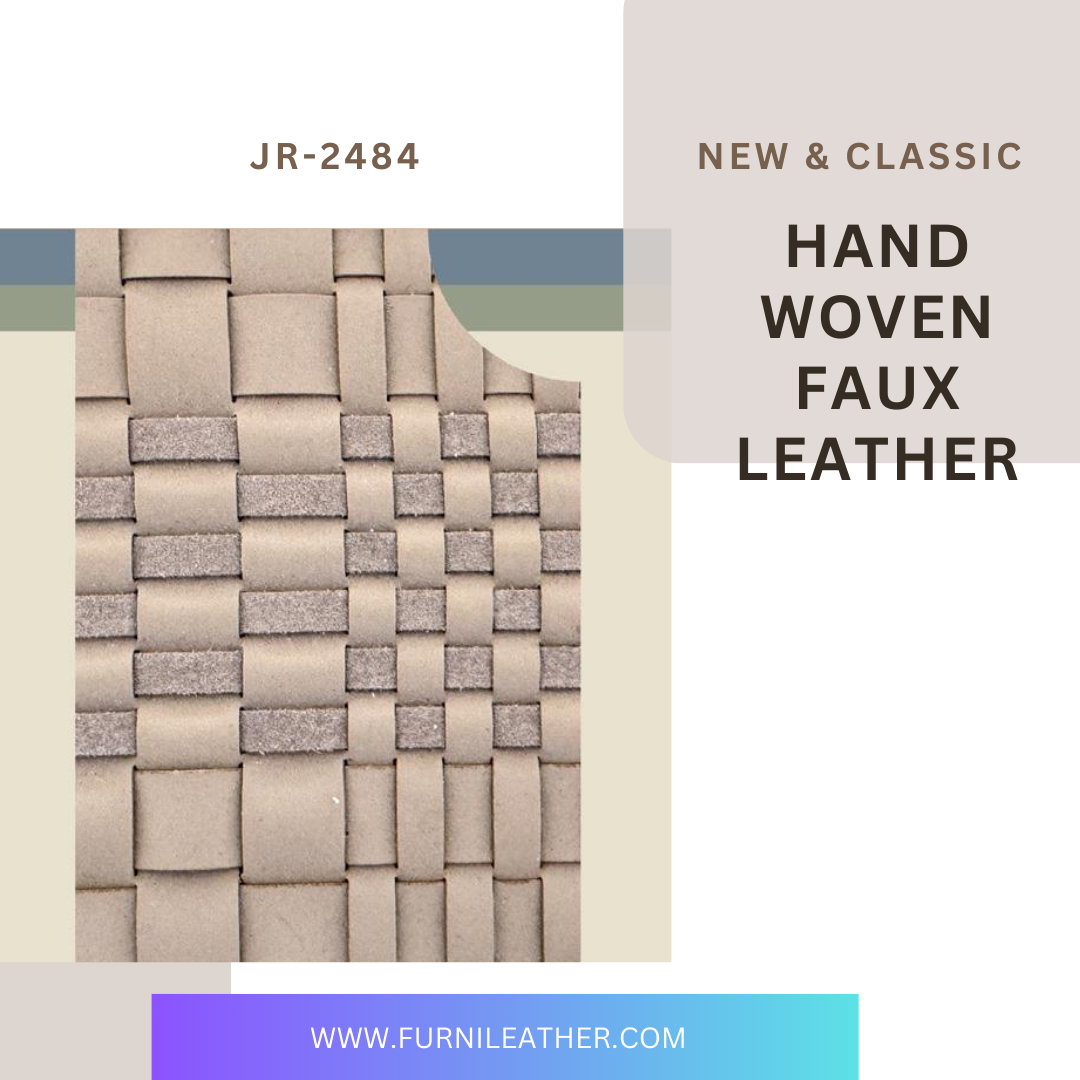
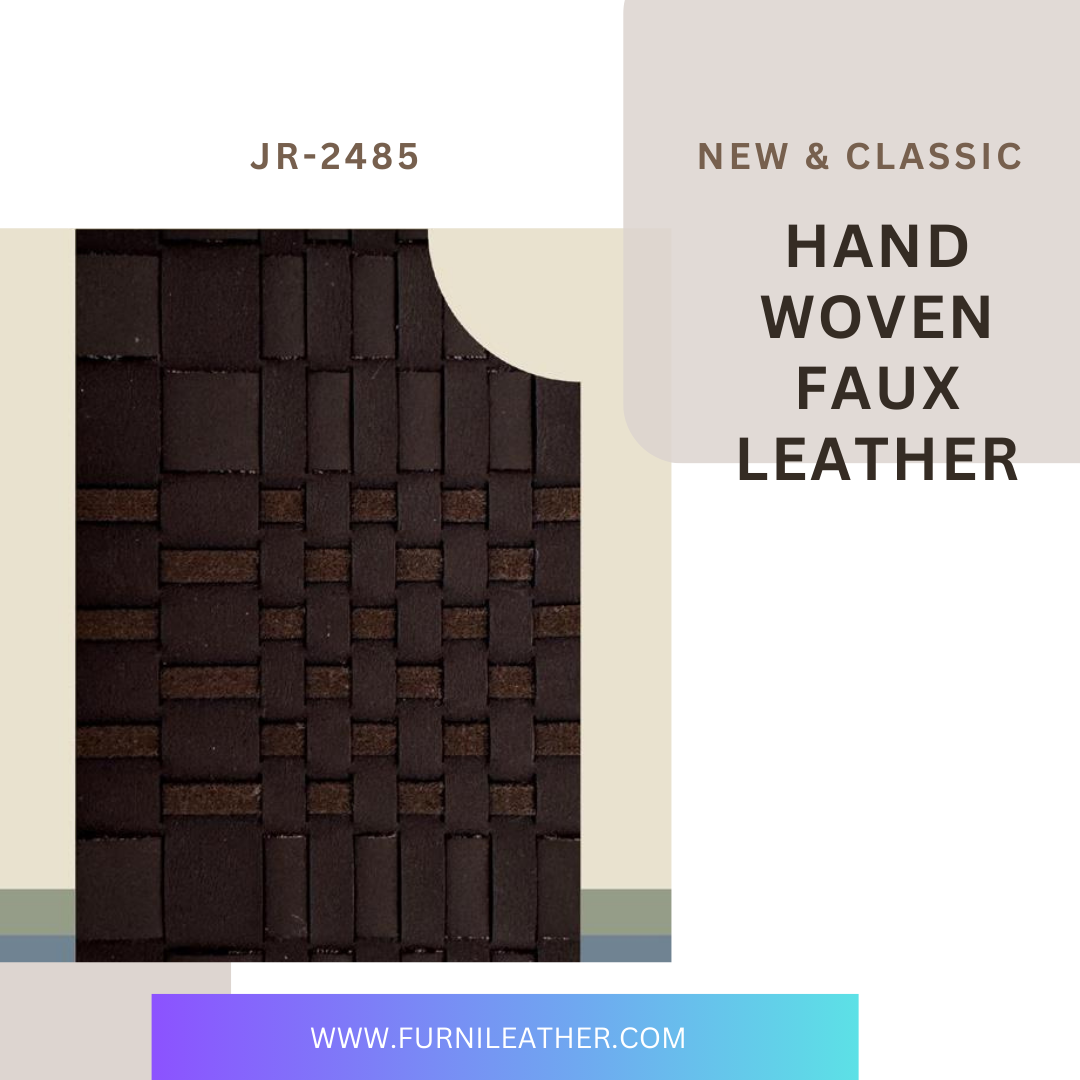
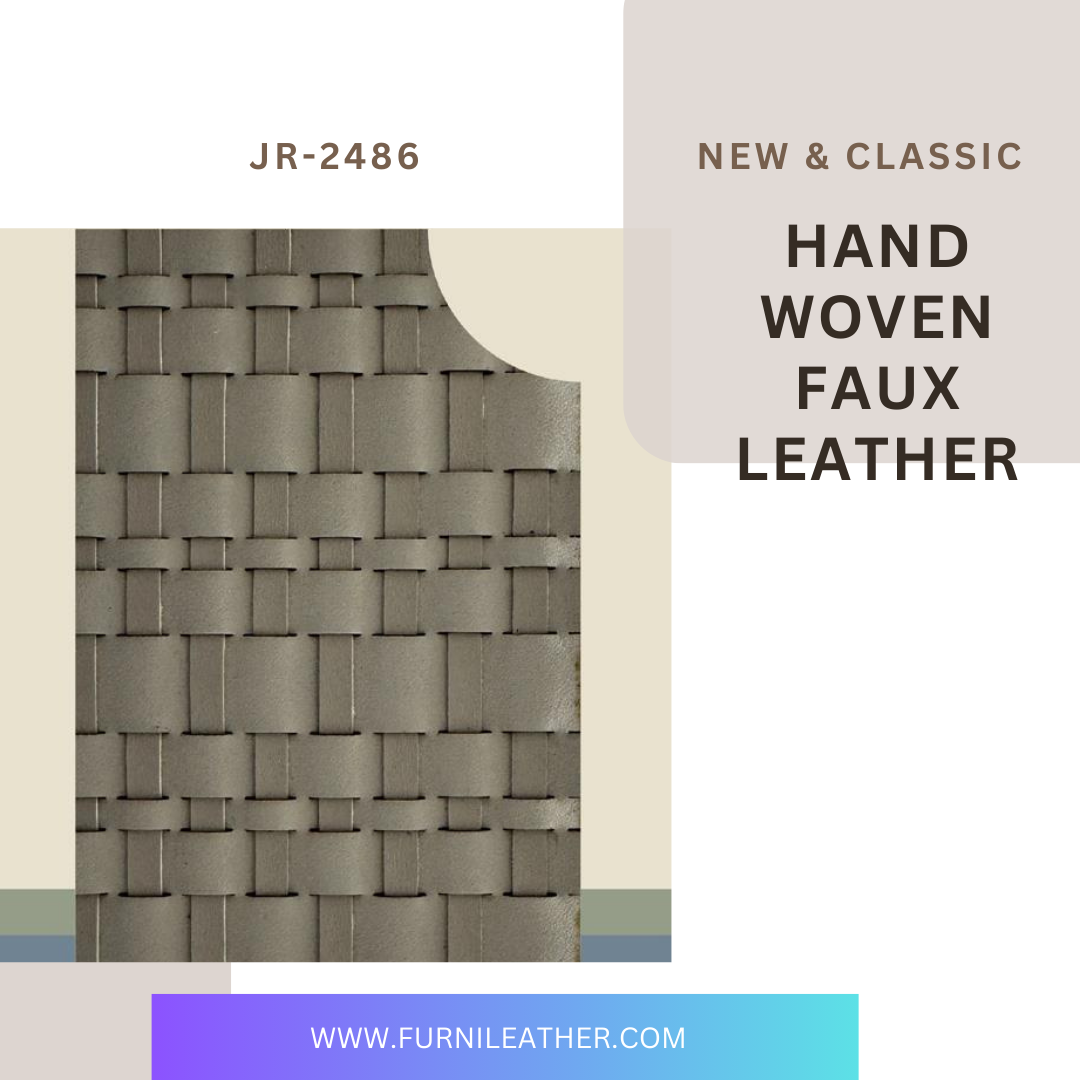
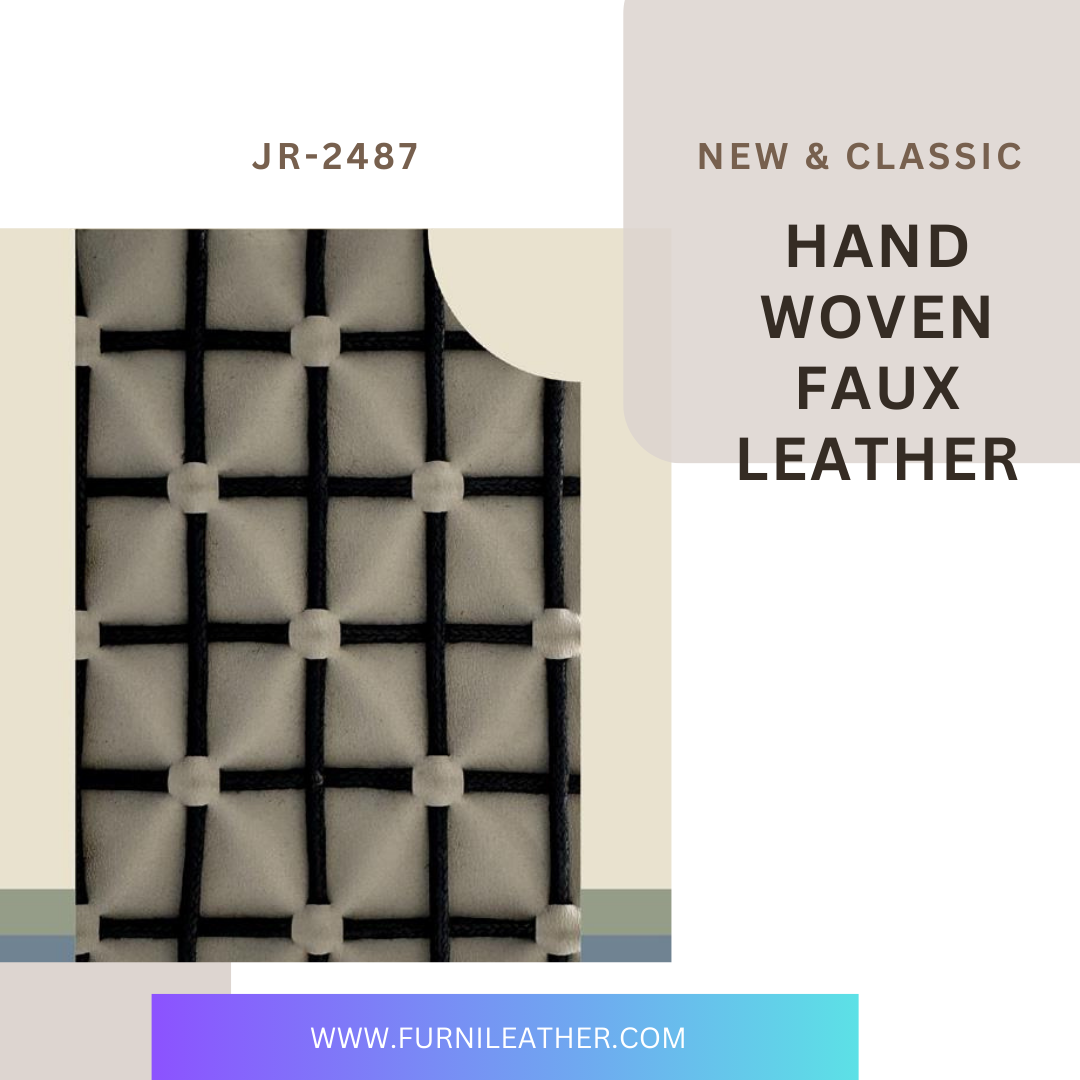
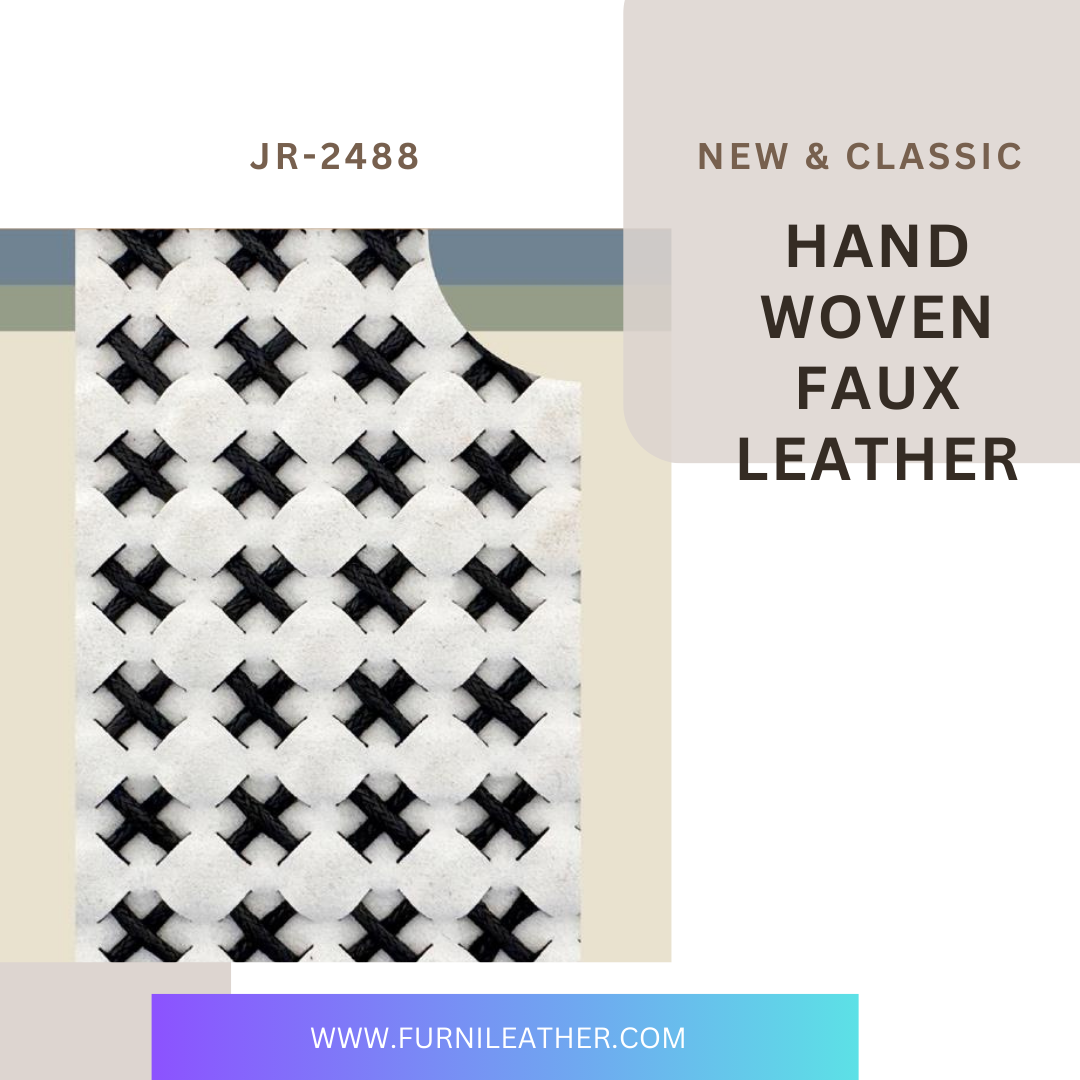

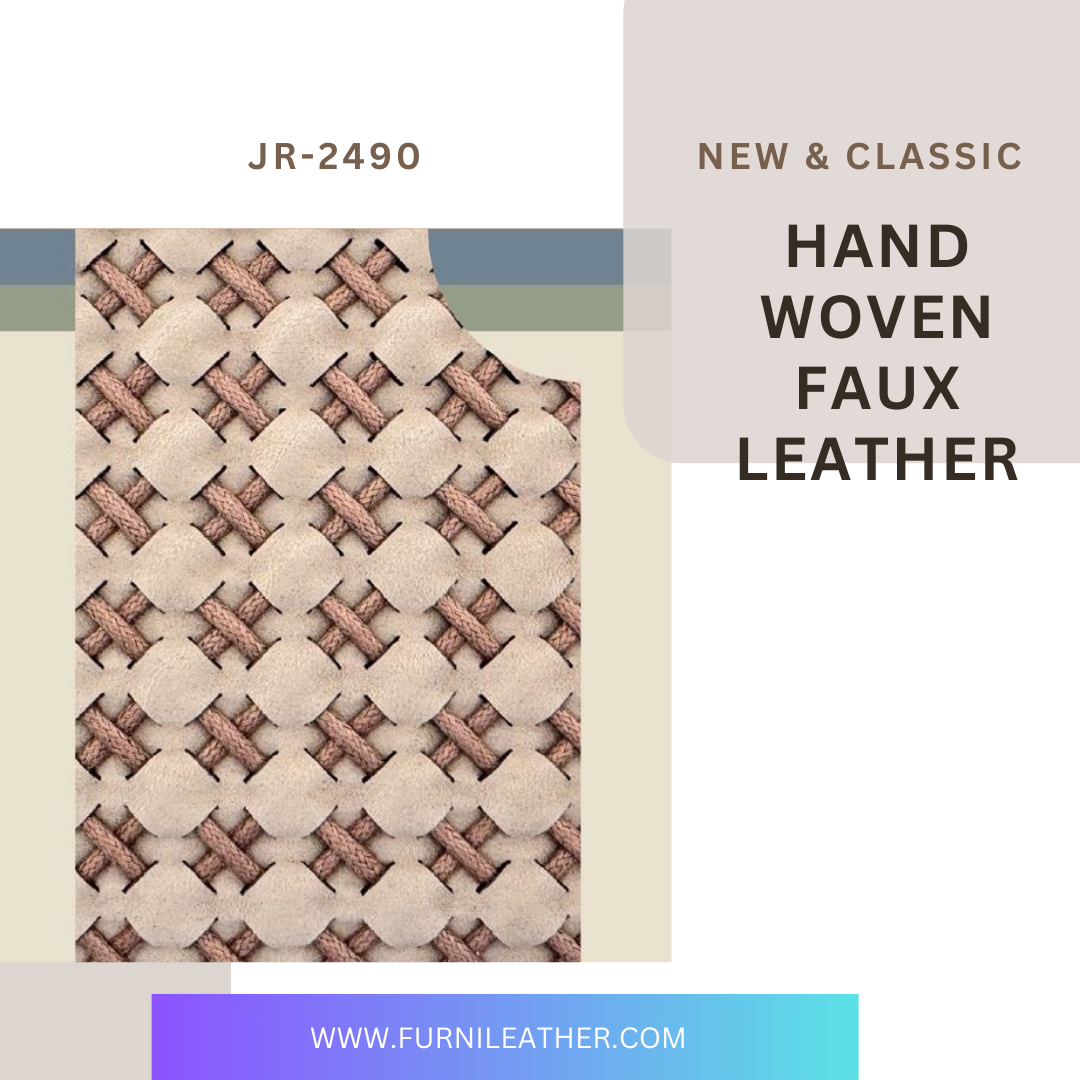
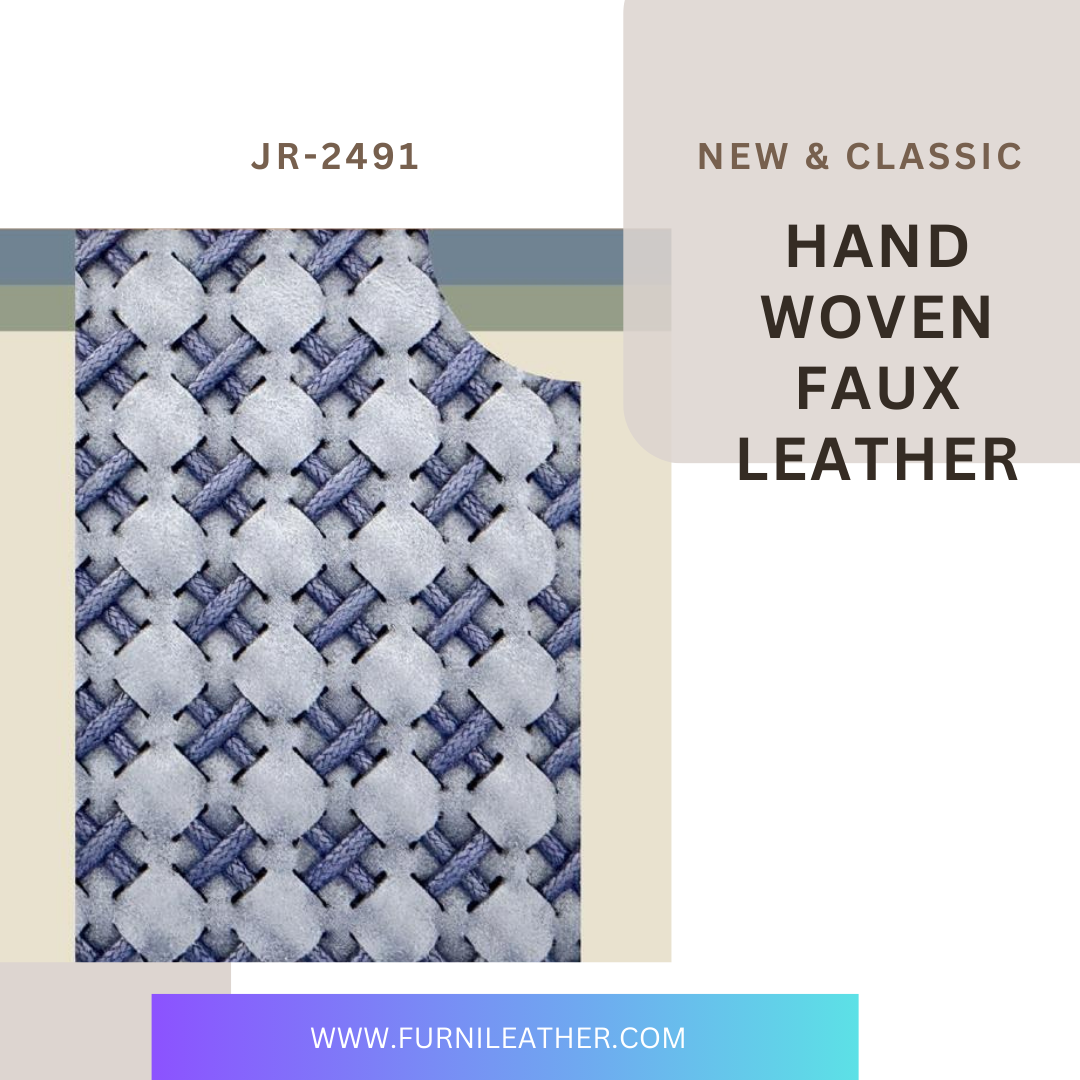
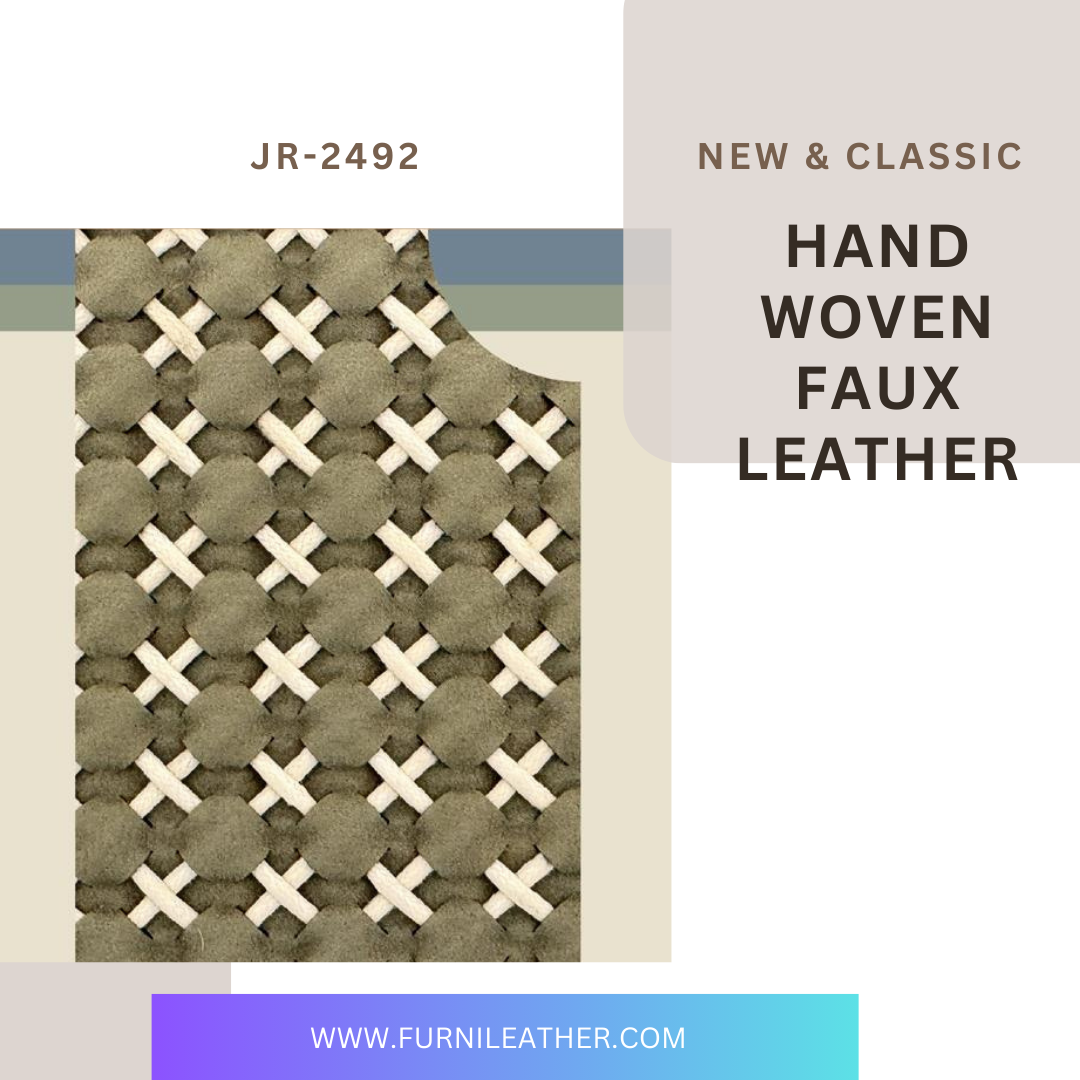
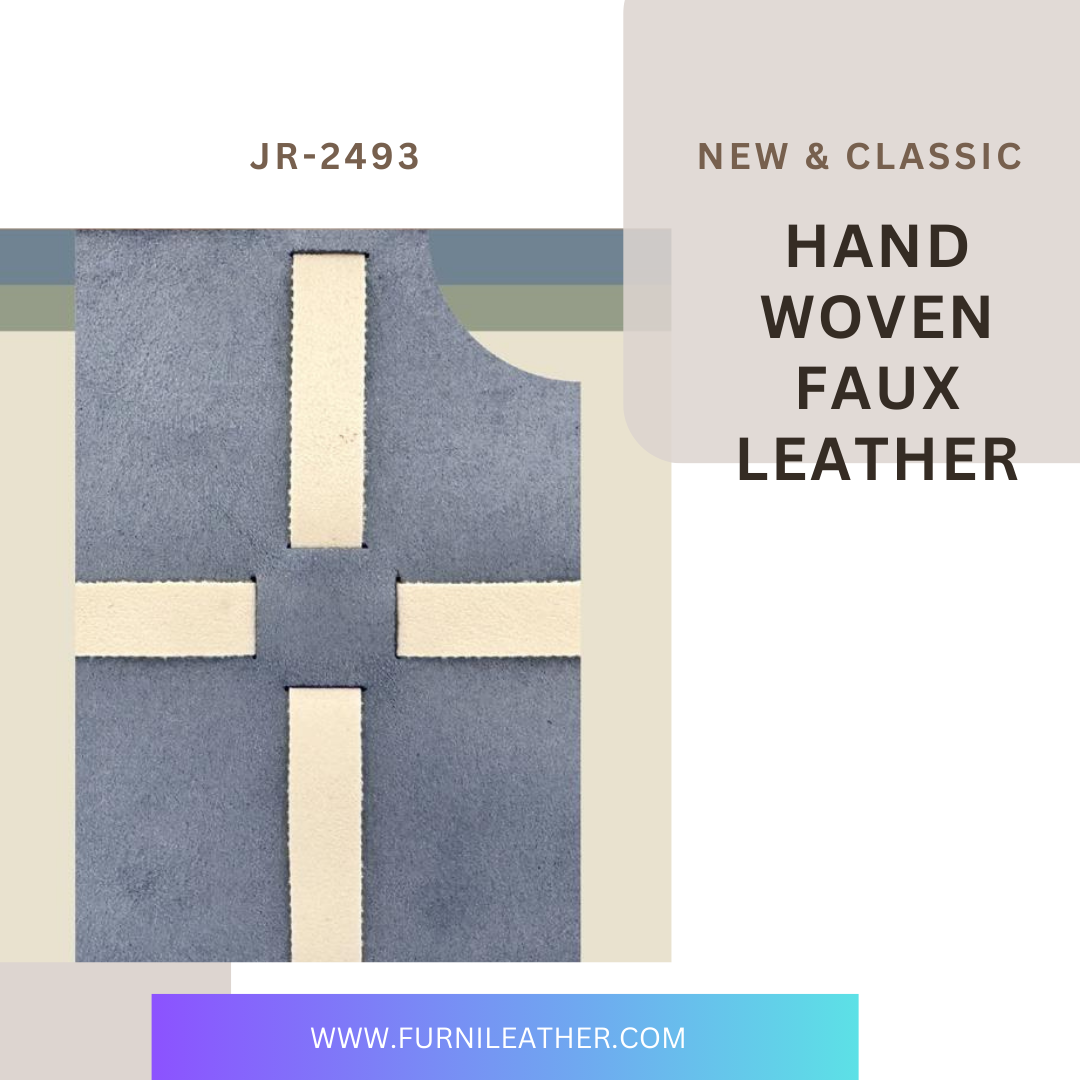

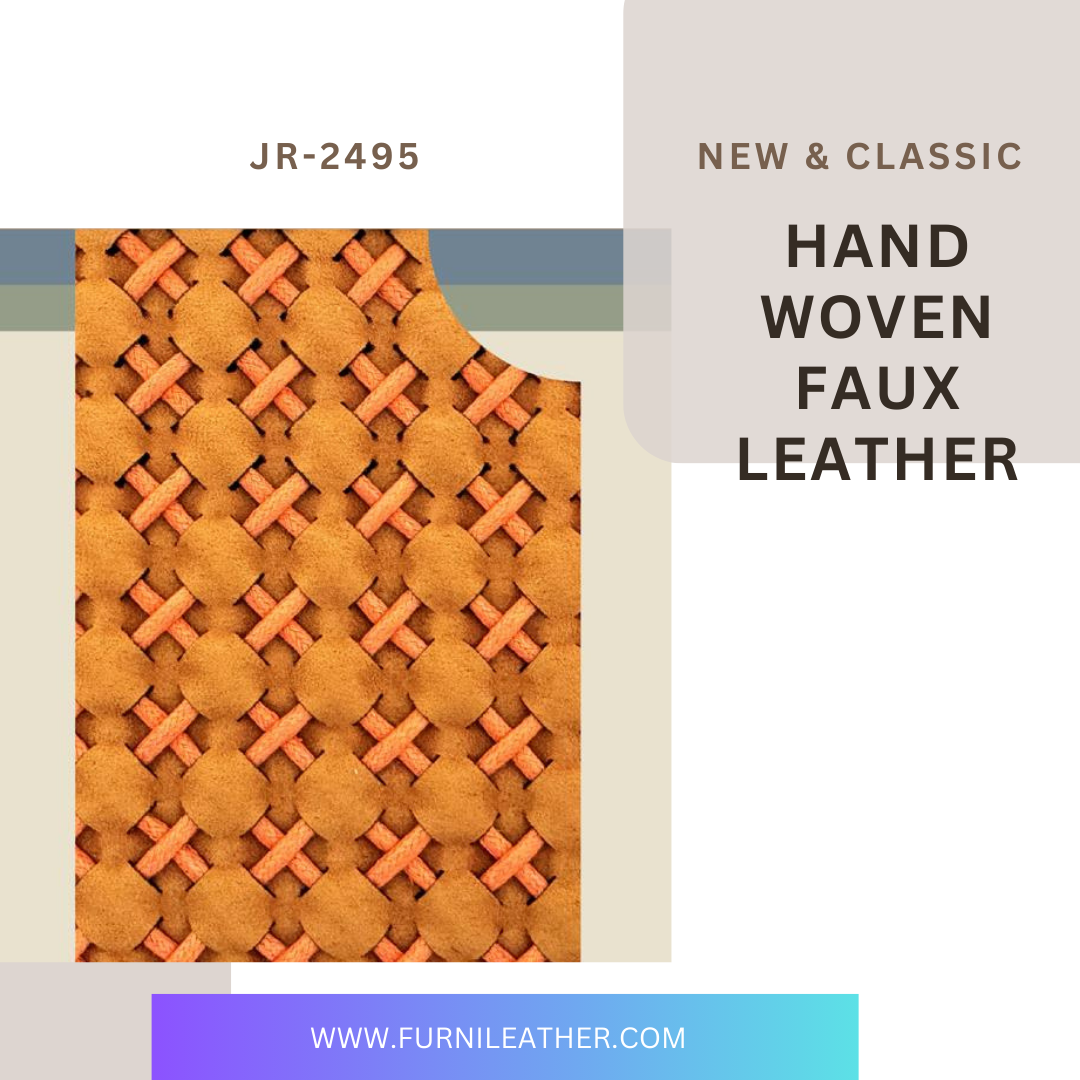
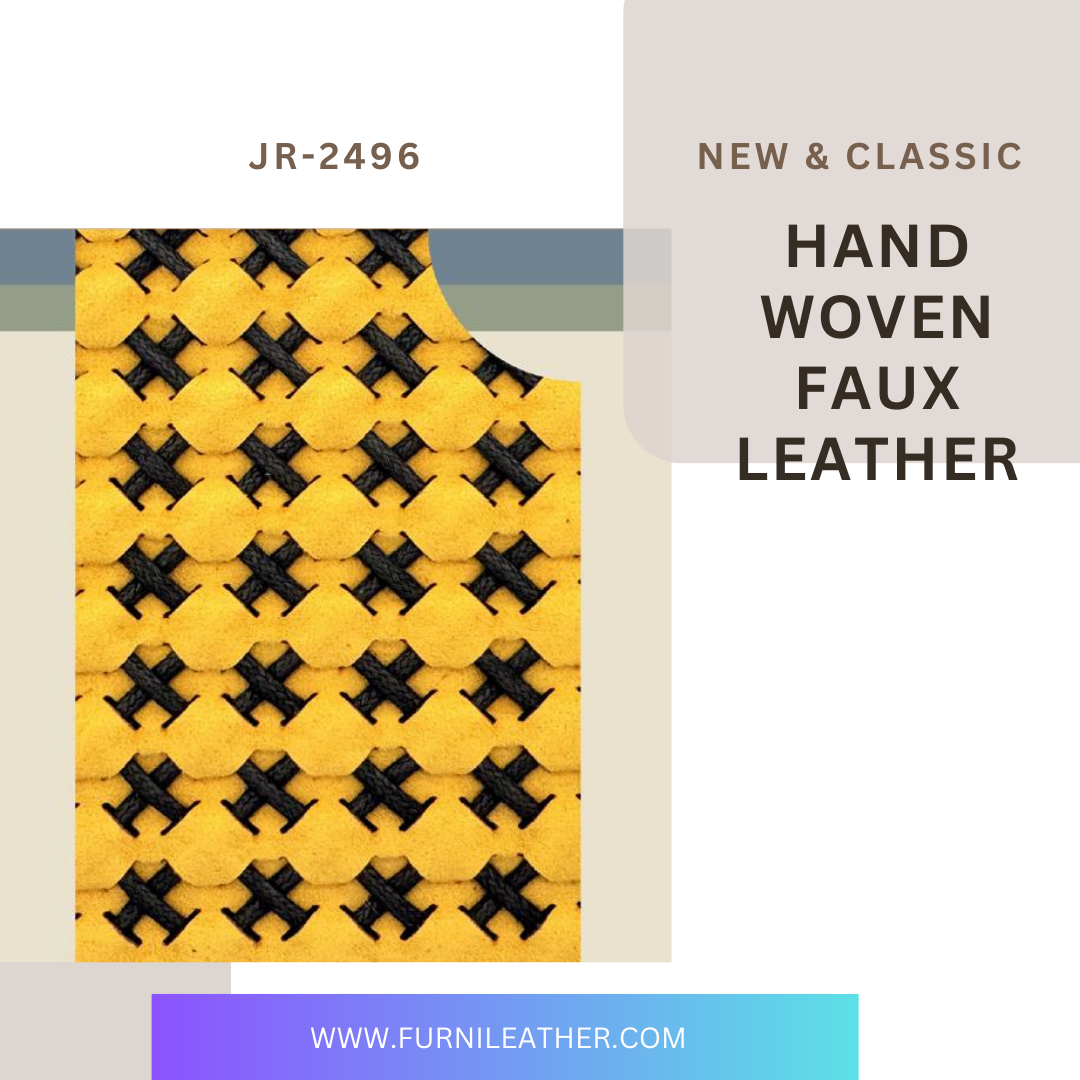
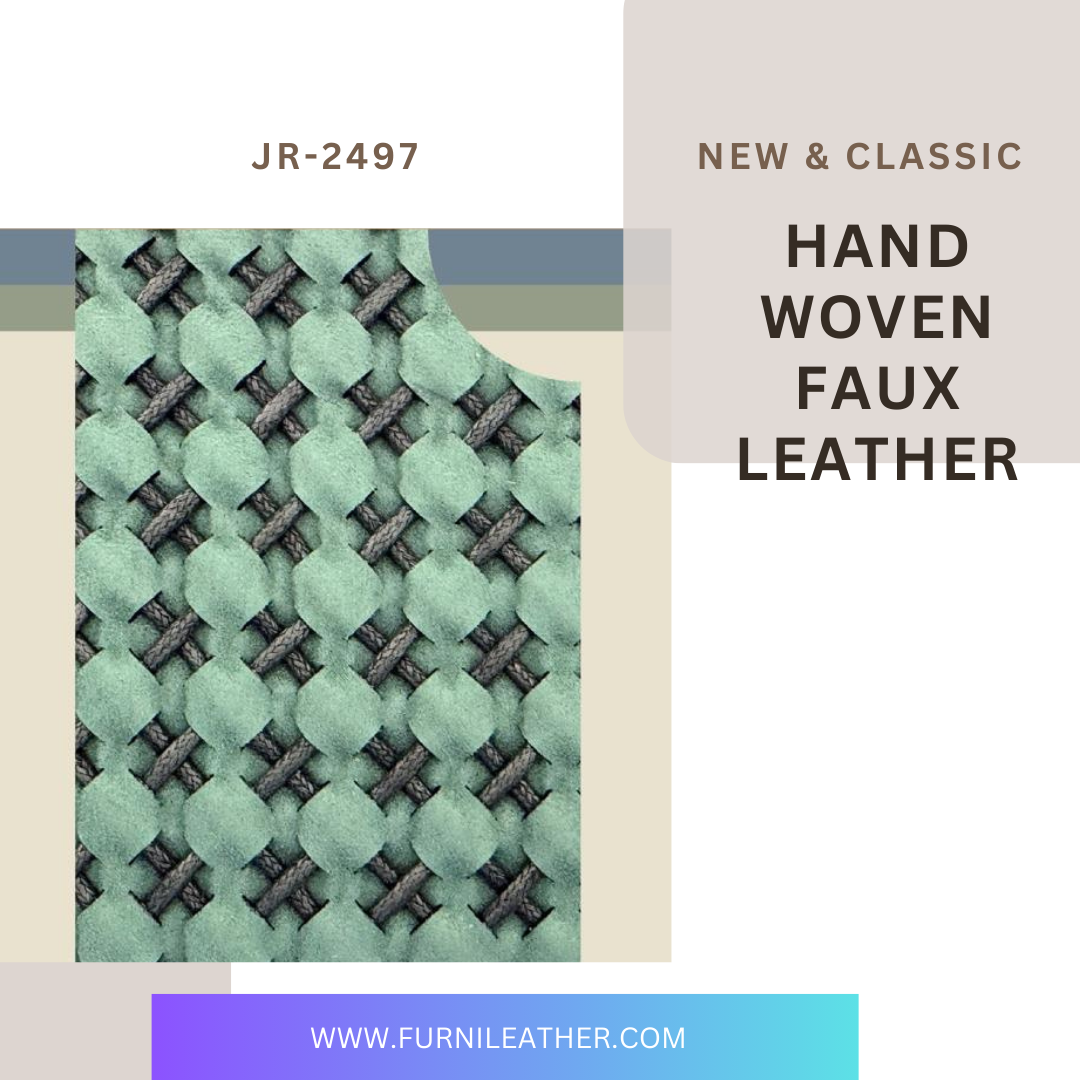
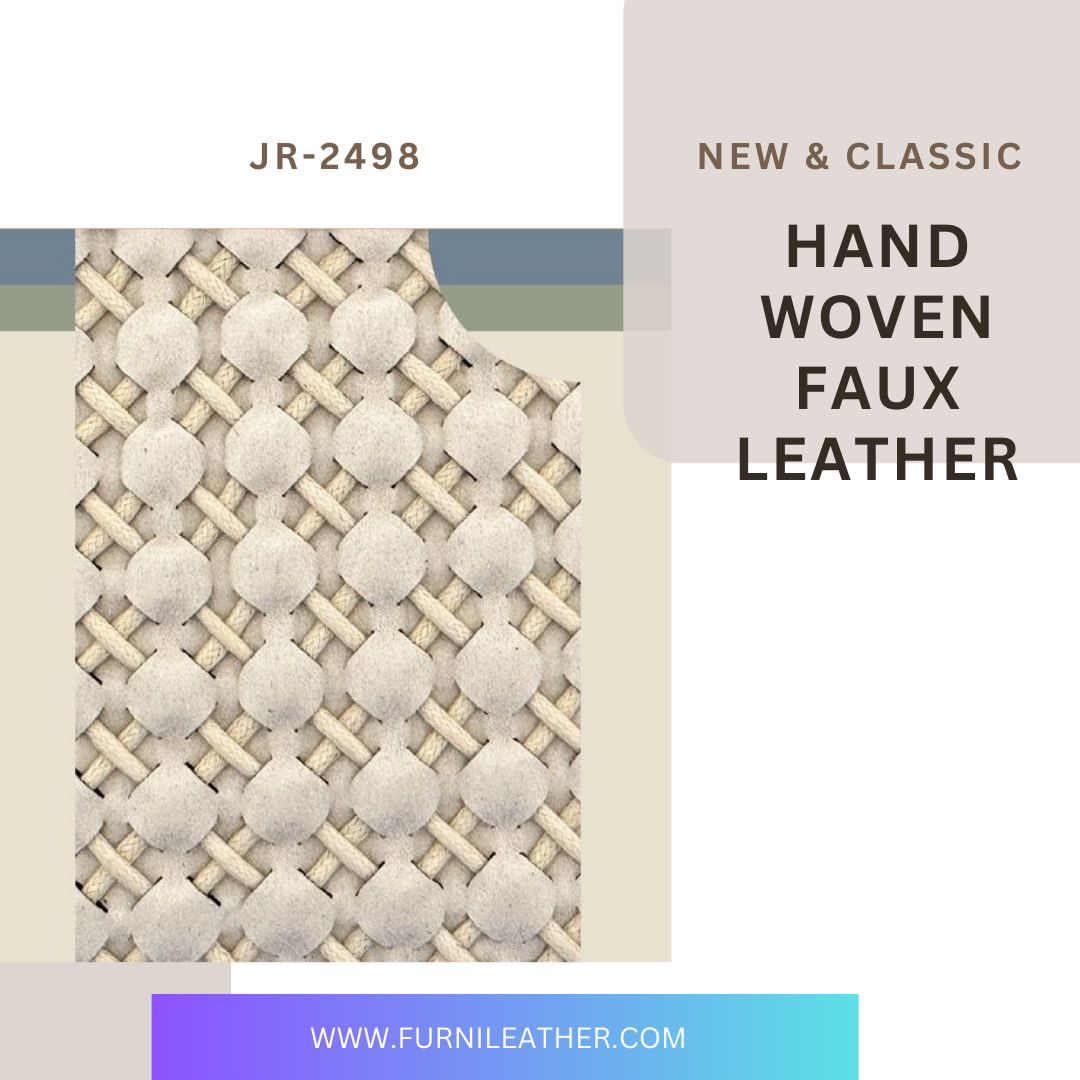
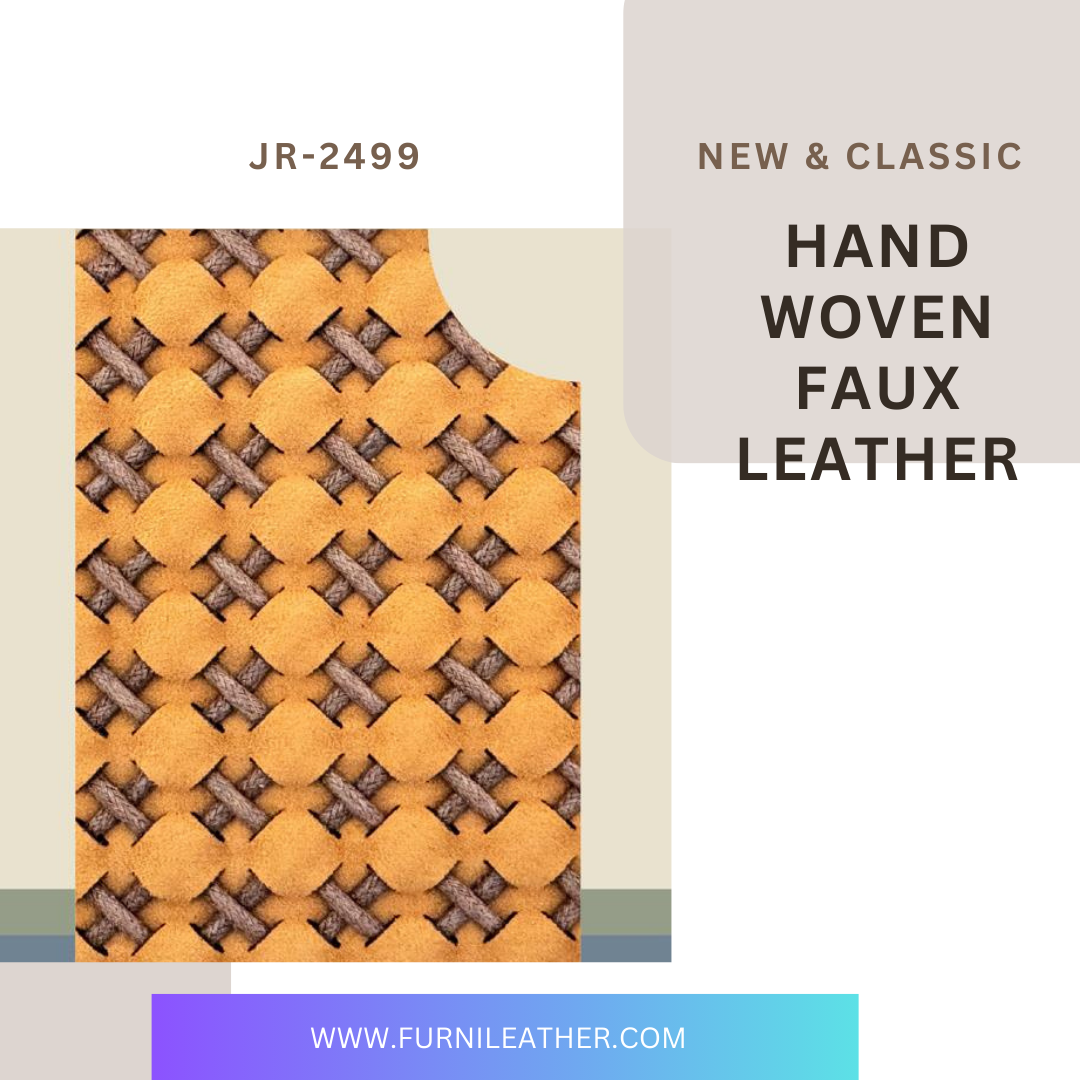
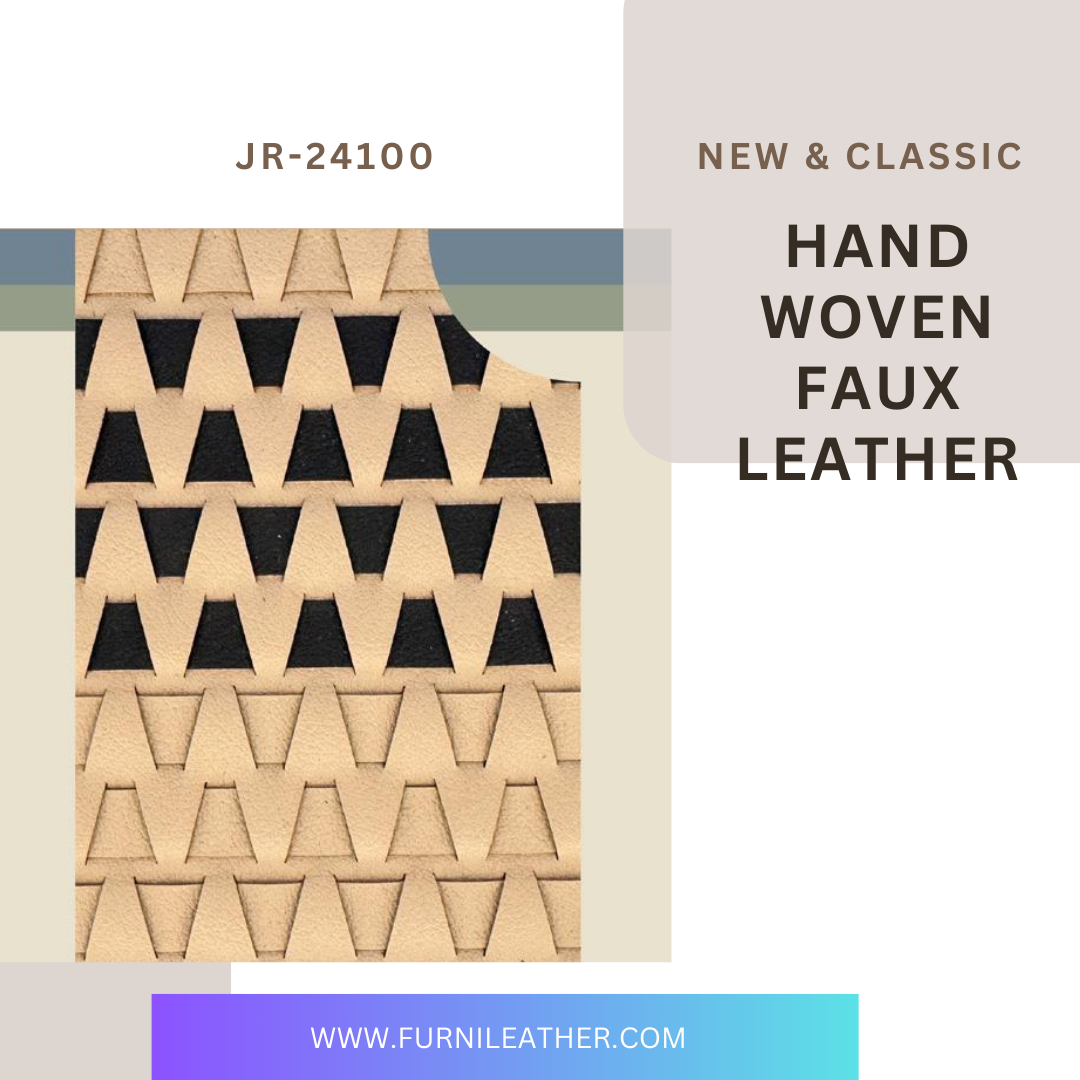
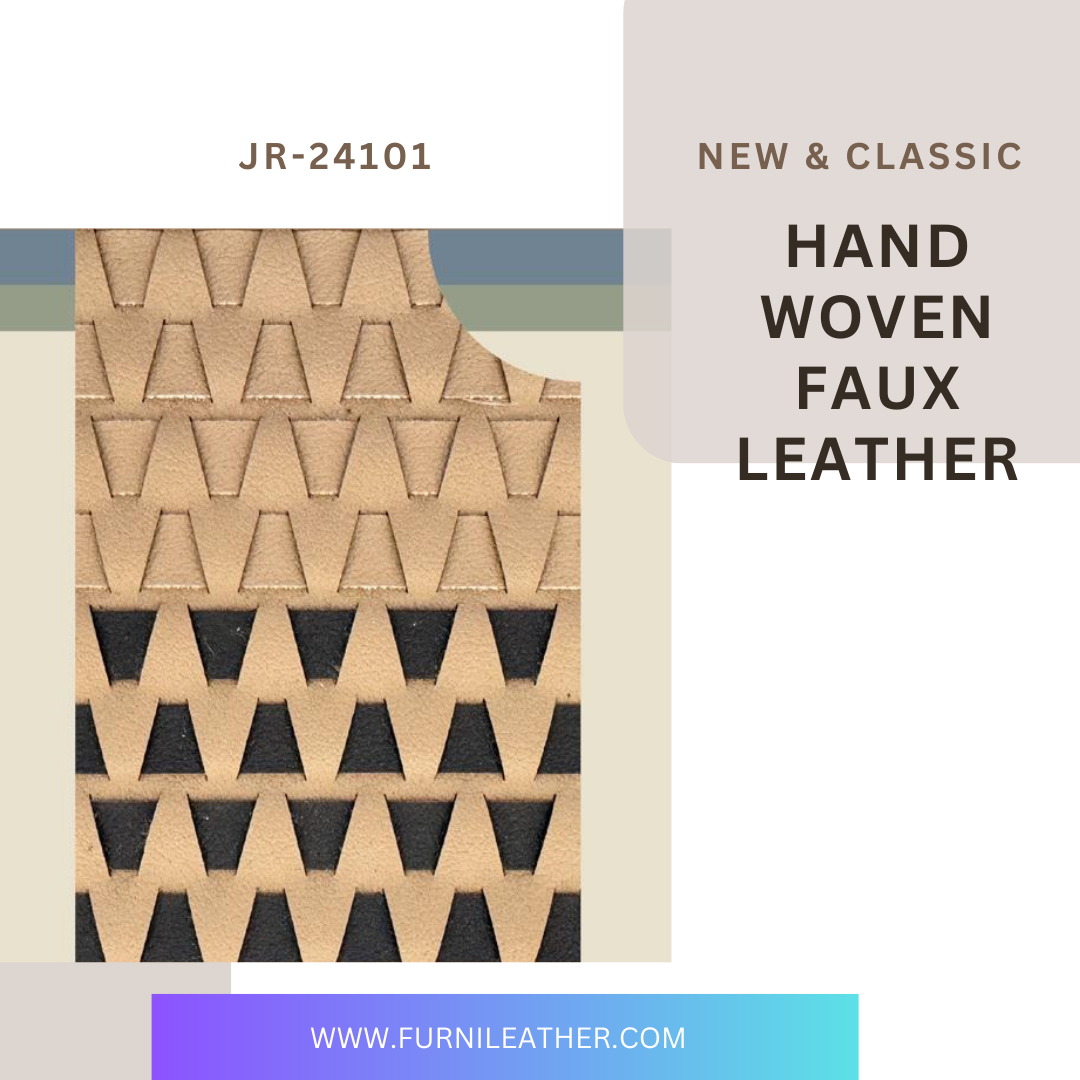
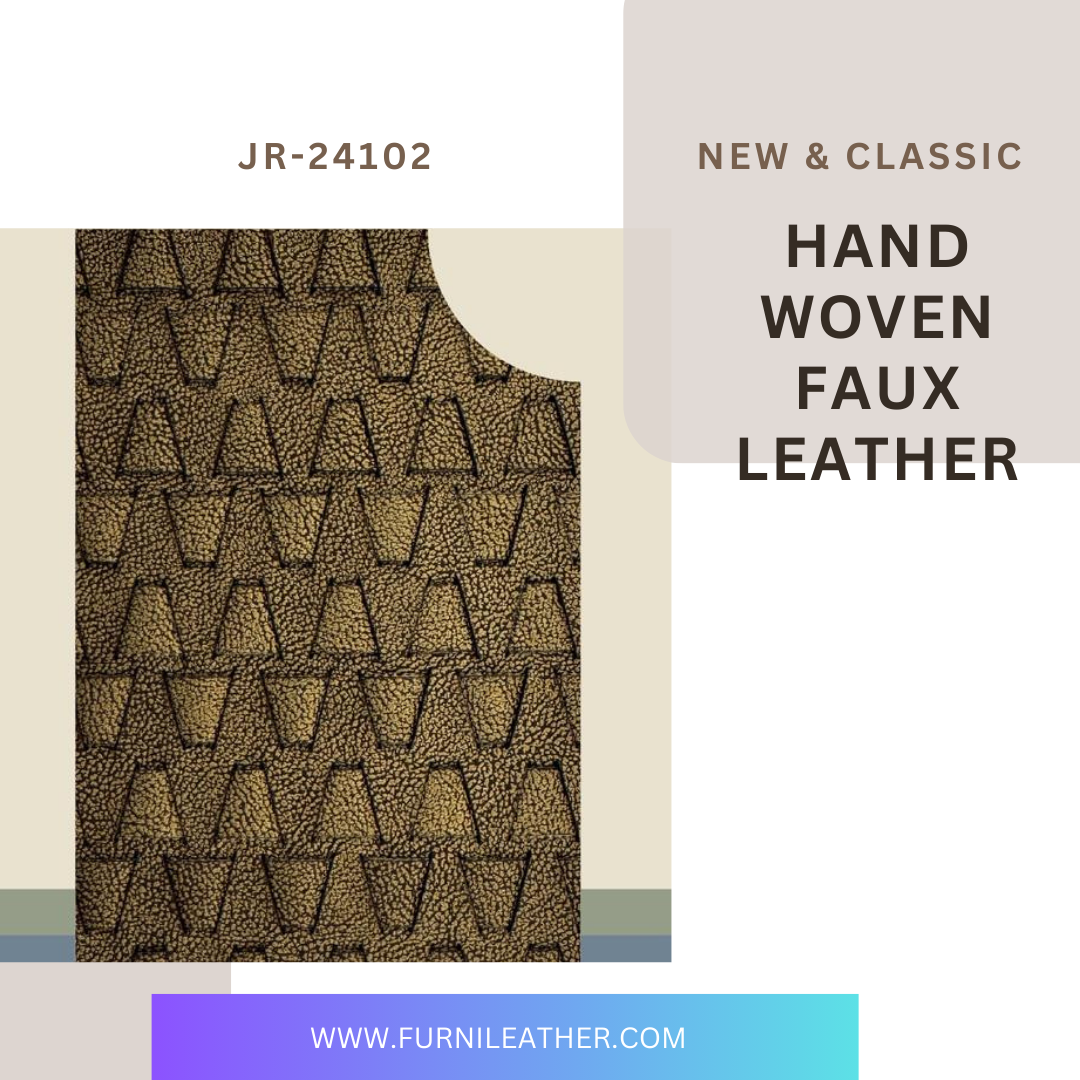
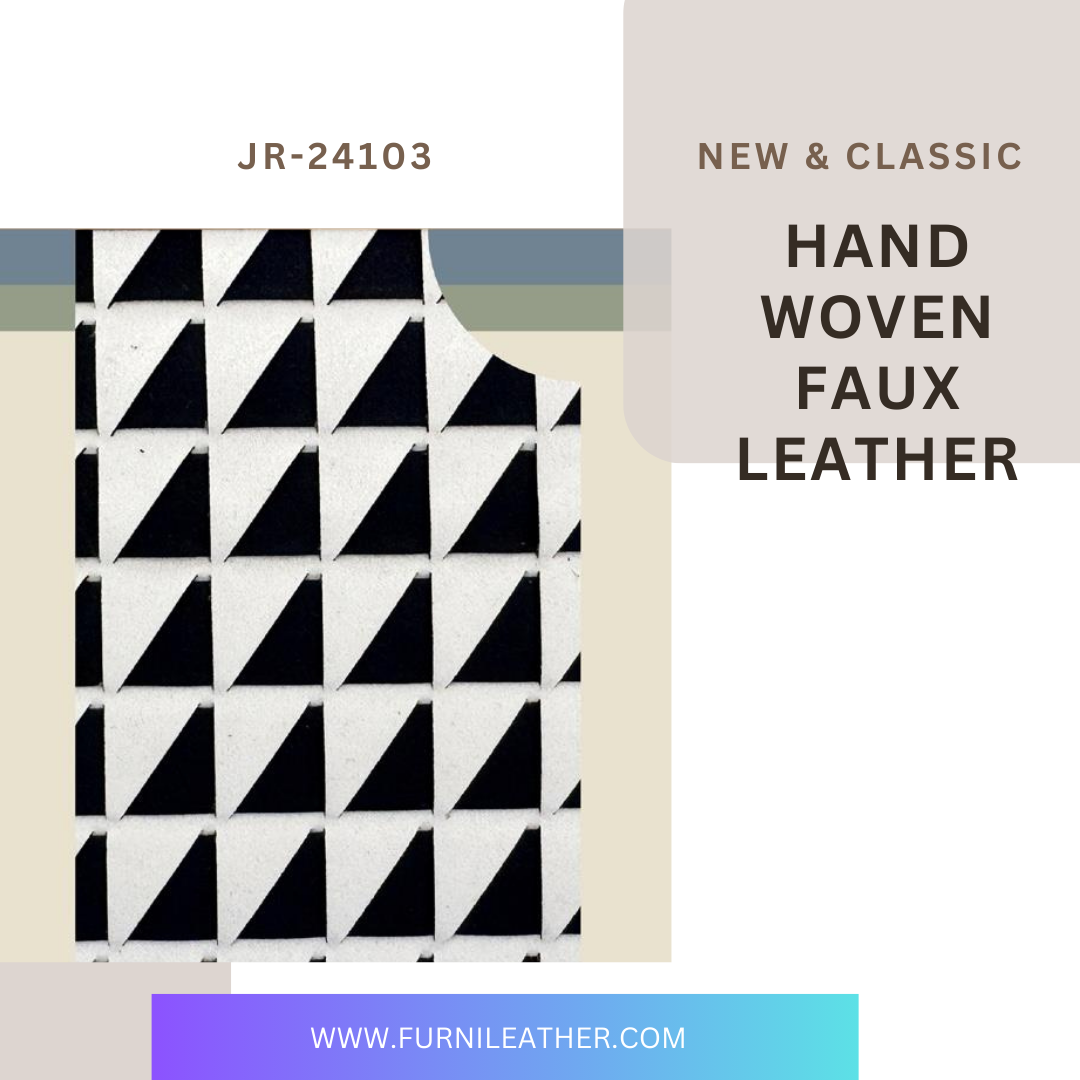
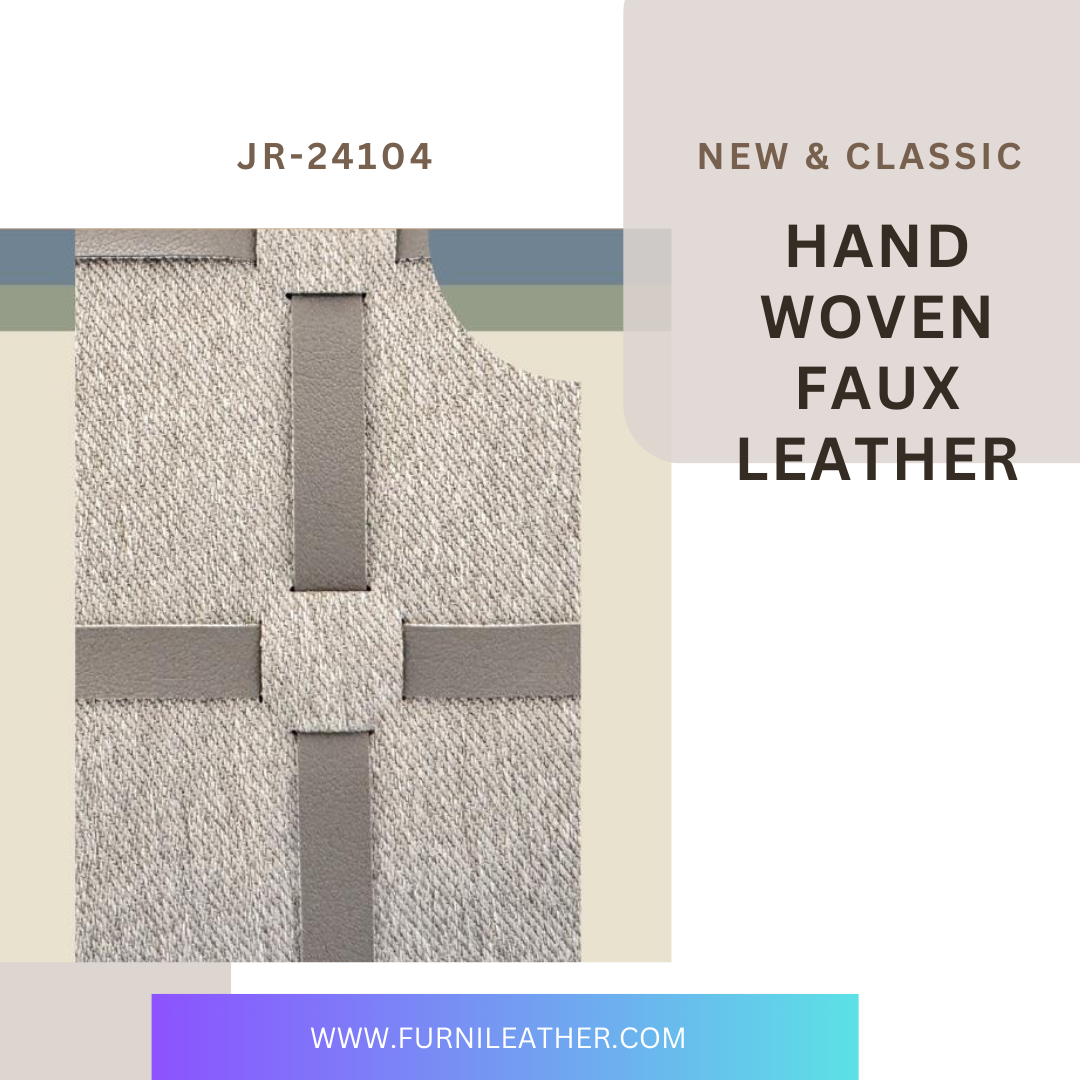
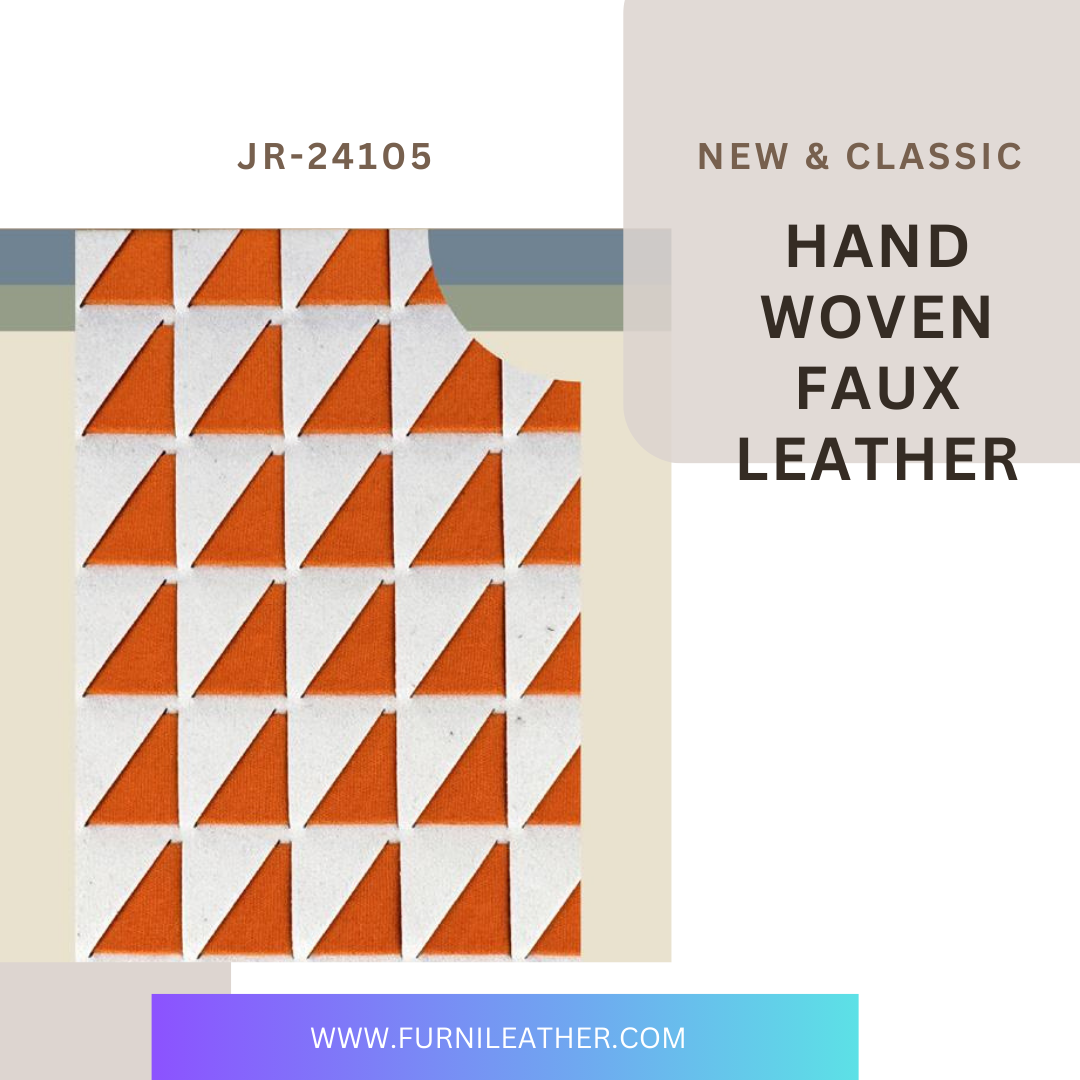
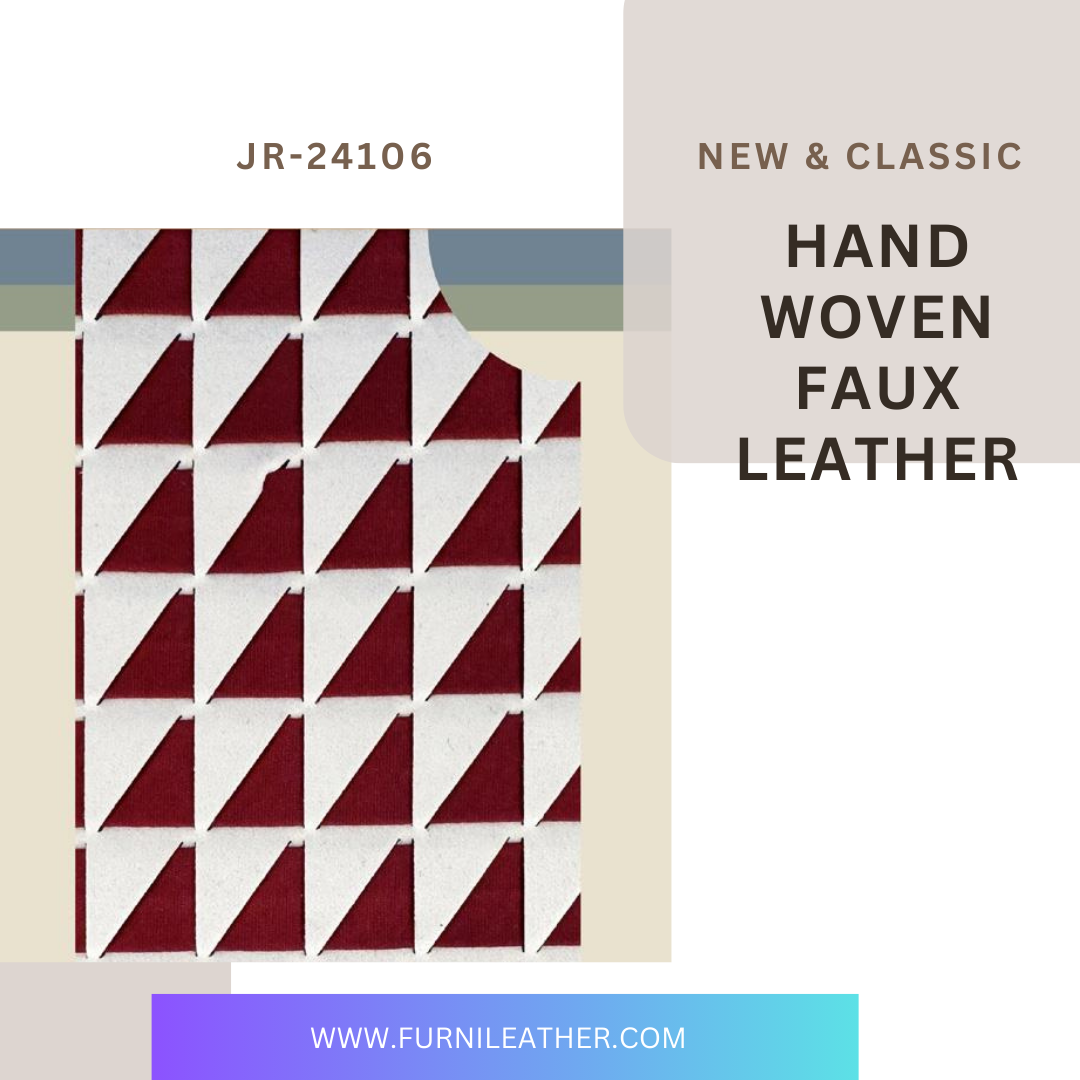
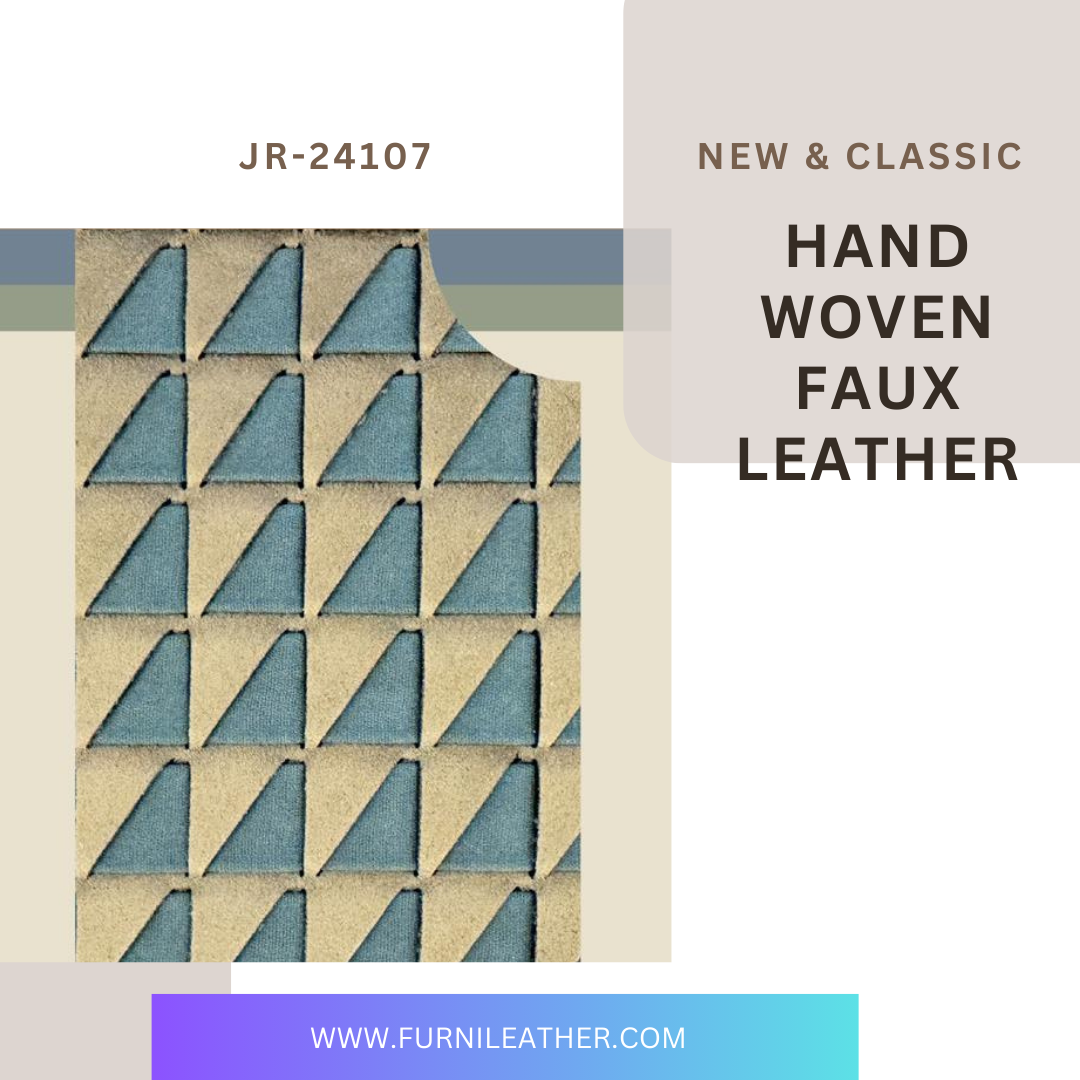
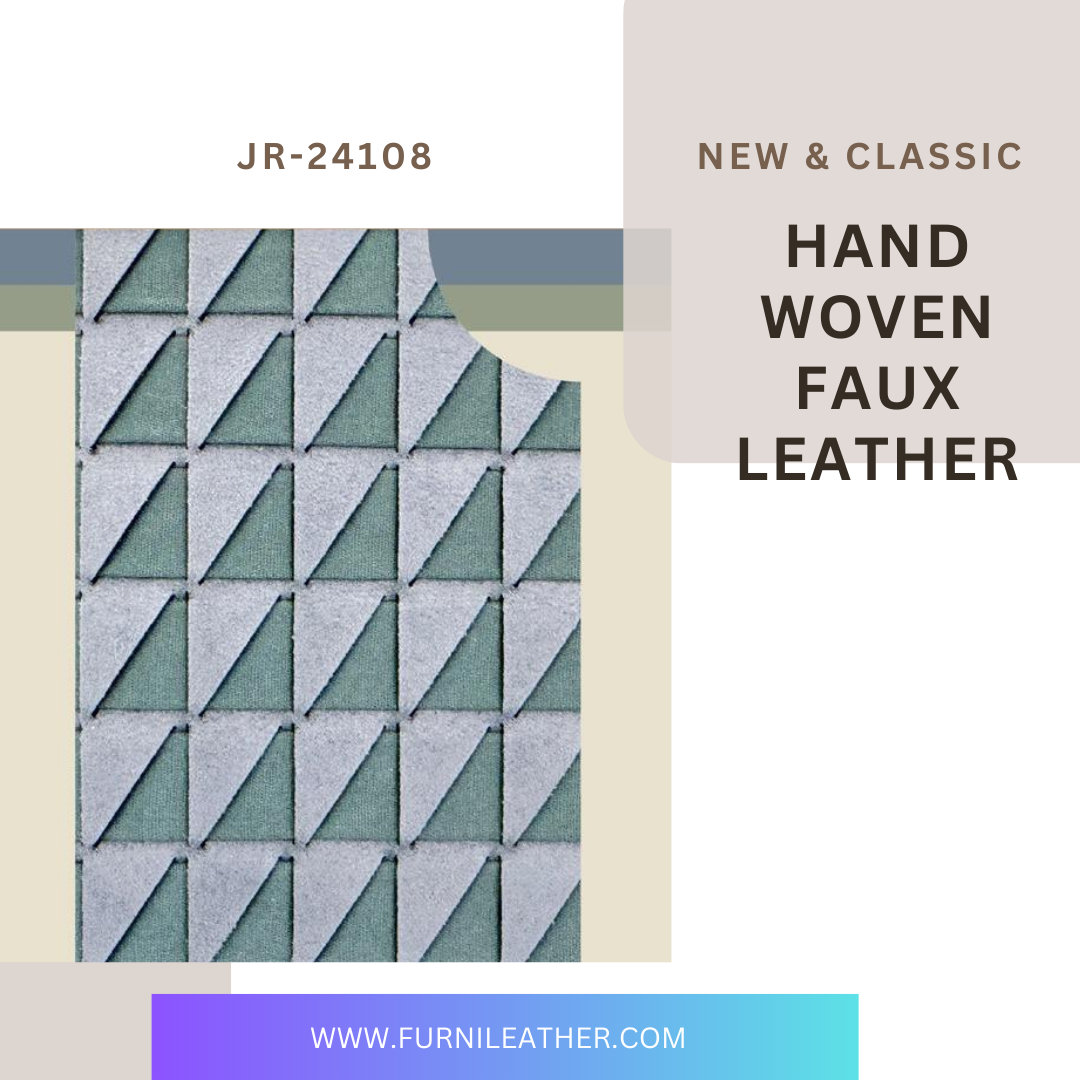
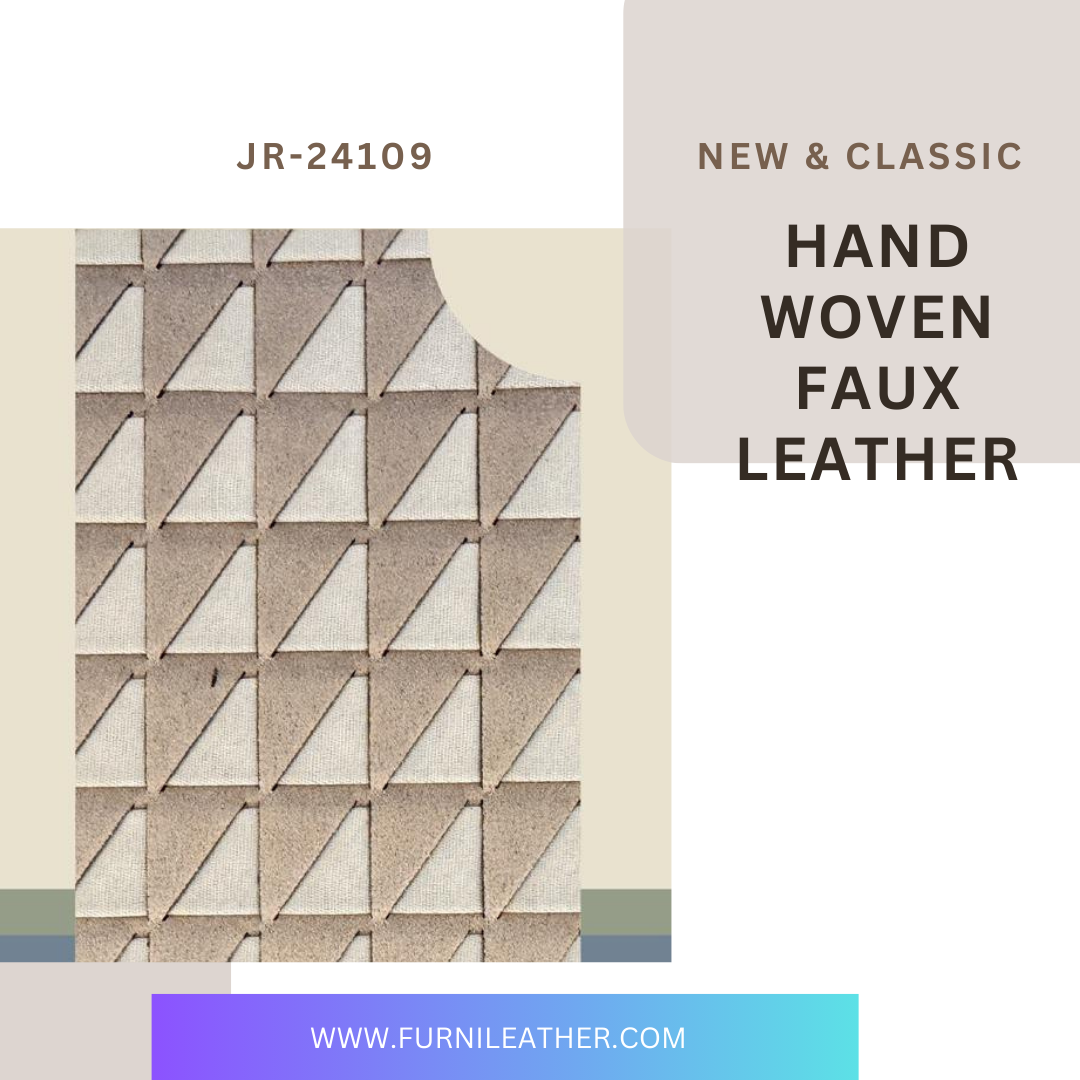
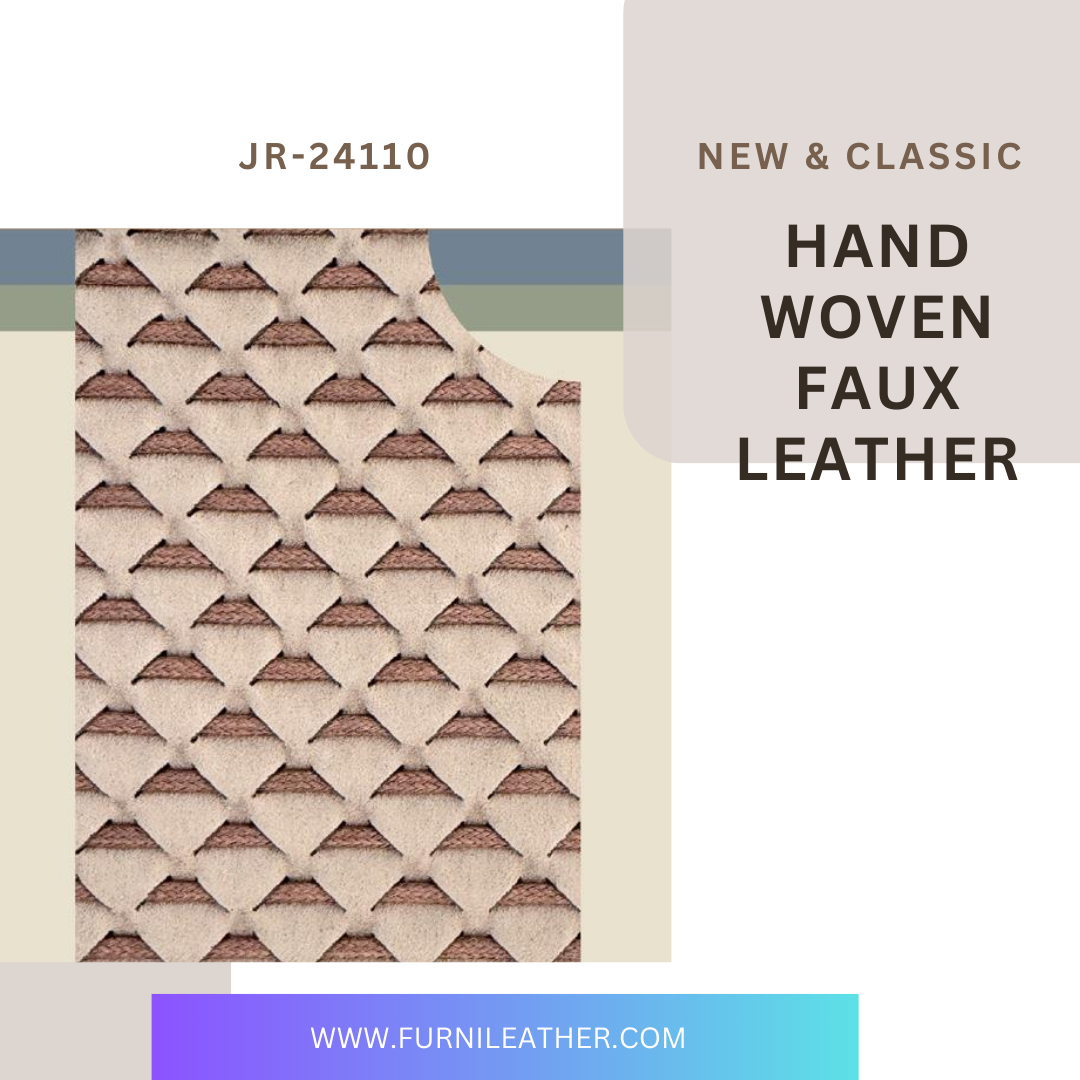
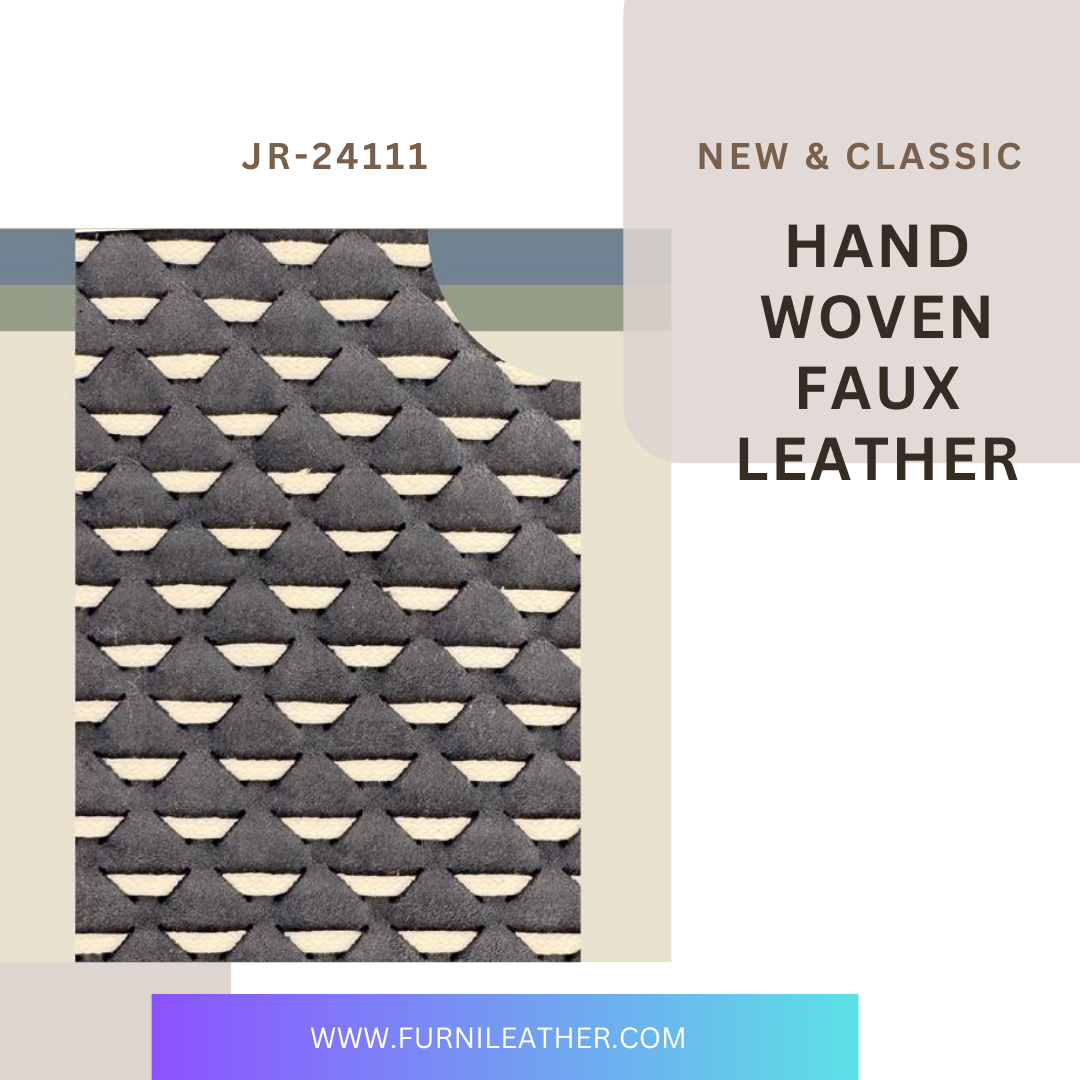
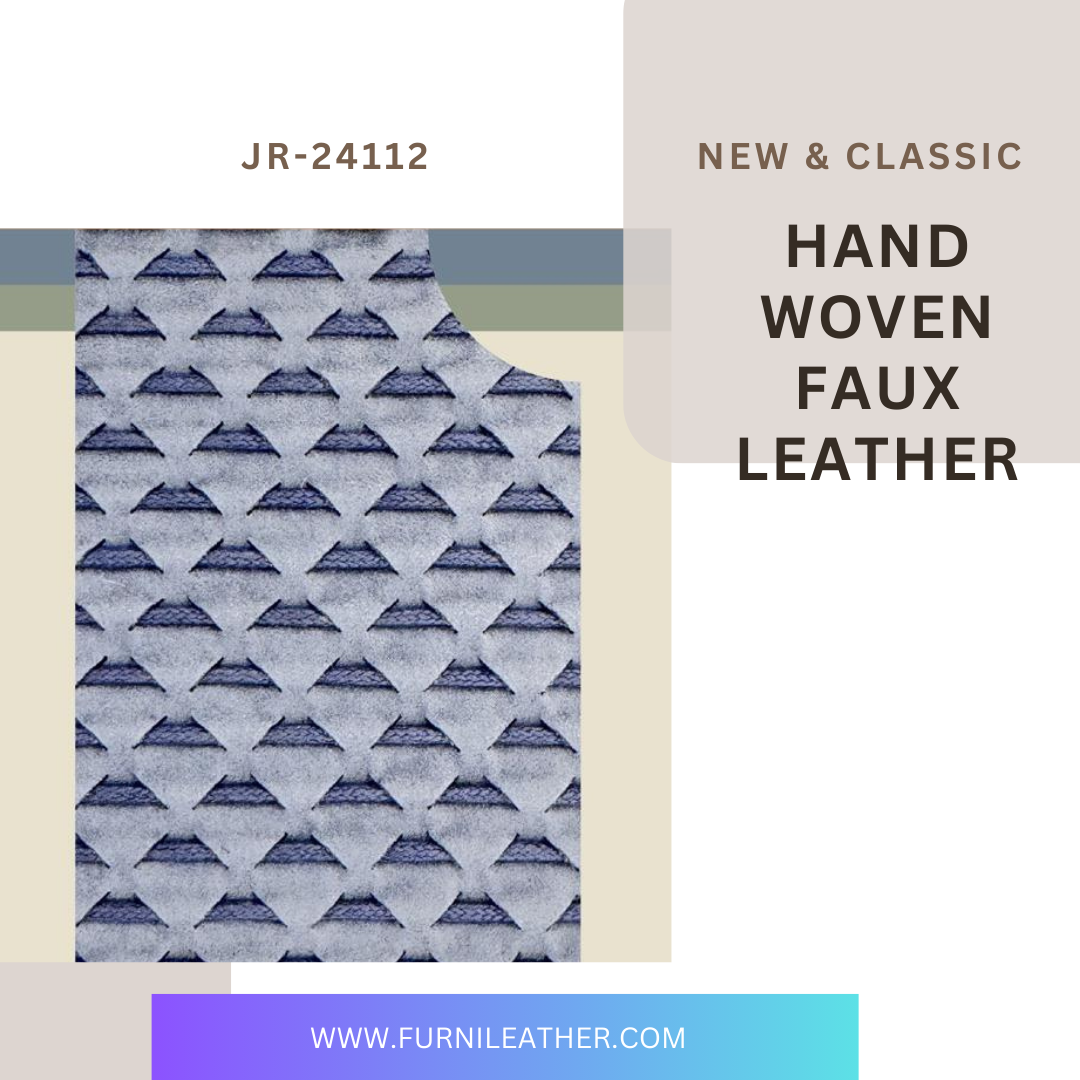
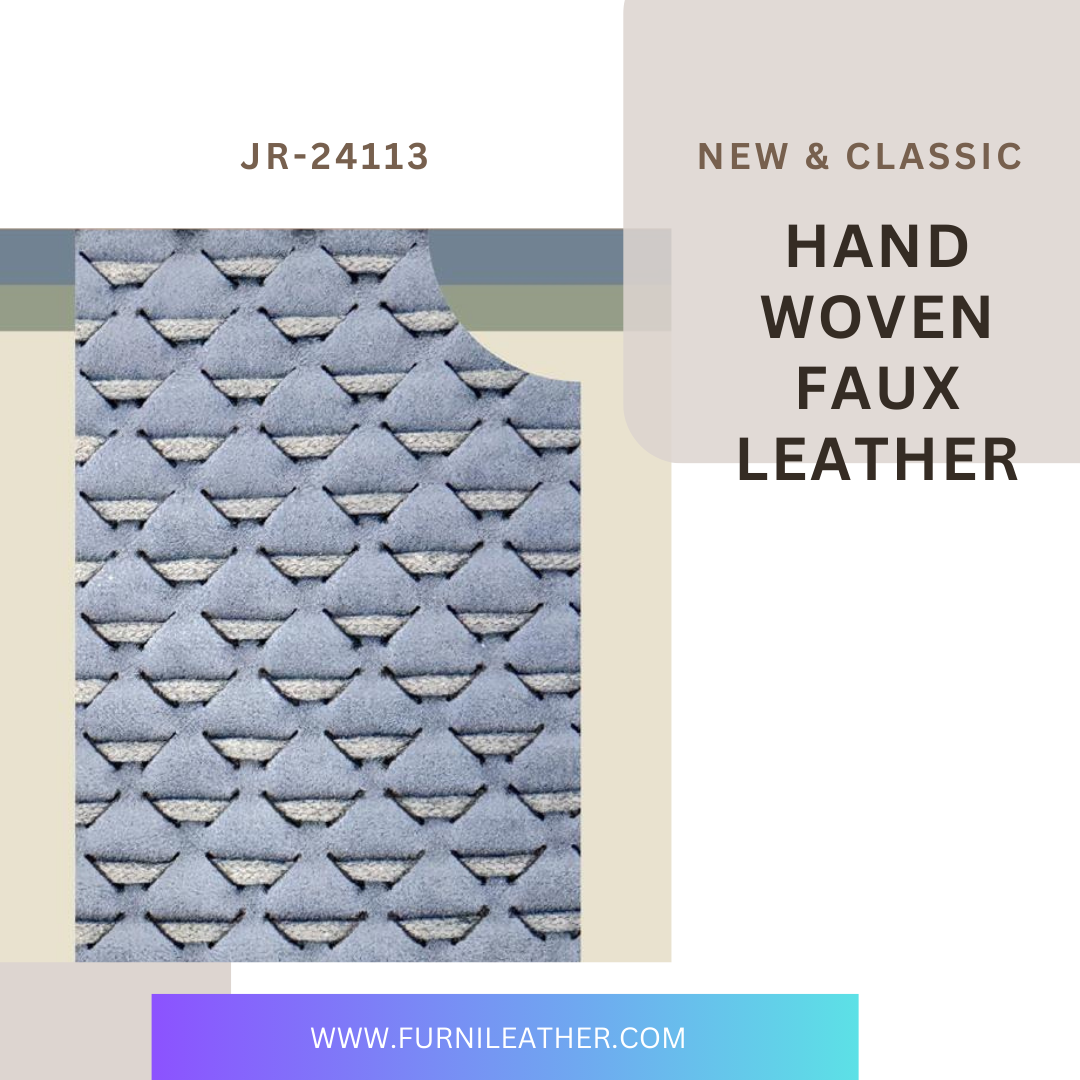
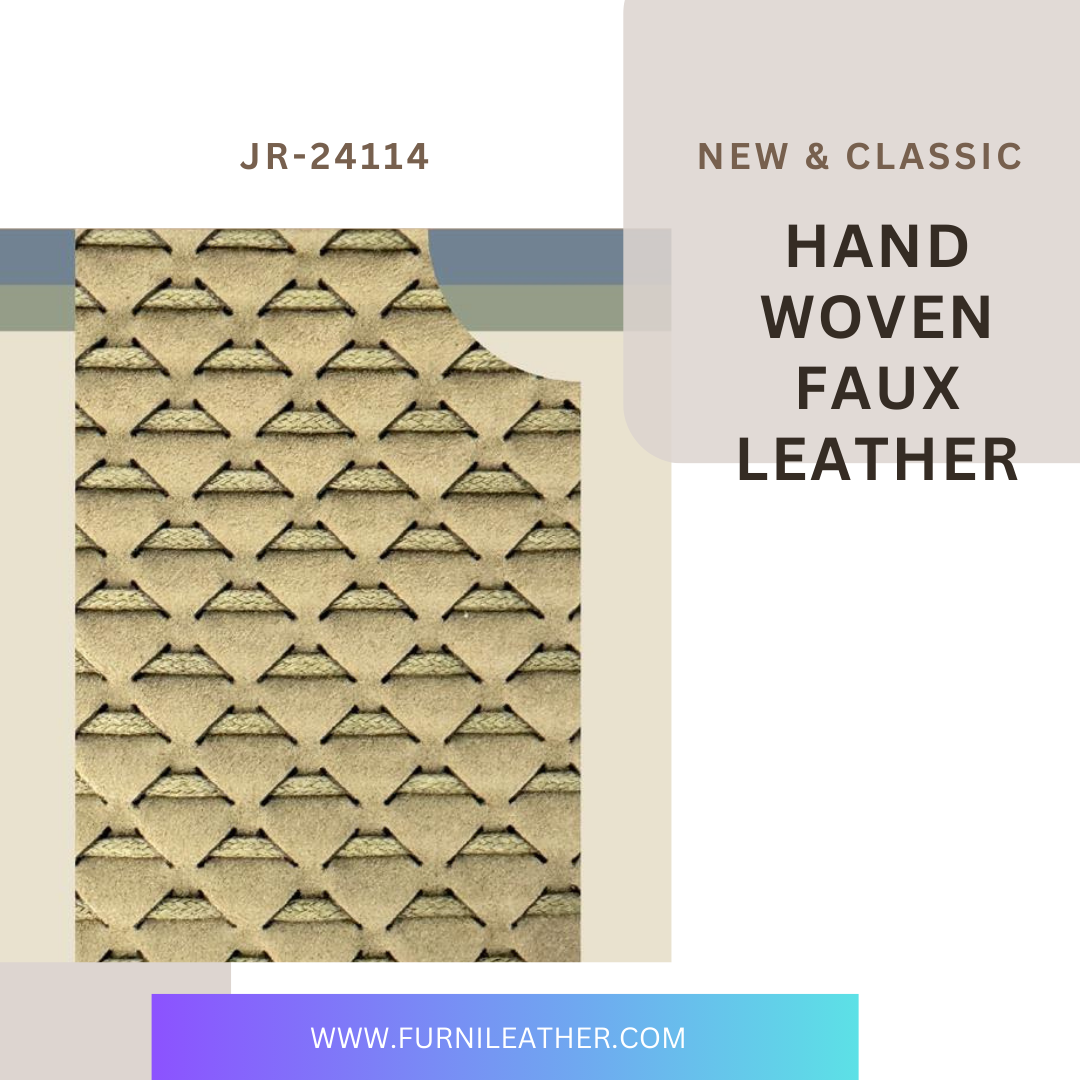
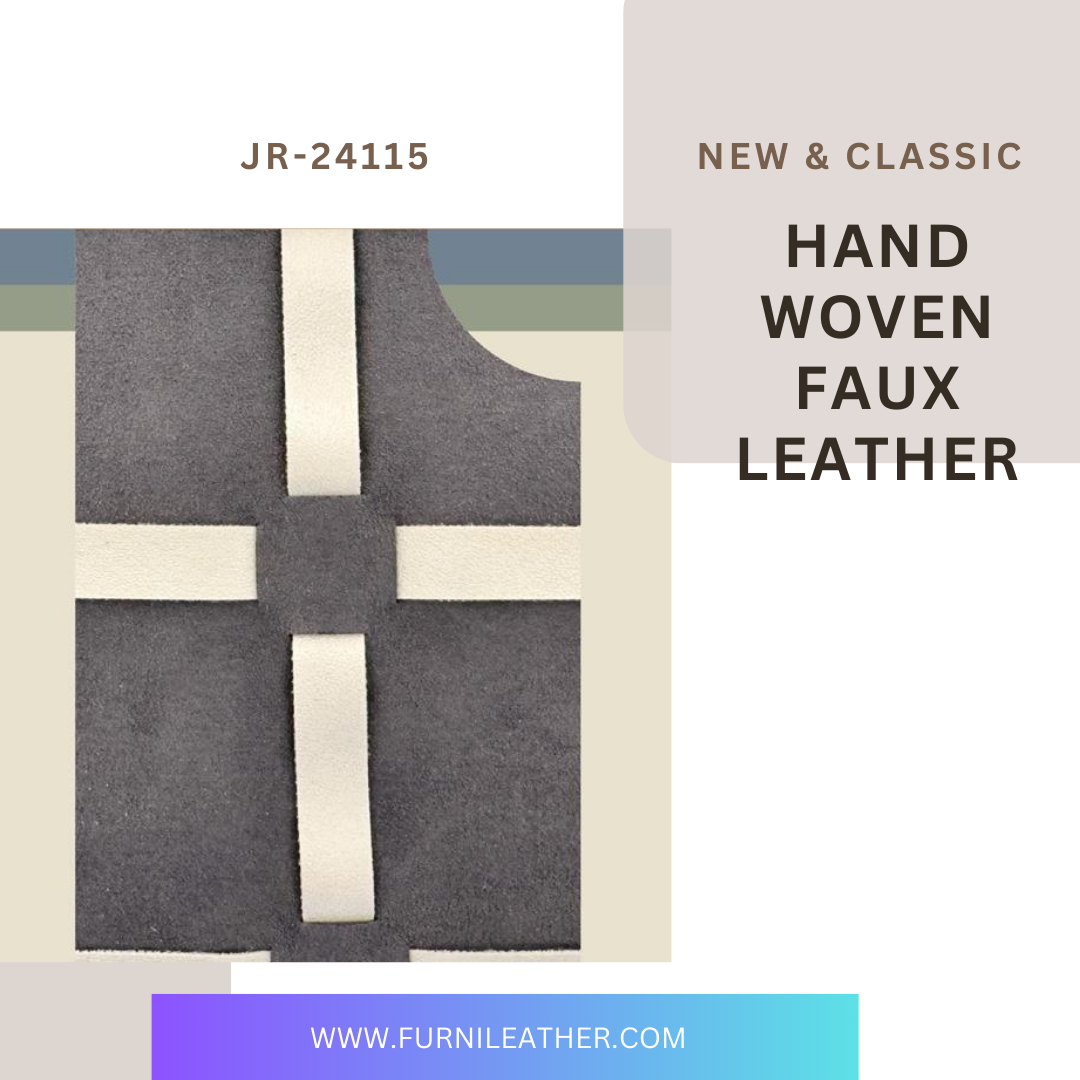
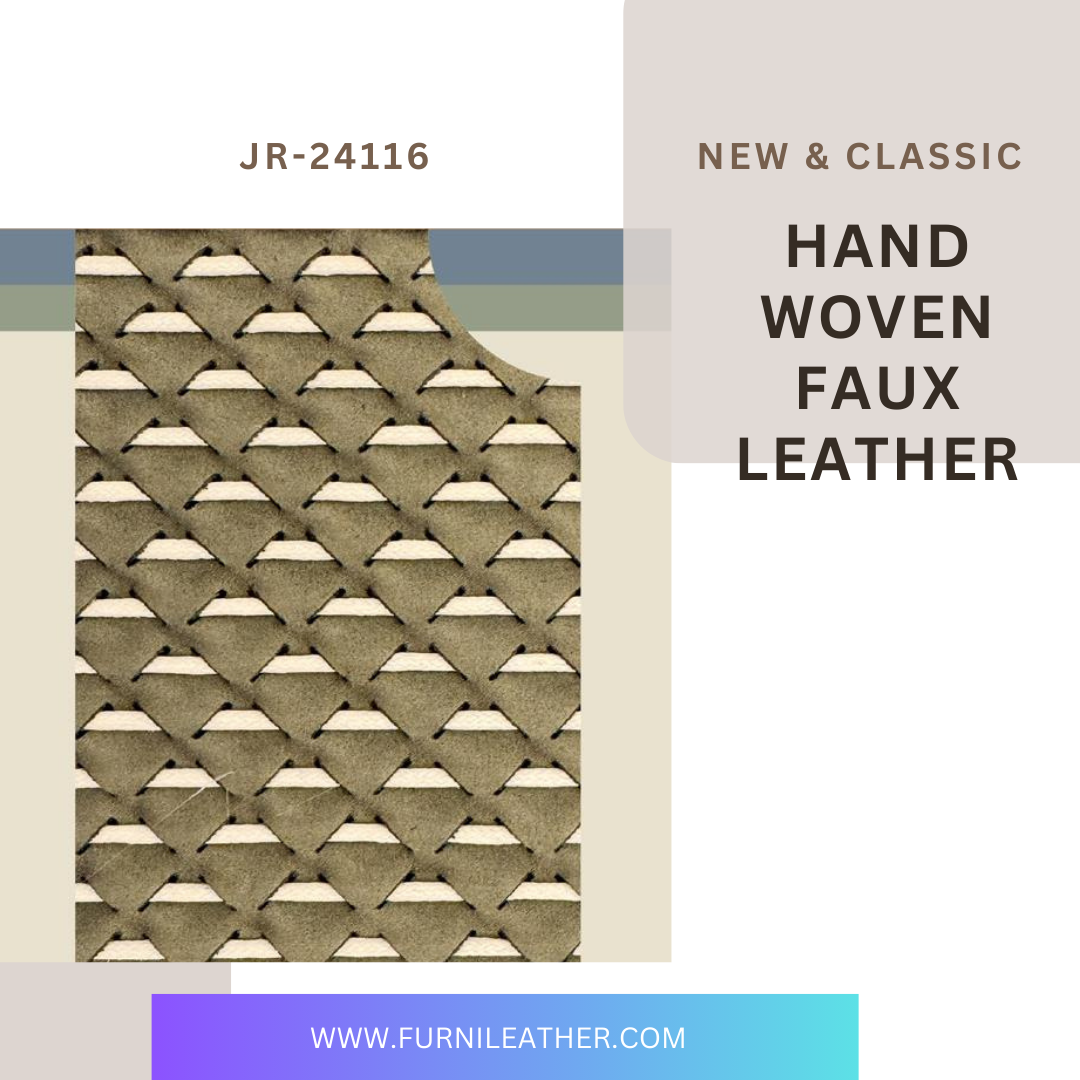
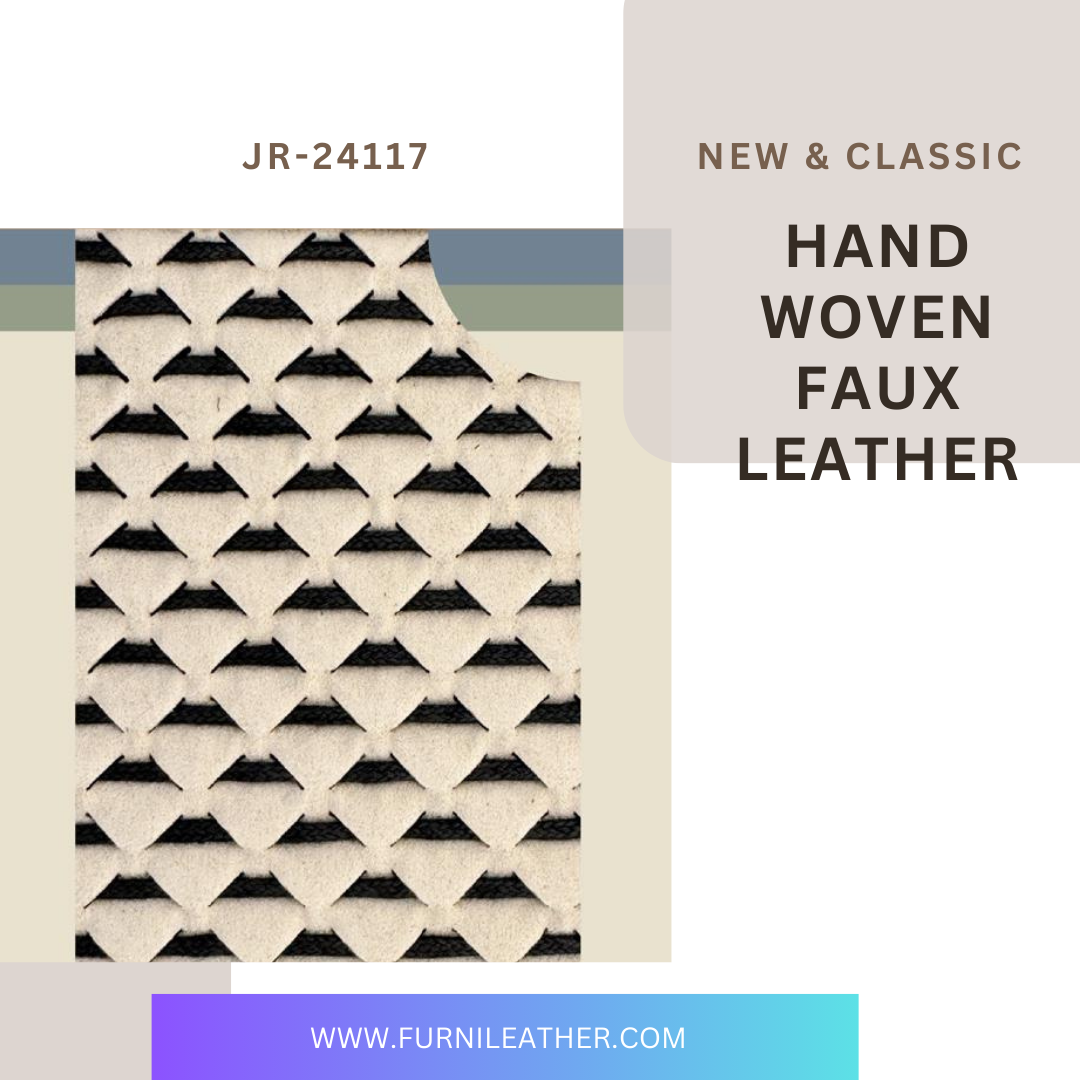
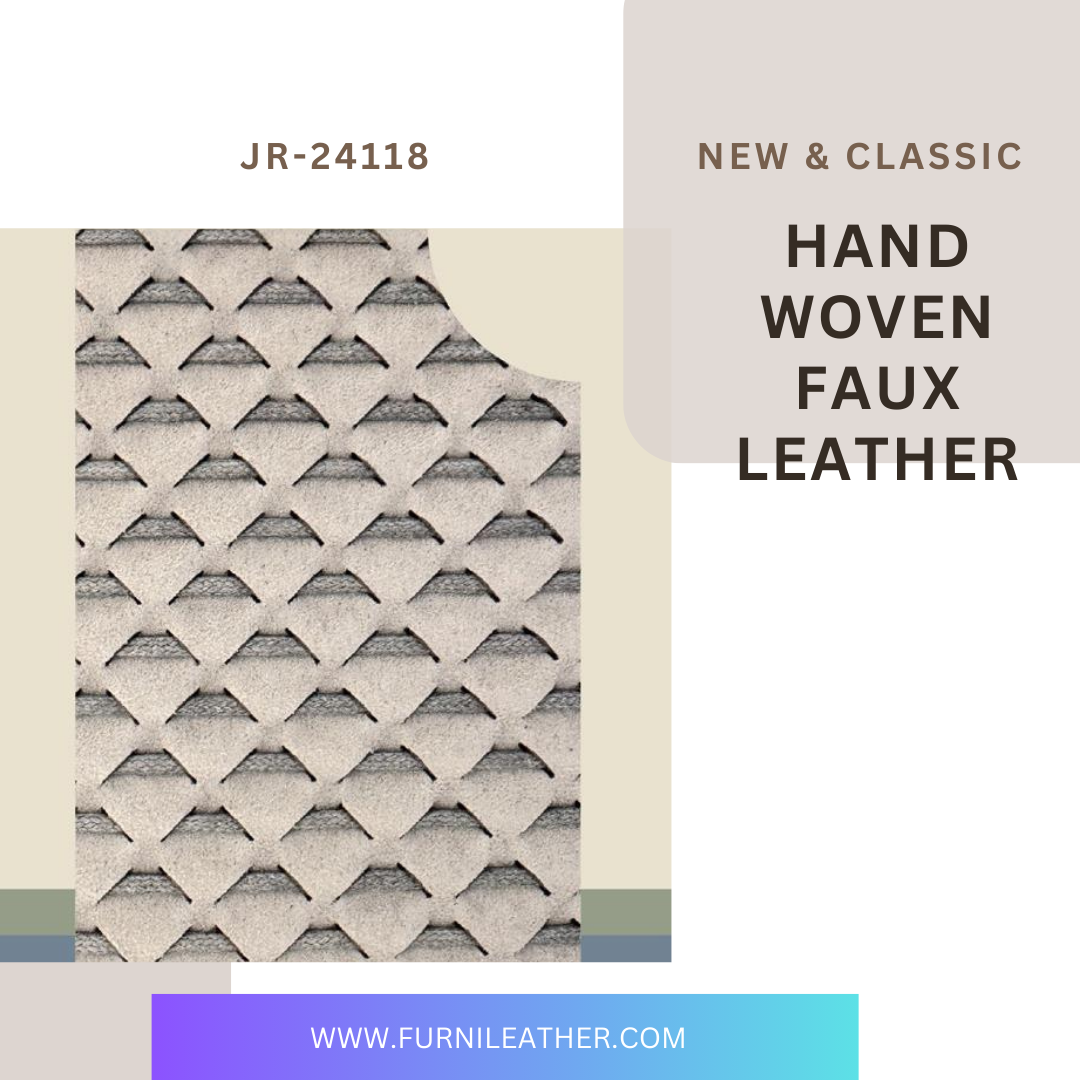
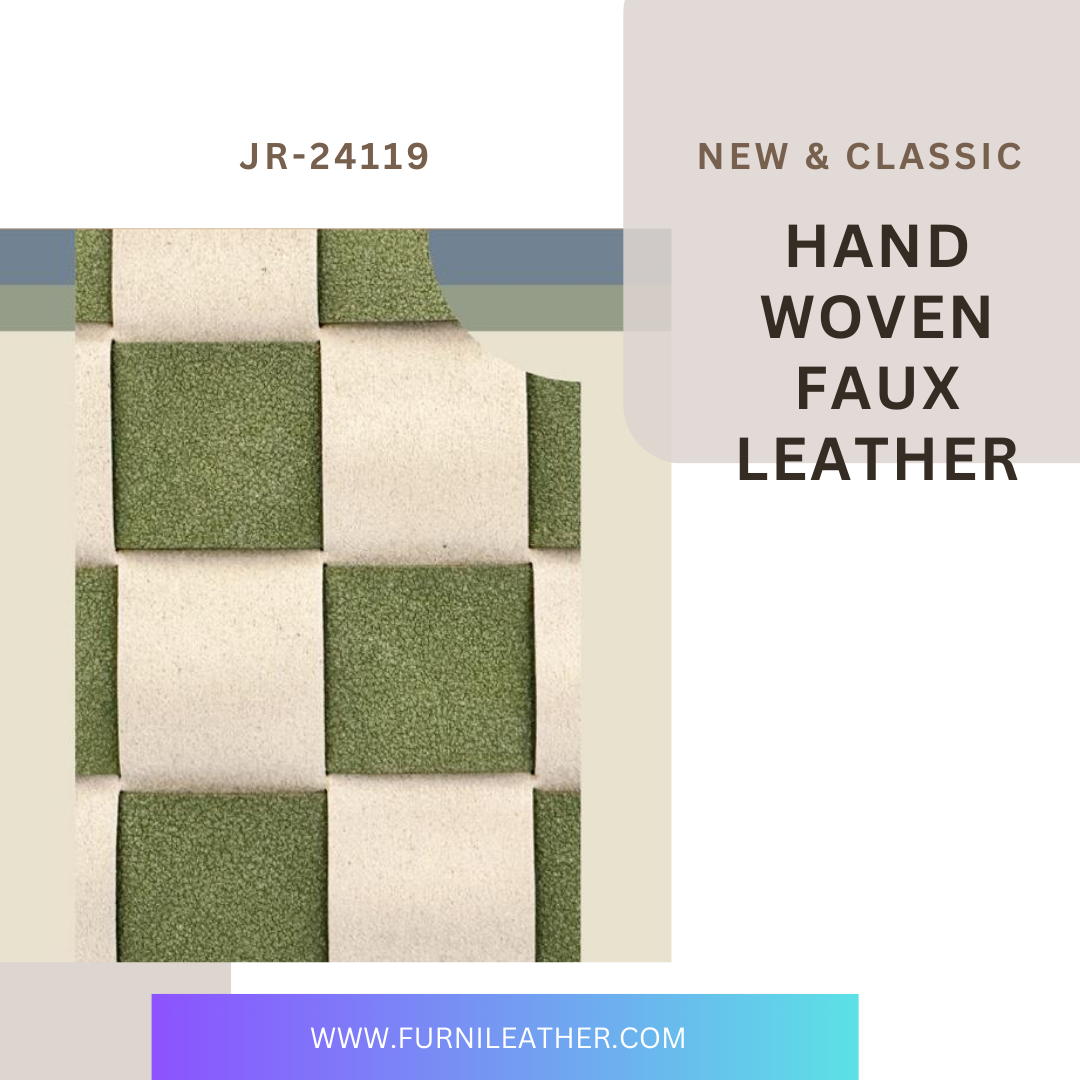
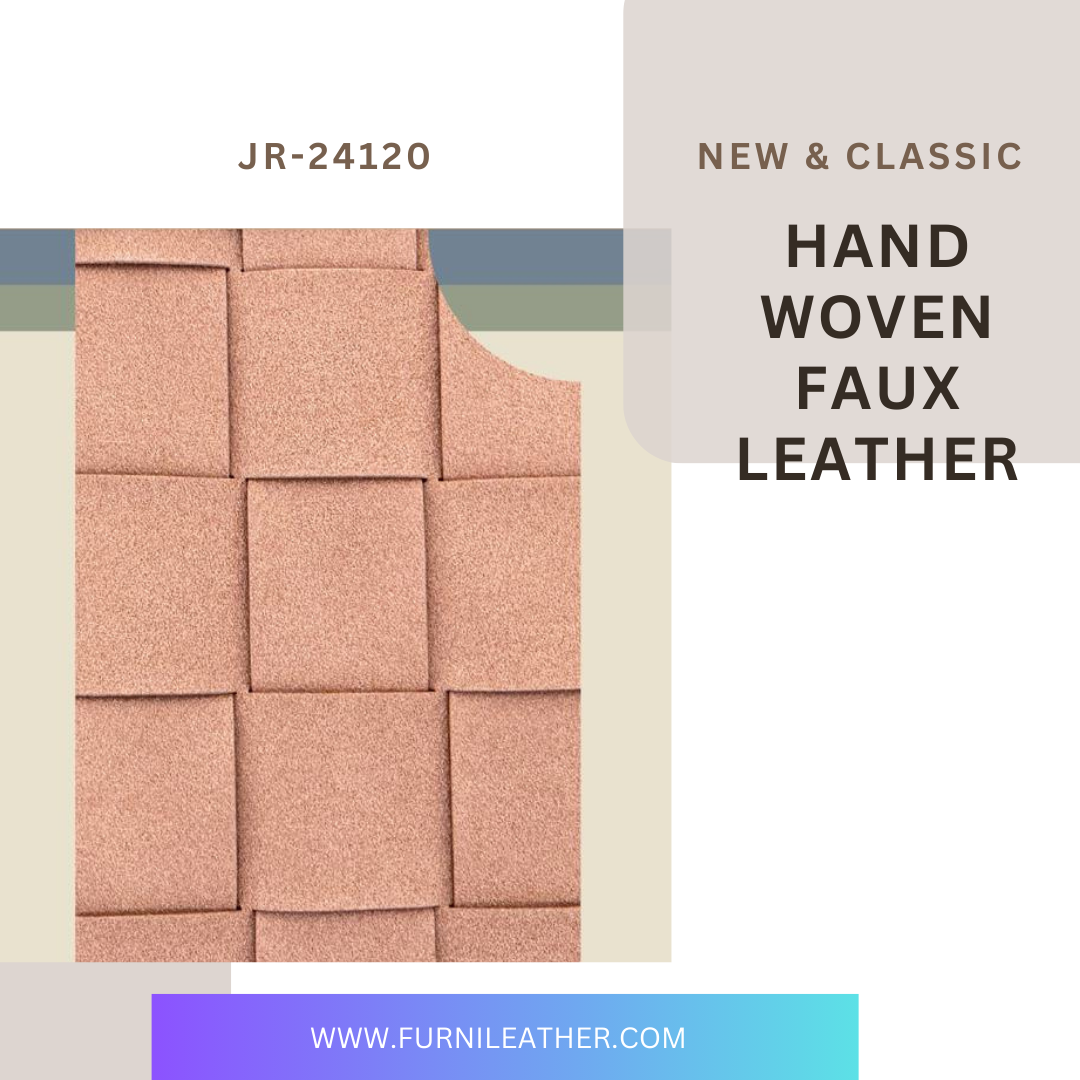
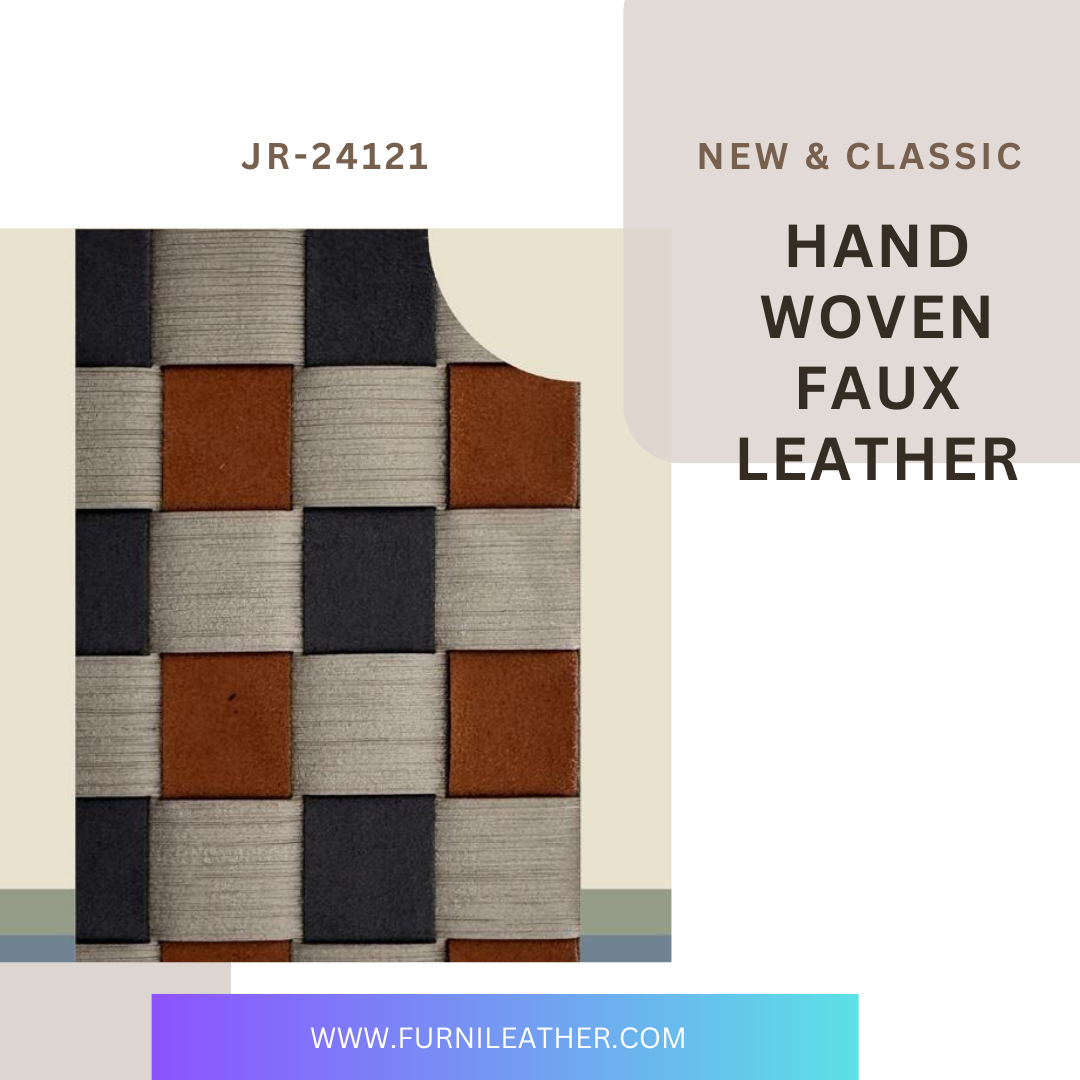
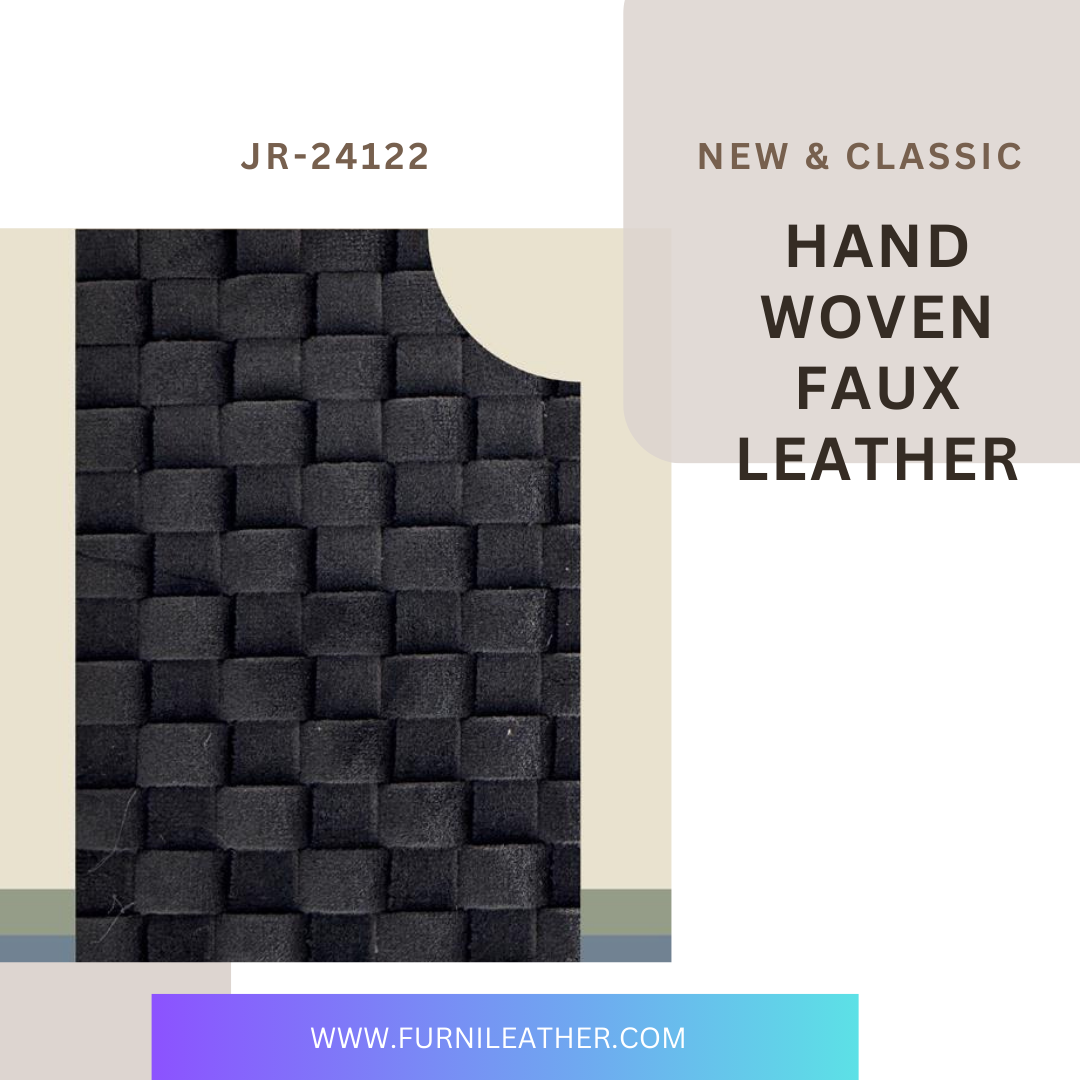
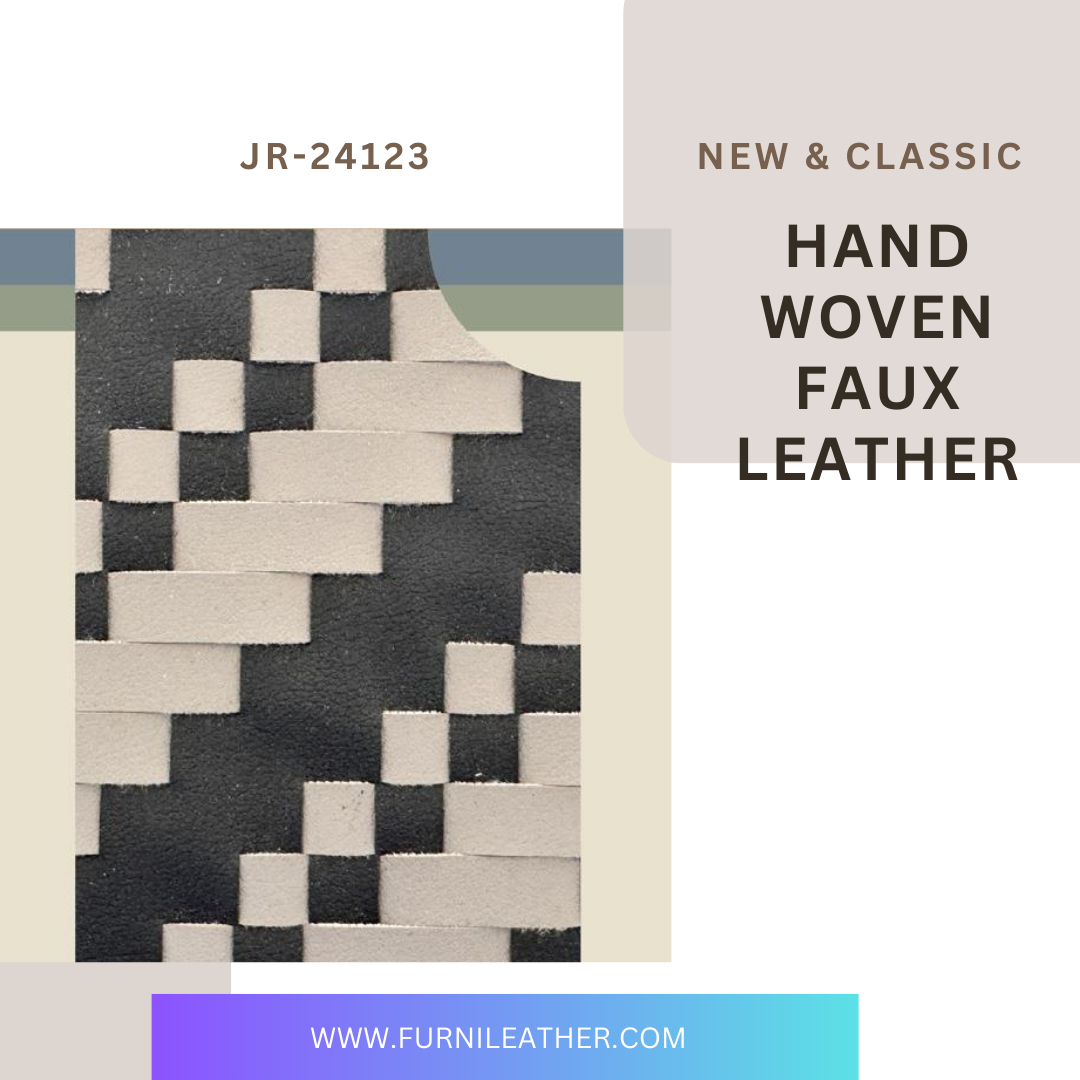
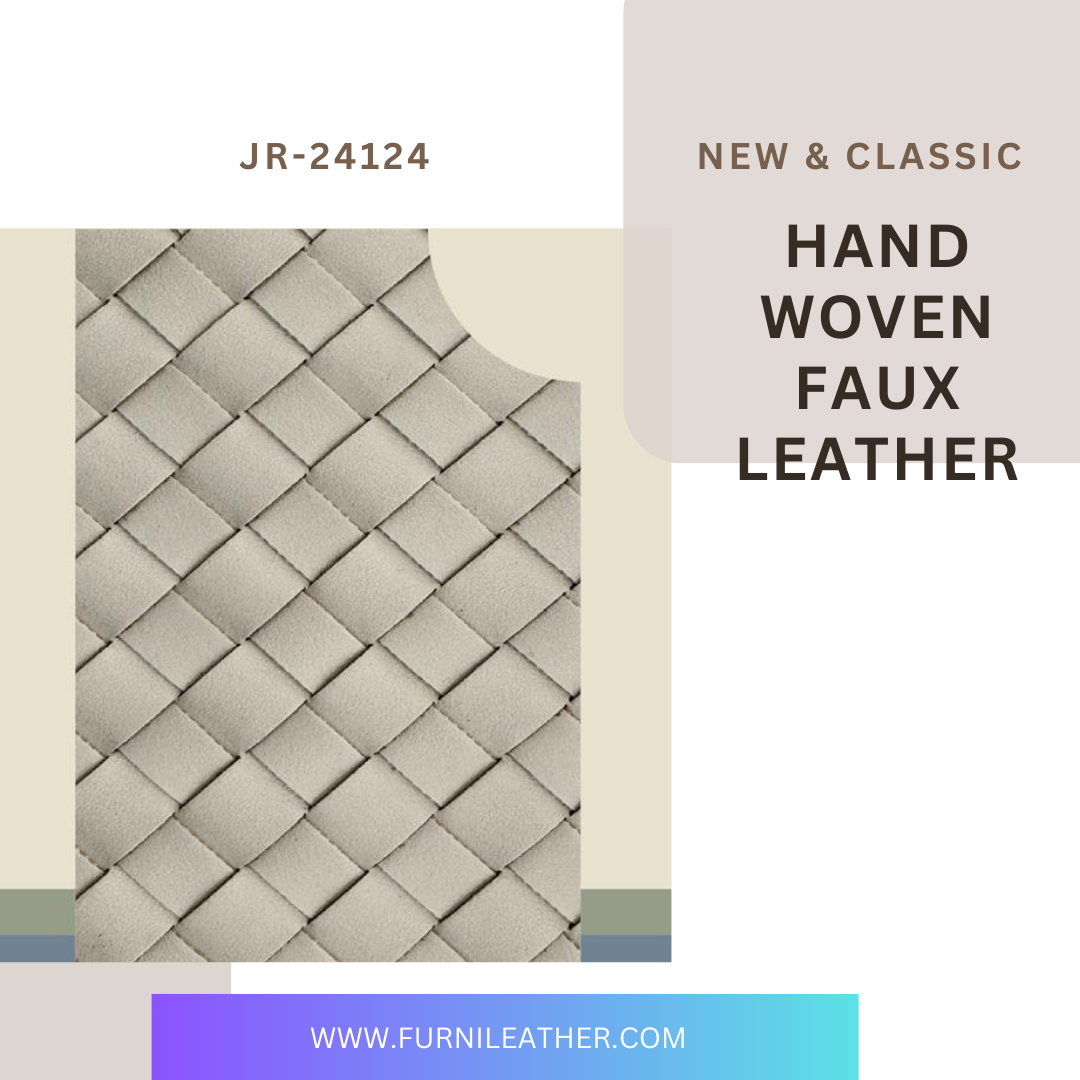
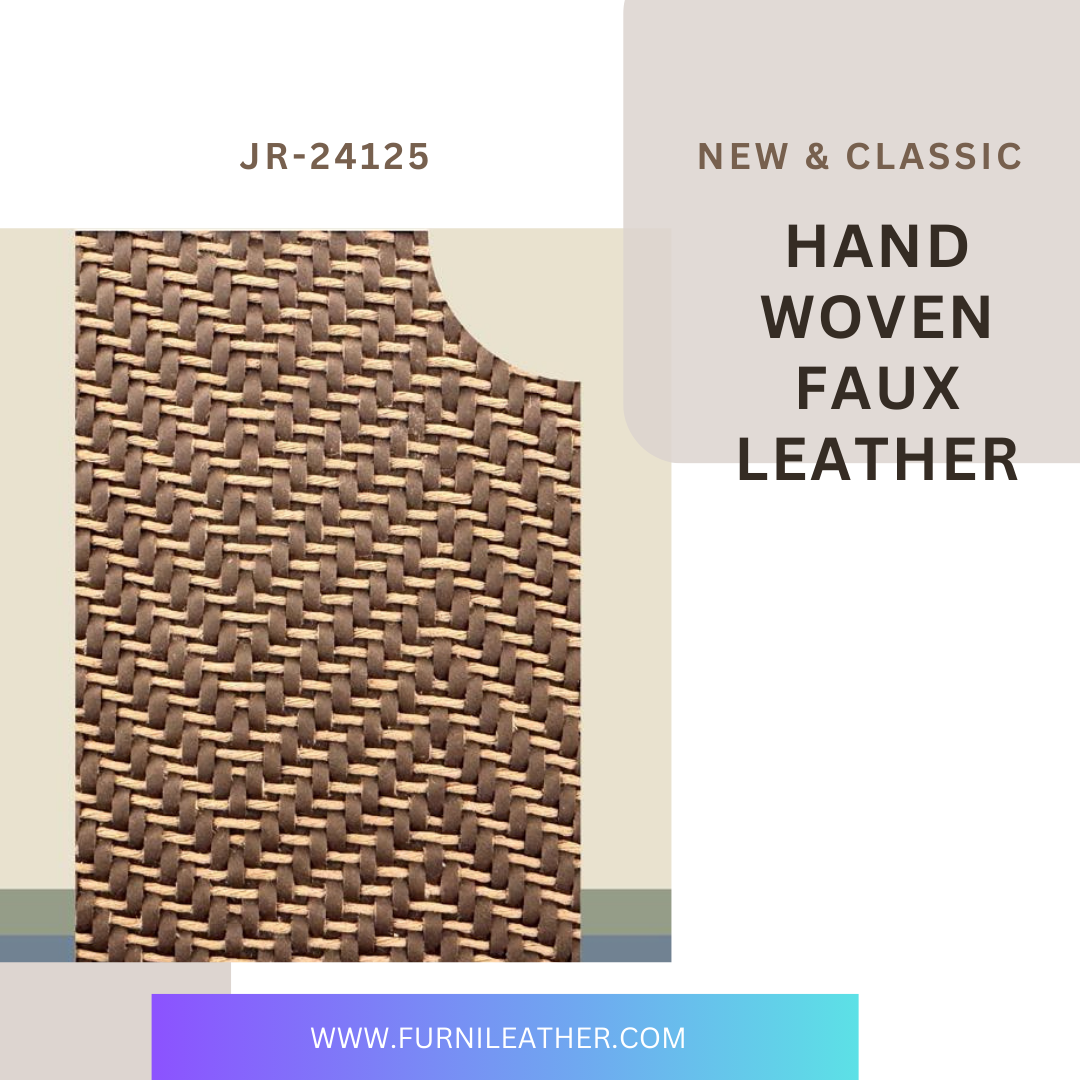
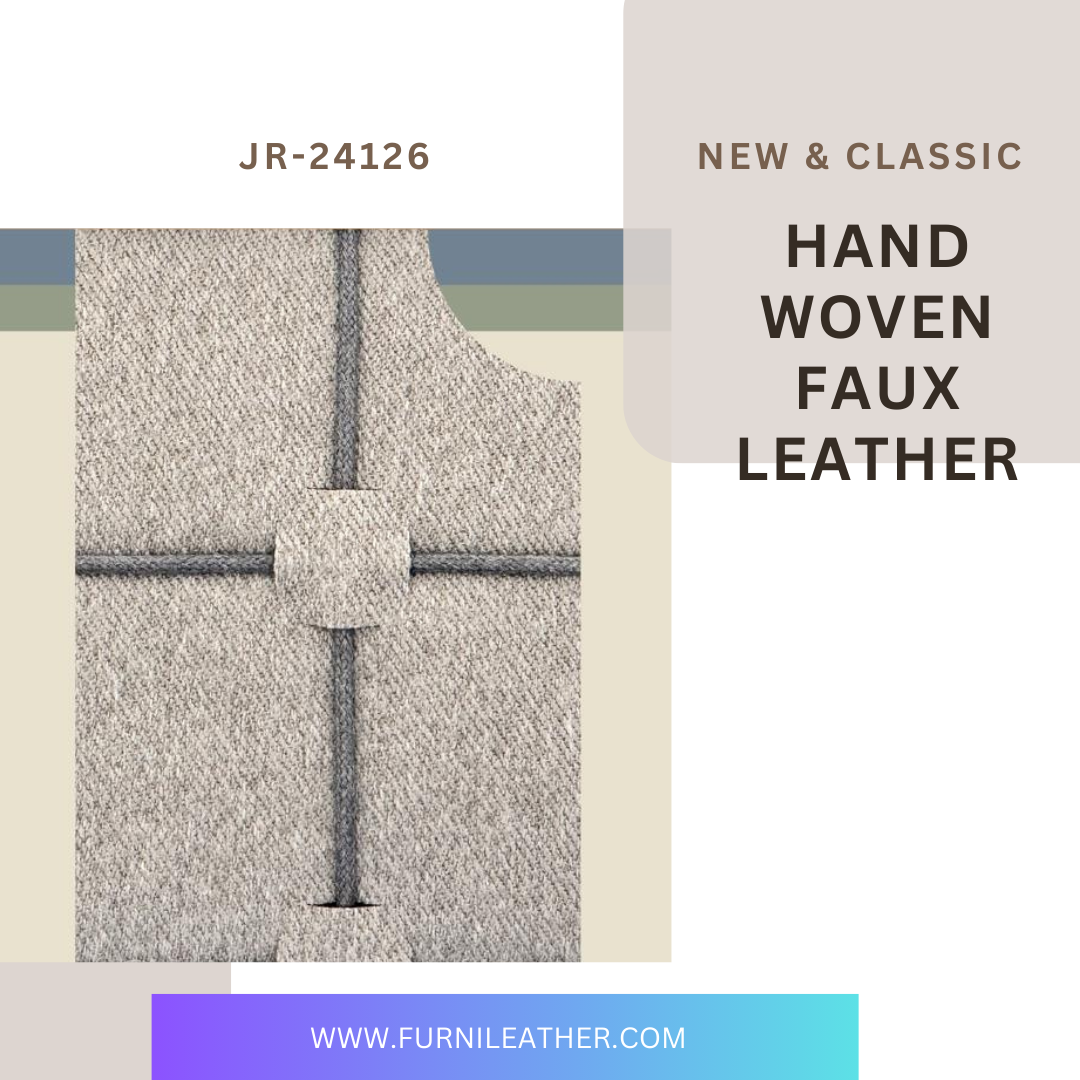
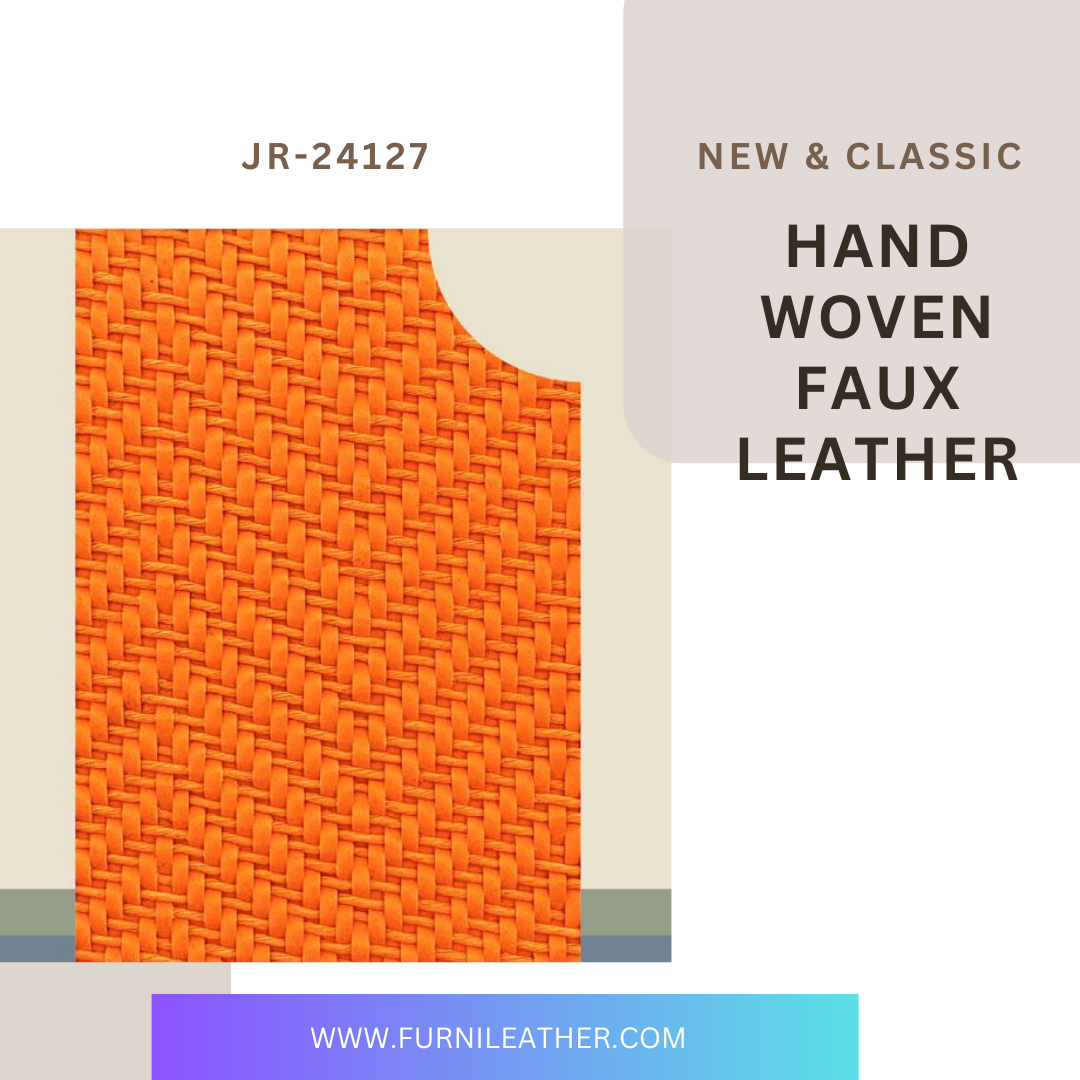
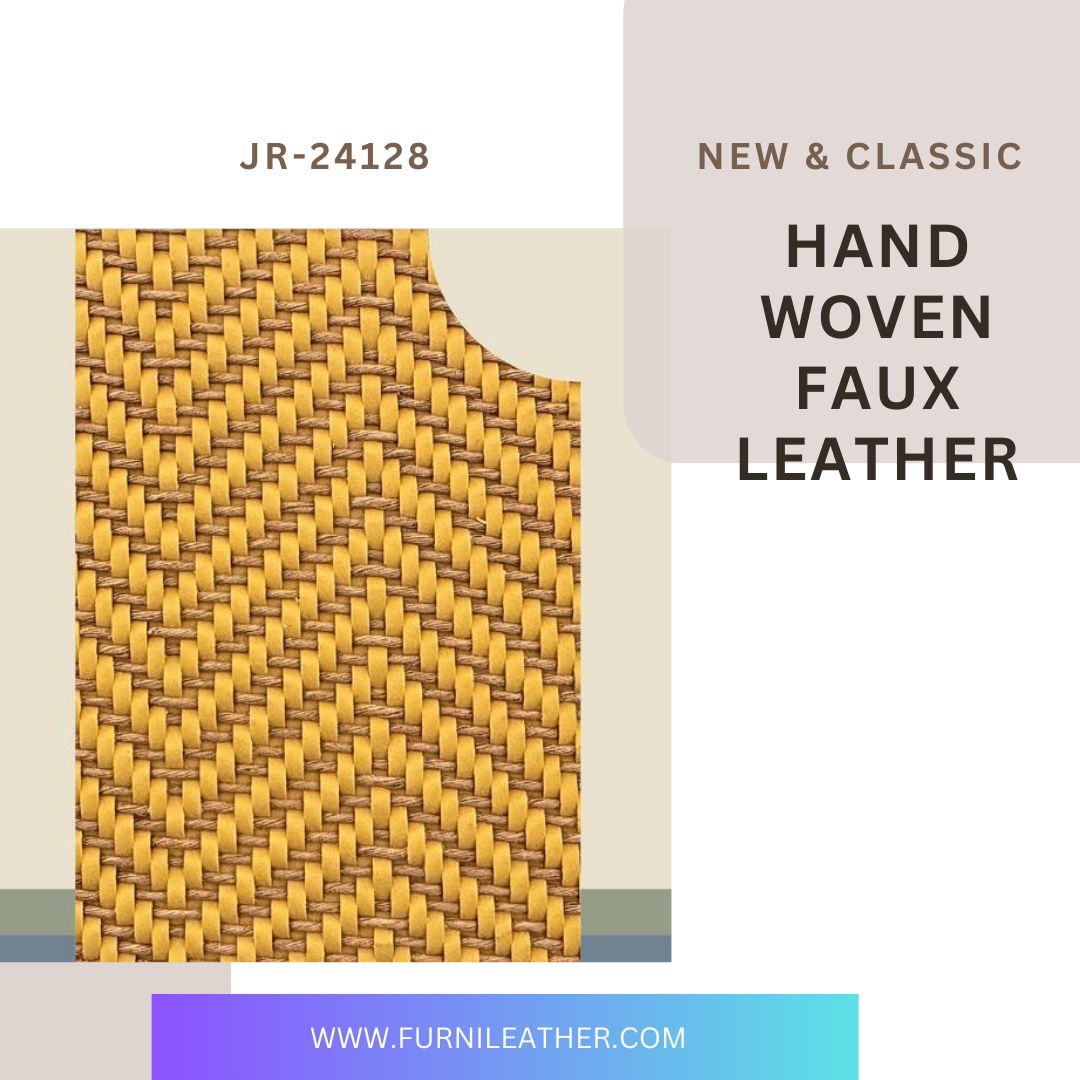
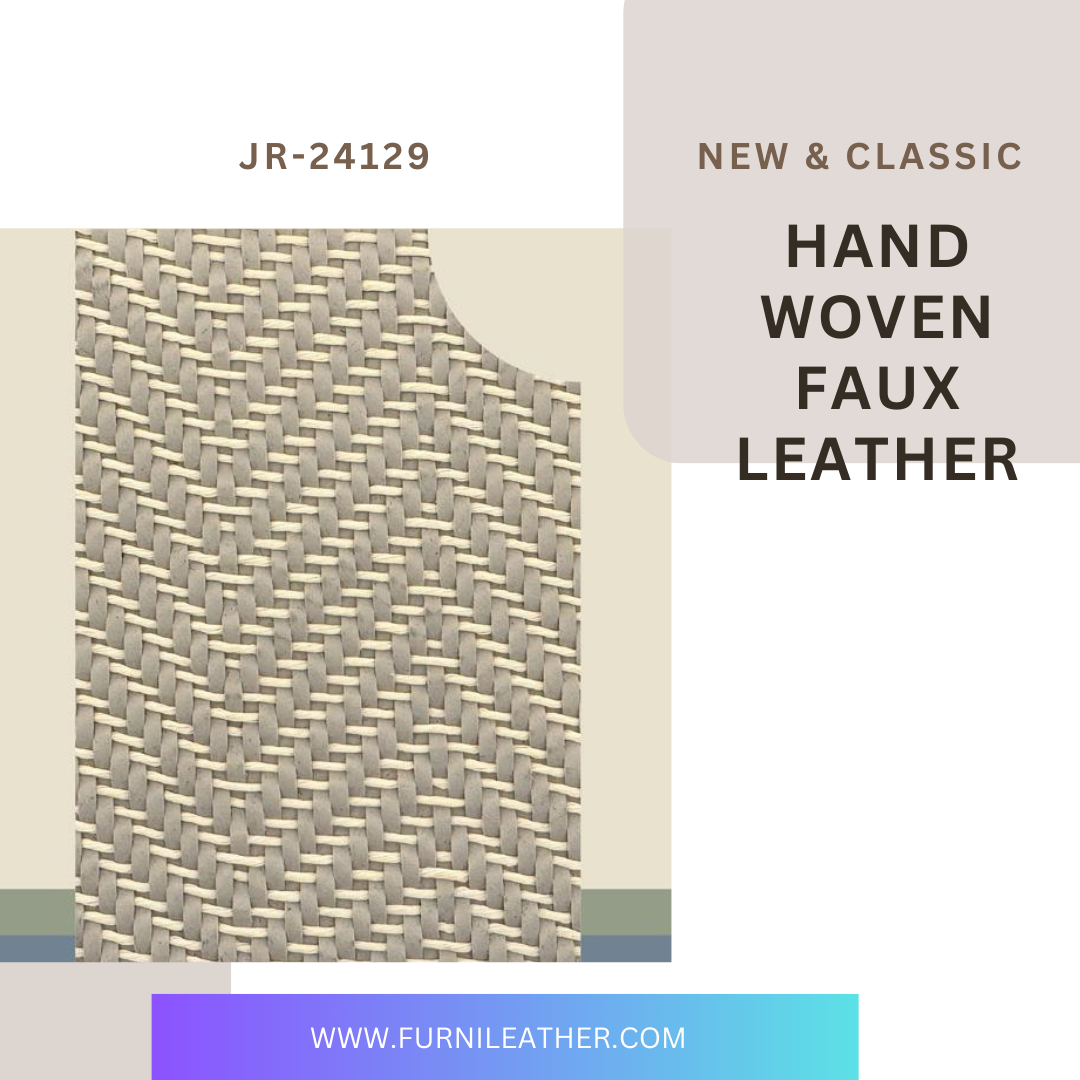
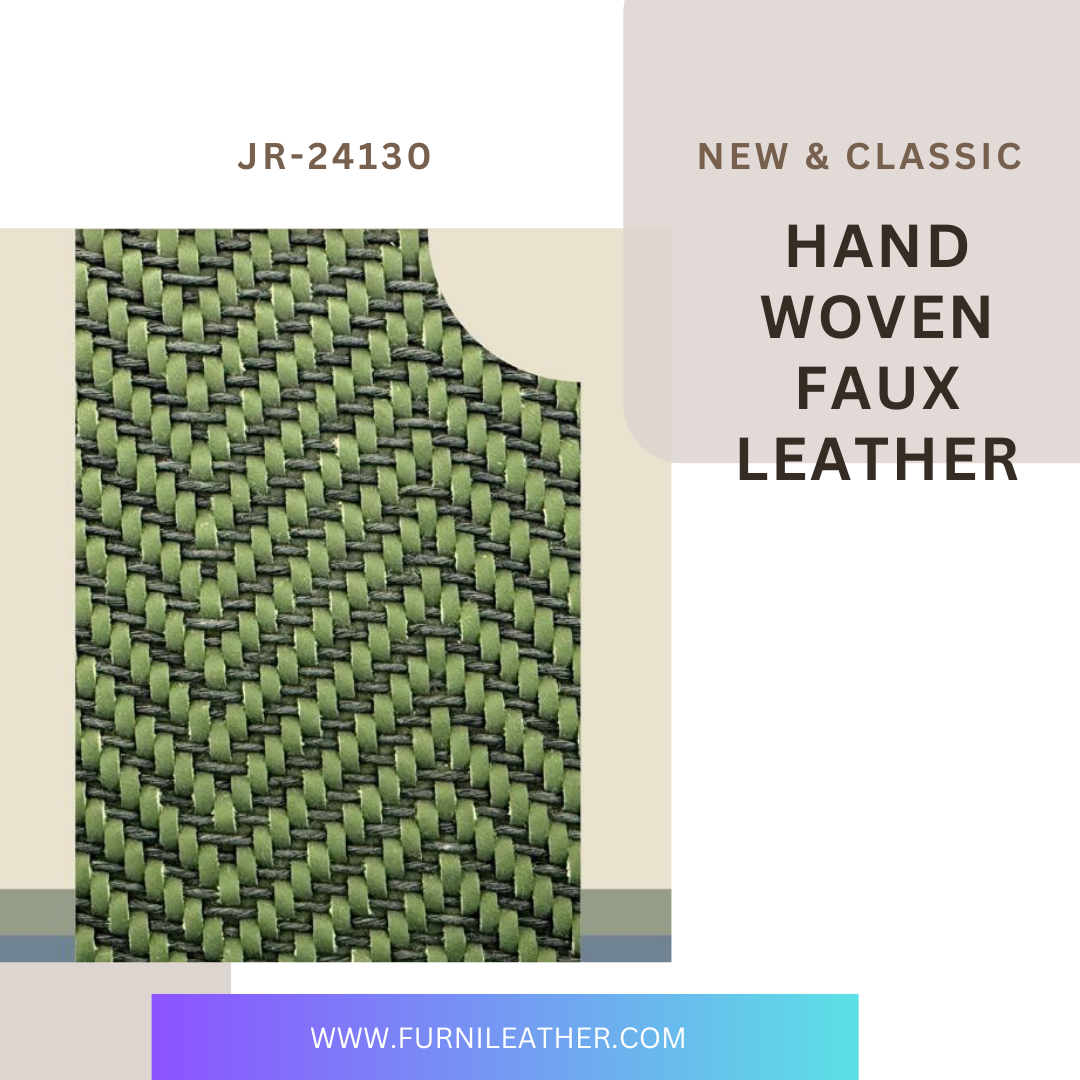
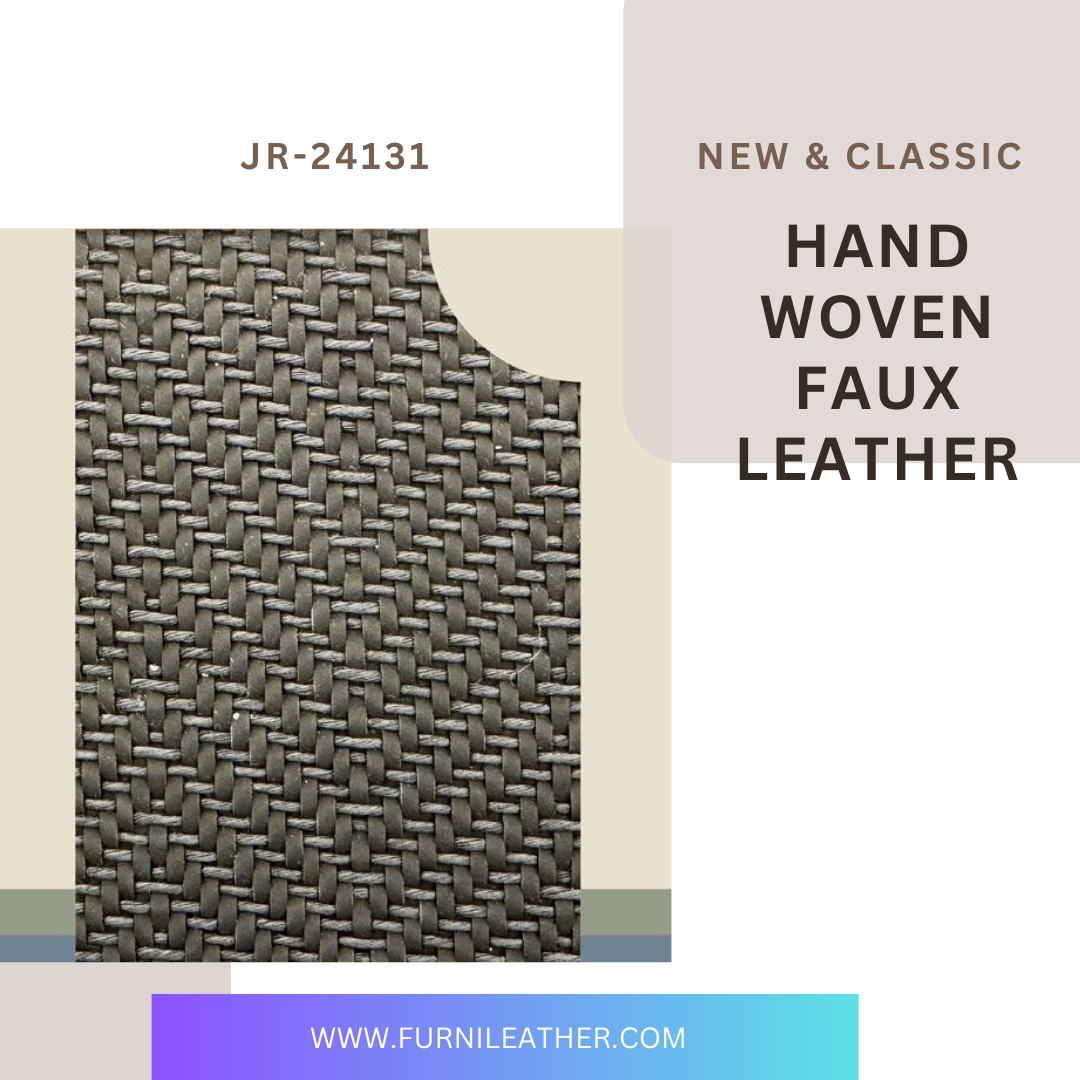
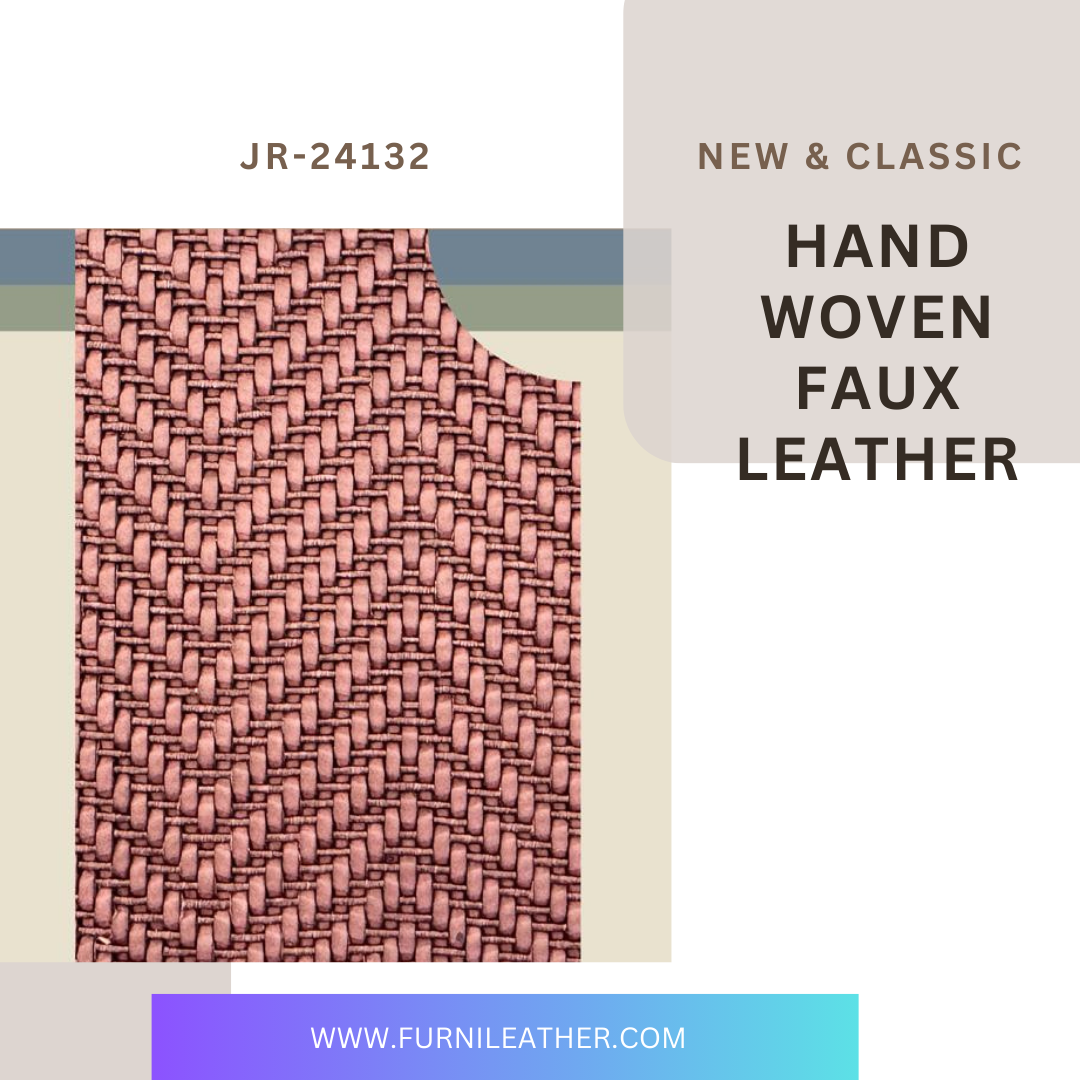
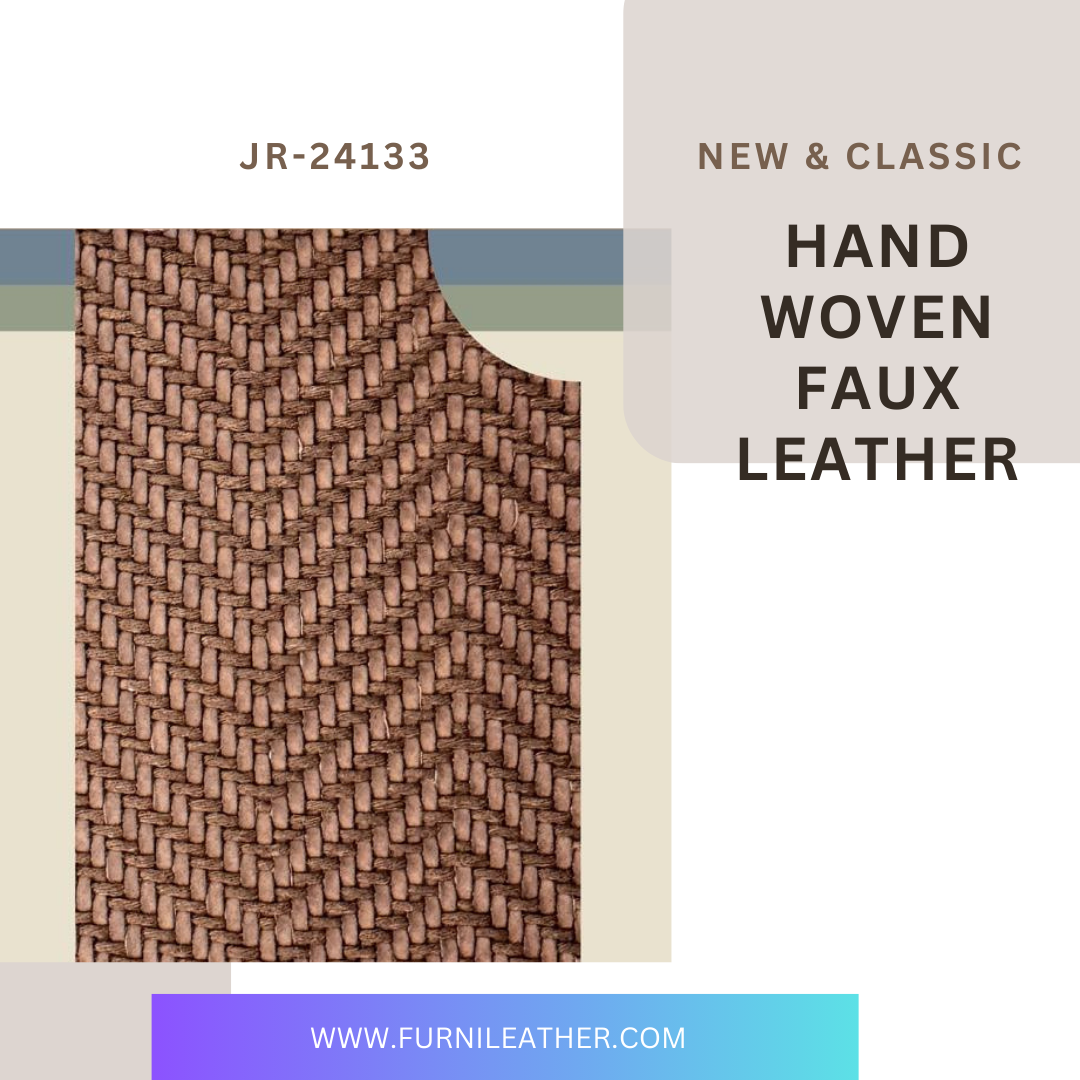
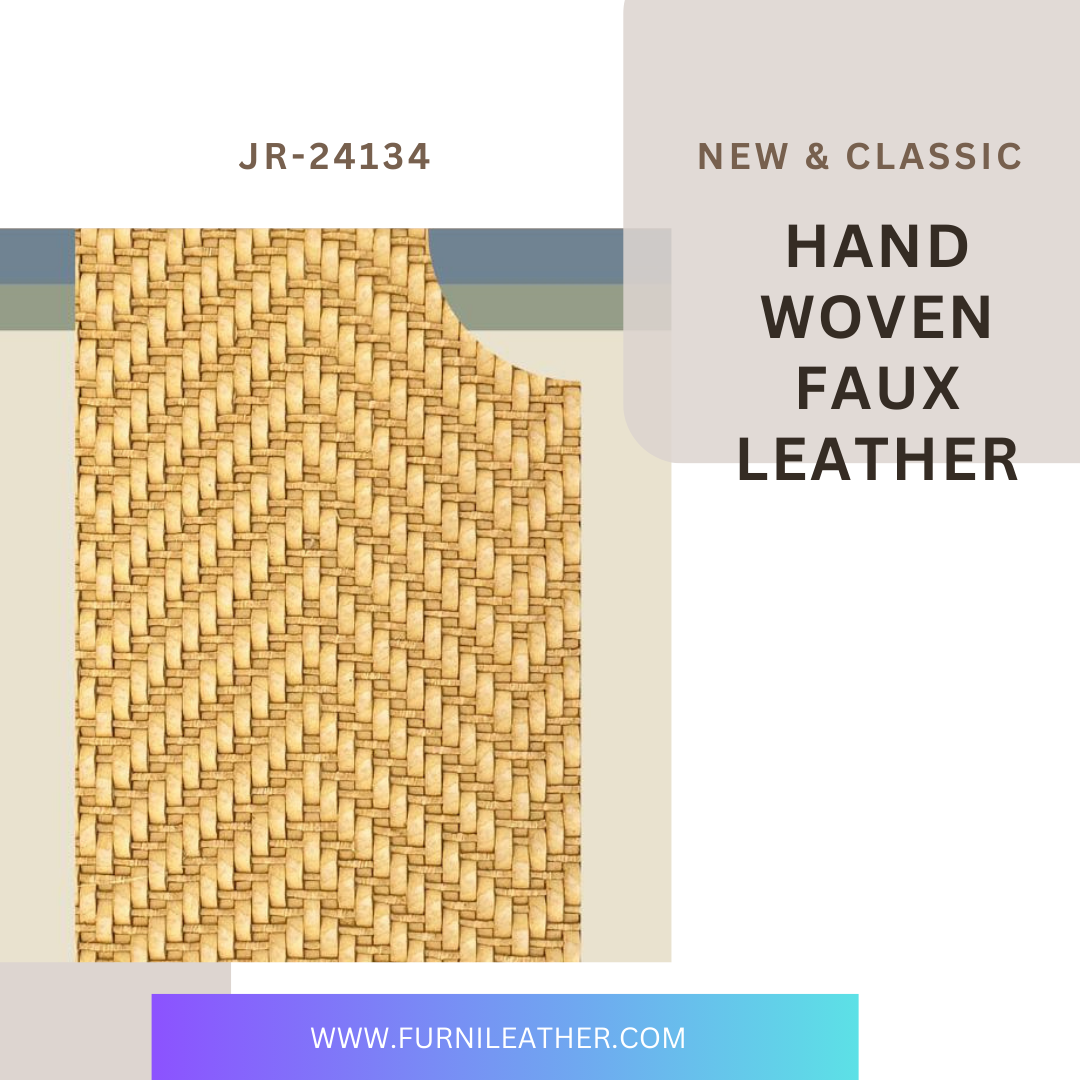
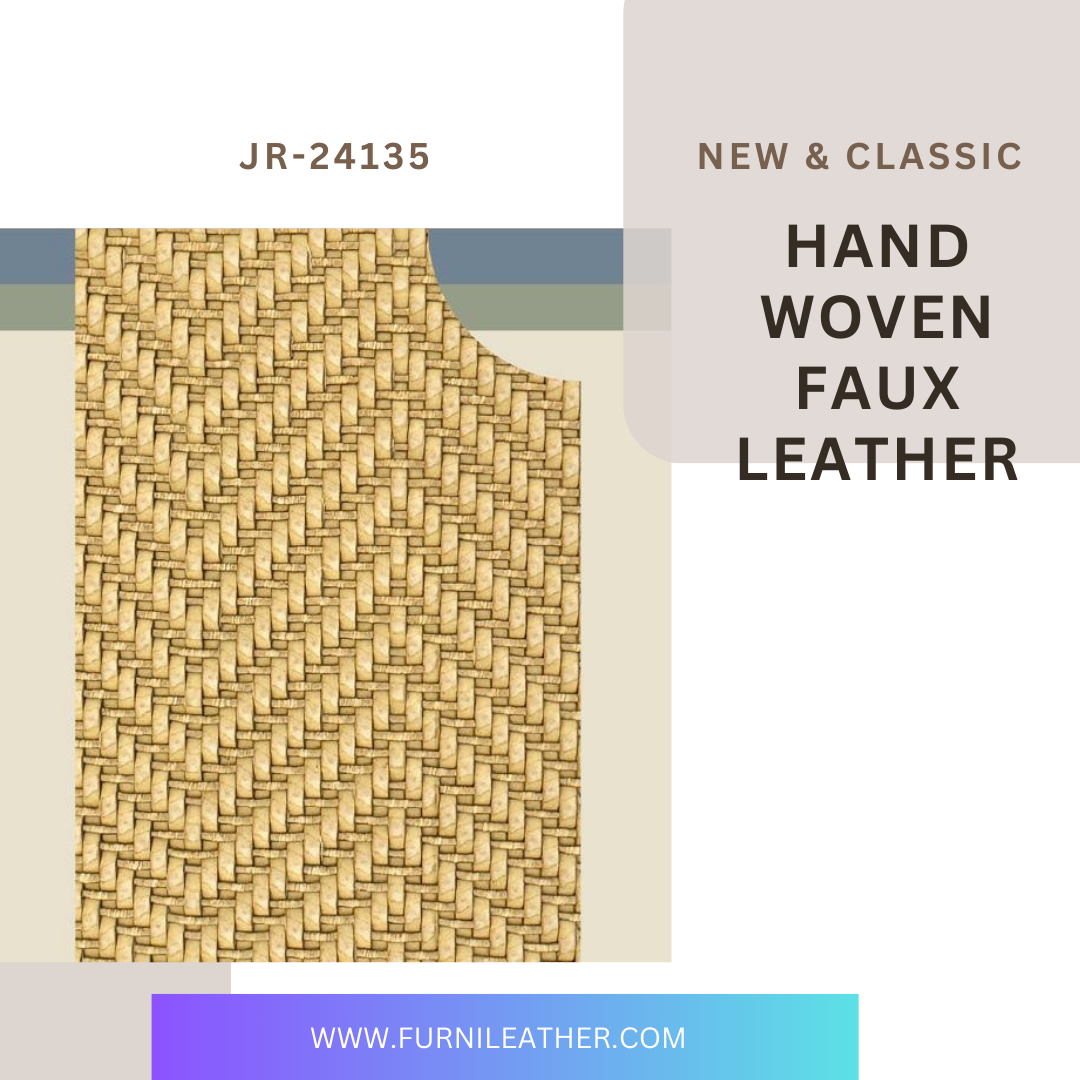
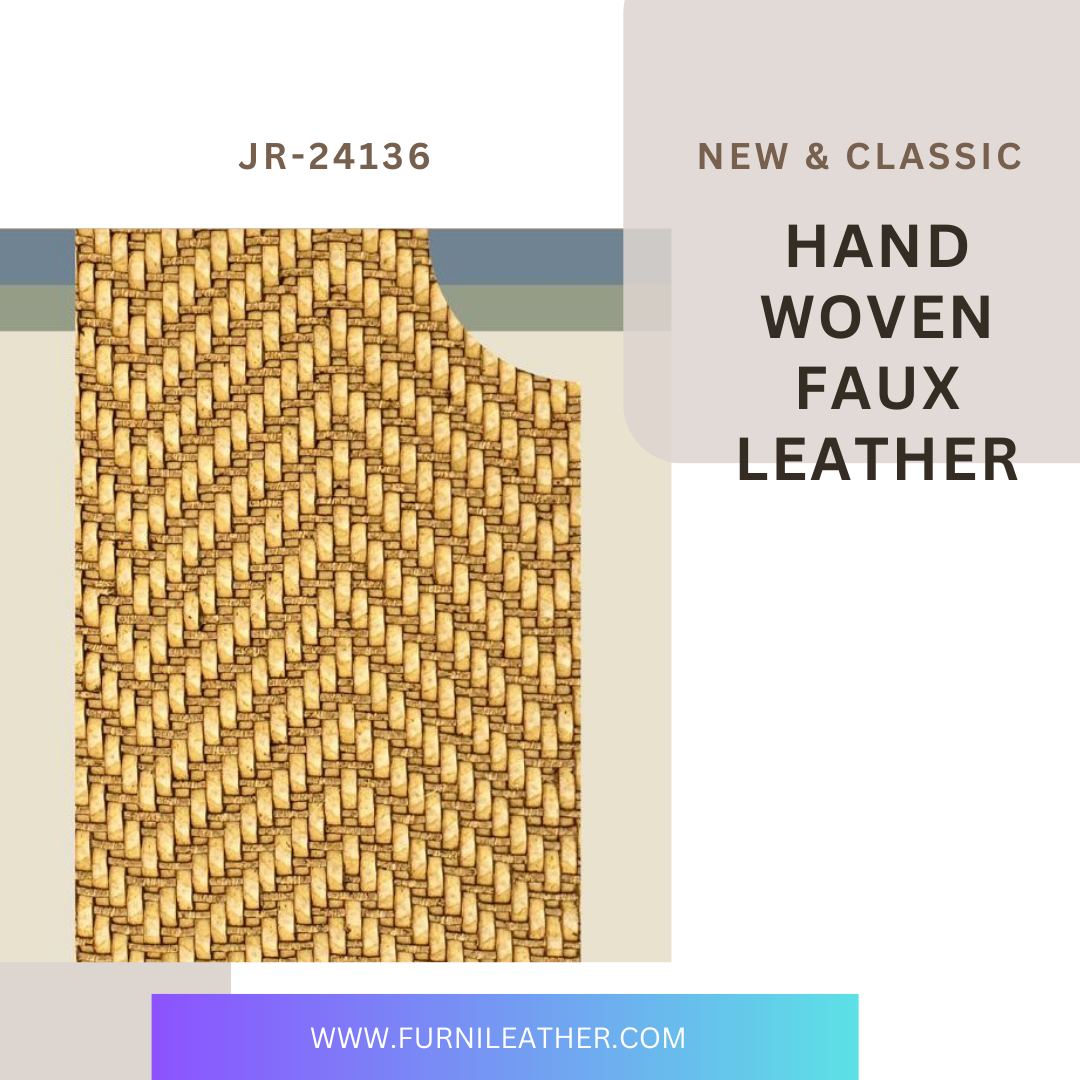
Unique Handwoven Faux Leather
Your project deserves the best, and our woven faux leather delivers beauty and longevity.
Need Help?
FAQs
Here's a brief look at the FAQs that guide you through our Silicone Leather
1. What is handwoven faux leather?
Handwoven faux leather is a synthetic leather material created by weaving narrow faux leather strips into a patterned surface. Unlike embossed textures, the woven structure provides real depth and visual texture while maintaining consistent material performance.
2. How is handwoven faux leather different from embossed woven patterns?
Embossed woven patterns are pressed onto a flat surface, while handwoven faux leather uses actual interlaced strips. This results in a more dimensional appearance and a distinctive handcrafted look often preferred for premium furniture and interior applications.
3. What applications is handwoven faux leather suitable for?eathability and comfort for upholstery?
Handwoven faux leather is commonly used in furniture upholstery, accent chairs, headboards, decorative panels, hospitality seating, and interior feature elements, where visual texture and design impact are important.
4. Is handwoven faux leather durable for daily use?
Yes. When properly constructed, handwoven faux leather offers good abrasion resistance and structural stability, making it suitable for residential and selected commercial environments. Performance varies depending on backing materials and application conditions.
5. Is handwoven faux leather easy to clean and maintain?
Handwoven faux leather is generally easy to maintain. Regular dust removal and wiping with a damp cloth are sufficient for most applications. Cleaning methods may vary depending on the weave density and surface finish.
6. Can handwoven faux leather be customized?
Yes. Customization options typically include weave patterns, strip width, colors, backing fabrics, and thickness, allowing designers and manufacturers to match specific project or brand requirements.
7. Is handwoven faux leather suitable for commercial or hospitality projects?
Handwoven faux leather can be specified for hospitality and commercial interiors where design value is a priority. Buyers should confirm performance requirements such as abrasion resistance and fire standards based on project specifications.
8. What is the typical MOQ and lead time for handwoven faux leather?
The typical minimum order quantity (MOQ) for handwoven faux leather is 50 meters, depending on the specific pattern, color, and backing requirements. The standard lead time is approximately 15–20 days, allowing sufficient time for material preparation and handwoven production processes. Final MOQ and lead time may vary based on customization scope and order volume.
Purchasing Process at FurniLeather
In our Purchasing Process, we guide you through each step, from initial inquiry to final order fulfillment,focusing on meeting your specific needs and requirements at every stage, ensuring a hassle-free and successful procurement experience

Step 1: Inquiry & Sample Development
- Free Customized Sample Development
- Technical Consultation
- Selection from Our Collection
- Sample Development leadtime normally one week
If you have a sample in hand, simply send it to us. Our skilled technical team will analyze the original sample and follow to create a new sample based on it. If you don’t have a physical sample,simply provide us with detailed specifications and the intended application of the artificial leather, and we will recommend the suitable samples or develop a bespoke solution tailored to the unique needs of your project.
Step 2: Order & Production Flow
- Ensure Clarity in Every Detail Prior to Manufacturing
- Source and Thoroughly Inspect 100% of Raw Materials
- Keep Customers Informed About Production Progress at All Times
- Normal Production Leadtime is 15 to 25 days
Based on the client-approved sample and details (like delivery, packaging, marking, shipping method), we issue a Proforma Invoice (PI). After receiving a 30% deposit, we procure materials and start production, keeping the client updated. We arrange quality checks and packaging, sending details for client approval. Pre-production or bulk samples ship to customer for final confirmation before packaging and final shipment

Step 3: Booking & Shipment
- Offer Solution for Air & Sea Shipment
- 1 Hour to Guangzhou & Shenzhen Port and HongKong
- Expertly Prepared and Comprehensive Export Documentation
- Delivery Time Base on Final Destination
After the bulk production is complete, we reconfirm the shipping method with the client, such as by air, by sea, CFS, LCL, destination port, forwarder details, consignee information, custom code,and original documents required by the client ( CO, Form A etc). Then, we book the container or flight for dispatch, provide the client with shipping photos, the bill of lading and other related export documents.


